
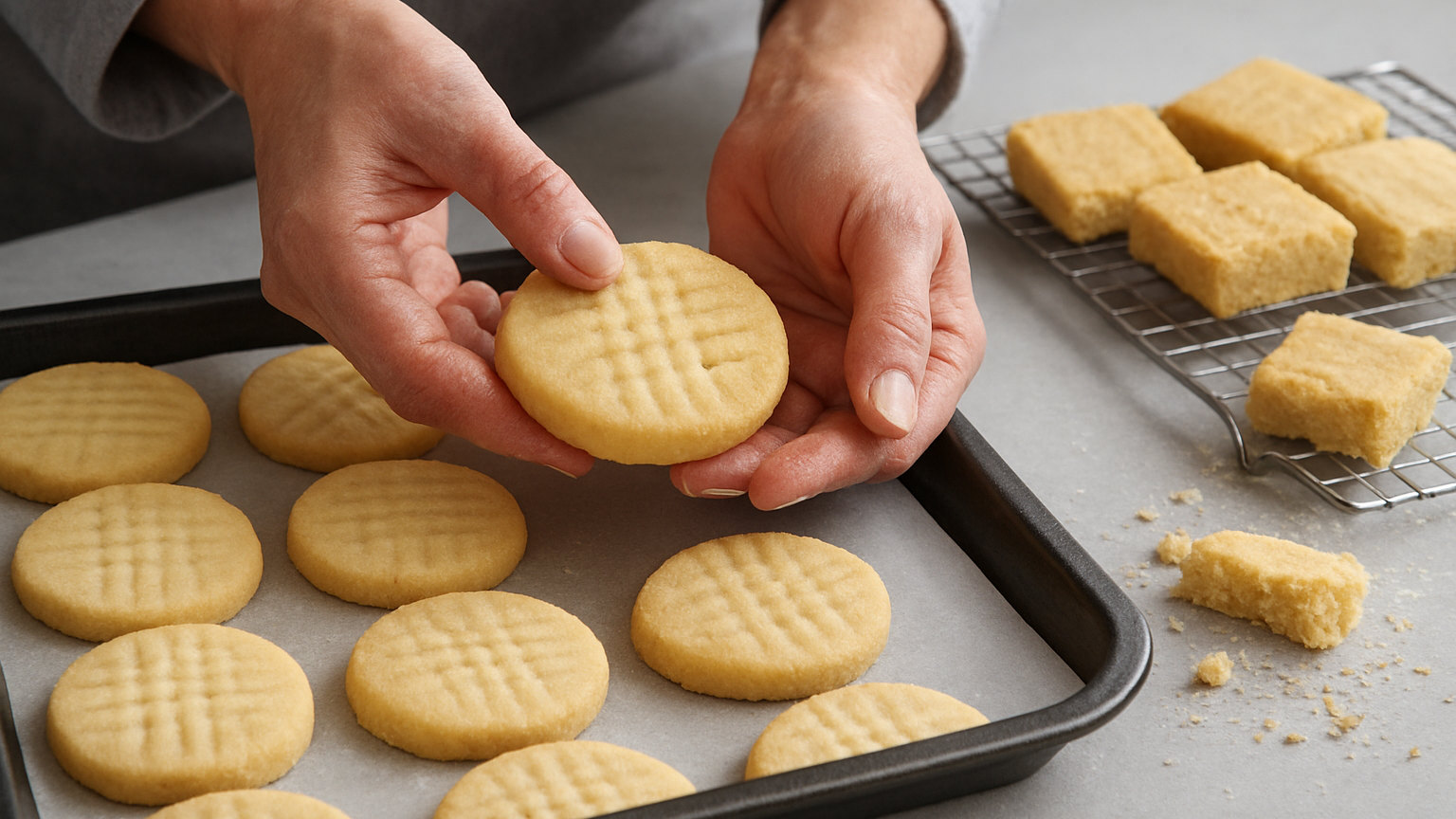
Classic shortbread contains only three ingredients: butter, sugar and flour. The traditional ratio is one part sugar to two parts butter and three parts flour by weight, which is easy to remember and almost impossible to improve on. It is baked slowly at a low temperature so it stays pale and dries out rather than browning, giving the short, crumbly, melting texture the biscuit is named for.
What does short mean in shortbread?
Short means crumbly and tender rather than chewy. Flour forms gluten when mixed with liquid, and gluten makes dough stretchy. Shortbread contains a great deal of butter and no liquid at all, so the fat coats the flour and prevents gluten developing. The more thoroughly the butter coats the flour, the shorter the biscuit, which is why overworking the dough makes shortbread tough.
What ingredients do you need?
- 250g unsalted butter, softened
- 125g caster sugar, plus extra for dusting
- 300g plain flour
- 75g rice flour or cornflour
- A good pinch of fine salt
How do you make shortbread?
- Heat the oven to 150°C (130°C fan), gas 2. Line a 20cm square tin with baking paper.
- Beat the butter and caster sugar together until just combined and creamy, but not pale and fluffy.
- Sift in the plain flour, rice flour and salt.
- Mix on the lowest speed, or with a wooden spoon, until the dough just comes together in clumps.
- Tip into the tin and press it down evenly with the back of a spoon or your knuckles.
- Prick all over with a fork, right through to the base.
- Chill for 20 minutes, then bake for 40 to 45 minutes, until pale golden and firm at the edges.
- Sprinkle with caster sugar and mark into fingers while still hot, then leave to cool completely in the tin before cutting through.
Do not cream it like a cake: beating air into the butter and sugar makes shortbread puff and then collapse. Mix only until the sugar is combined, then stop.
Why add rice flour?
Rice flour contains no gluten and has a slightly gritty texture, which gives shortbread its characteristic sandy bite and helps it stay short. Cornflour does a similar job and gives a smoother, more melting result. Neither is essential, and shortbread made entirely with plain flour is perfectly good, just a little denser.
Why bake it low and slow?
A low oven dries the biscuit out gradually rather than browning it, which is what gives shortbread its pale colour and dry, crumbly texture. Baked hot, the edges colour before the middle has set, and the high butter content can make it greasy. Forty minutes at 150°C sounds long for a biscuit, but it is exactly right.
Why prick it with a fork?
The holes let steam escape as the shortbread bakes, which stops it puffing up and keeps it flat and even. This is why traditional shortbread has rows of neat holes across the top. Prick right through to the base of the tin, and do it before chilling so the marks hold their shape.
What are petticoat tails?
Petticoat tails are shortbread baked in a large round and cut into triangular wedges, said to resemble the shape of pieces in an old petticoat pattern. Shortbread fingers are baked in a square or rectangular tin and cut into bars, and rounds are cut individually with a cutter. All three use the same dough.
Does the butter matter?
More than in almost any other recipe. With only three ingredients, the flavour of the butter is the flavour of the biscuit. Use a good unsalted butter and add your own pinch of salt, which lets you control the seasoning. Salted butter can be used, but leave out the extra salt.
How long does it keep?
Shortbread keeps very well, for up to two weeks in an airtight tin, which is why it has always been made in advance for Christmas and Hogmanay. It freezes for three months, baked or as raw dough shaped into a log ready to slice.


