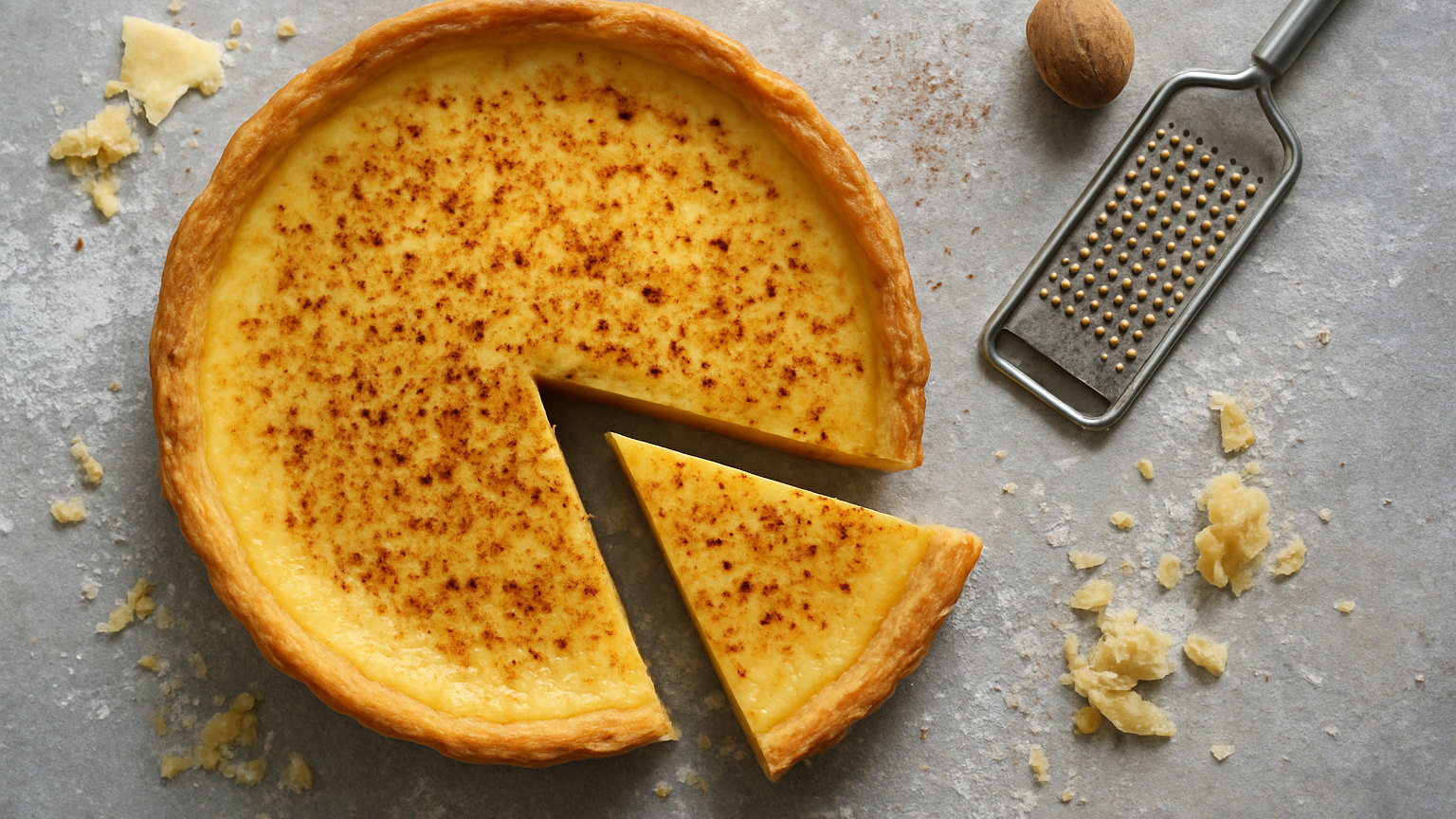
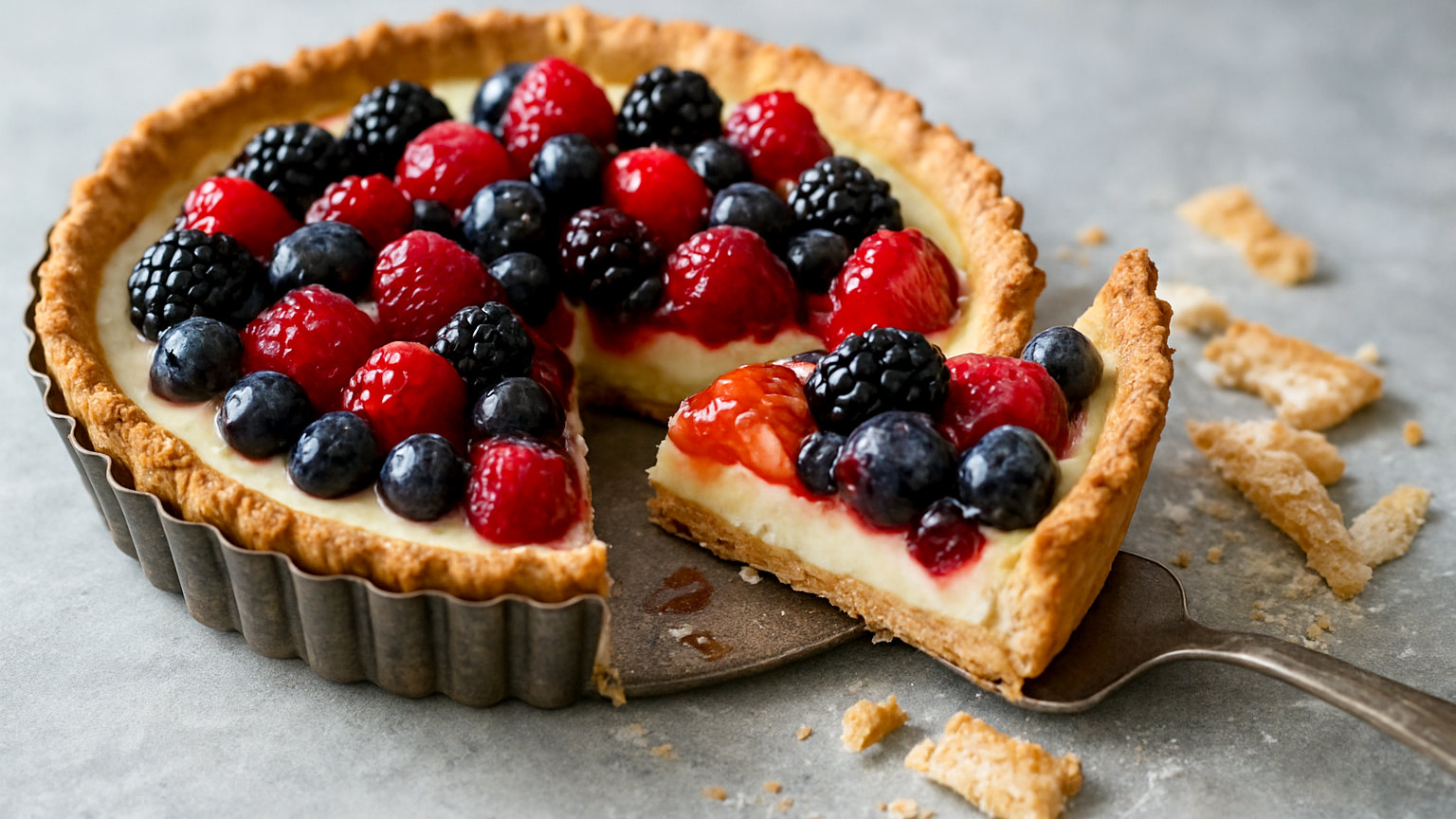
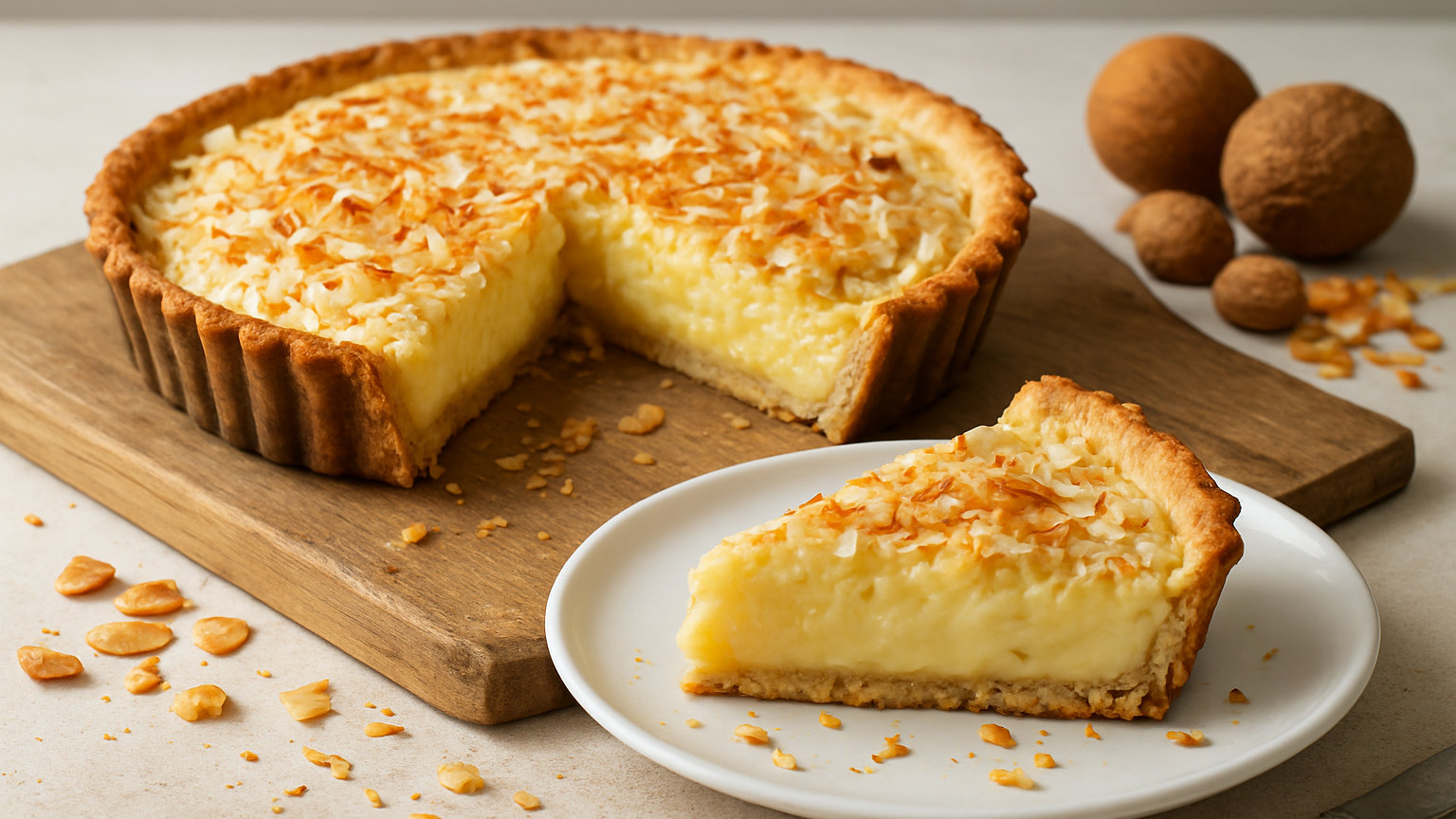
A Yorkshire curd tart is a traditional English tart made from curd cheese, sugar, eggs, currants and a distinctive pinch of allspice, baked in a crisp shortcrust case. The filling is lightly set, slightly grainy and much less sweet than most tarts, with a gentle, fresh dairy flavour. It has been baked in Yorkshire for centuries and is still sold in bakeries across the county.
What is curd cheese?
Curd cheese is a fresh, soft cheese made by warming milk with a setting agent so it separates into solid curds and liquid whey, then draining the curds. It is mild, slightly tangy and crumbly rather than smooth. Traditionally it was made at home from surplus milk, often with rennet. In shops you may find it labelled curd cheese, or you can substitute drained cottage cheese or ricotta.
How do you make curd cheese at home?
Heat 2 litres of whole milk to about 37°C, stir in a teaspoon of vegetarian rennet and leave it undisturbed for an hour, until set. Cut the curd into cubes, warm gently to 40°C and leave for 20 minutes, then pour into a colander lined with muslin and drain for two hours. A simpler method is to heat the milk to 80°C and stir in 4 tbsp lemon juice, then drain the curds in the same way.
What ingredients do you need?
For the shortcrust pastry
- 200g plain flour
- 1 tbsp caster sugar
- 100g cold unsalted butter, cubed
- 1 egg yolk and 2 tbsp cold water
For the filling
- 400g curd cheese, or drained cottage cheese
- 75g caster sugar
- 50g unsalted butter, melted
- 2 large eggs, beaten
- 100g currants
- Finely grated zest of 1 lemon
- 1 tsp ground allspice
- 1 tbsp rum or brandy, optional
How do you make a Yorkshire curd tart?
- Make the shortcrust pastry, line a 23cm loose-bottomed tart tin and chill for 30 minutes.
- Blind bake at 190°C (170°C fan), gas 5, for 15 minutes with paper and beans, then five minutes without. Lower the oven to 180°C (160°C fan), gas 4.
- Beat the curd cheese with the sugar until fairly smooth, leaving a little texture.
- Beat in the melted butter and eggs.
- Stir in the currants, lemon zest, allspice and rum, if using.
- Pour into the pastry case and level the surface.
- Bake for 30 to 35 minutes, until lightly set and just golden, with a slight wobble in the middle.
- Cool in the tin. Serve warm or cold, dusted with a little caster sugar.
Do not overbeat the curds: a curd tart should have a slightly grainy, rustic texture. Beating the cheese completely smooth gives something closer to a baked cheesecake.
Why allspice?
Allspice, sometimes called clove pepper, is the traditional and defining spice in a Yorkshire curd tart. Its warm, slightly peppery flavour, with notes of clove, cinnamon and nutmeg, is what distinguishes the tart from other curd and cheesecake recipes. Some old recipes use nutmeg instead, but allspice is the authentic choice.
What is the history of the tart?
Curd tarts date back at least to the seventeenth century, made when milk was plentiful in spring and early summer. In Yorkshire they were closely associated with Whitsuntide and with cheese-making on farms, where the leftover curds from the dairy went into baking. The recipe has changed remarkably little over the centuries.
How is it different from a cheesecake?
A cheesecake uses cream cheese or a set filling, is usually much sweeter and richer, and often has a biscuit base. A curd tart uses fresh curd cheese in a pastry case, contains dried fruit and spice, and is far less sweet. The texture is lighter and slightly crumbly rather than dense and creamy.
How long does it keep?
Keep the tart in the fridge for up to three days and bring it back to room temperature before serving. It freezes reasonably well for up to a month, though the filling is best fresh.