
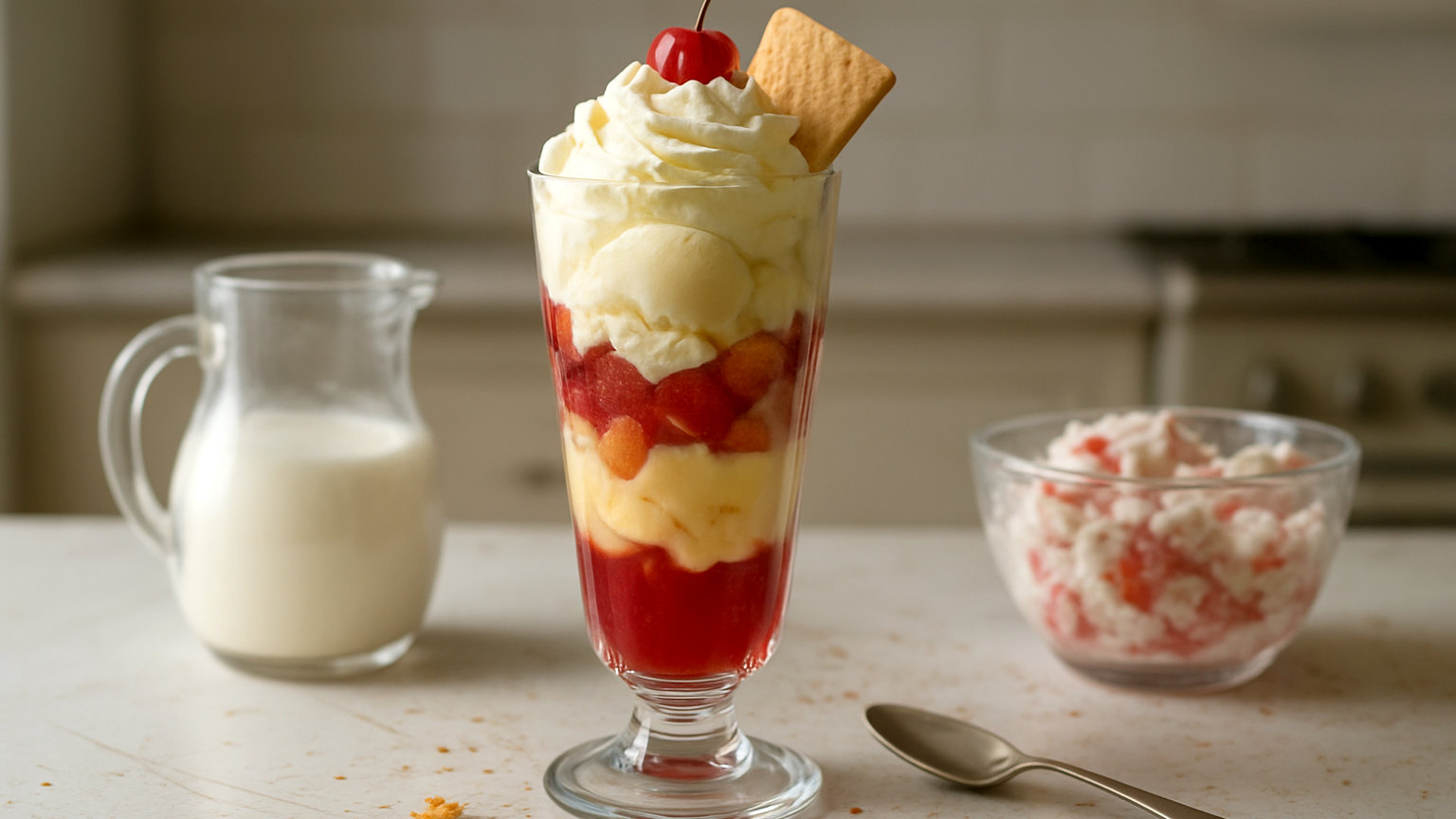
A knickerbocker glory is layers of fruit, jelly, ice cream, sauce and whipped cream built up in a tall glass and eaten with a long spoon. There is no cooking involved, only assembly, and the pleasure of it is entirely in the layers and the height. It is a seaside dessert of the 1950s that has never quite gone away.
What do you need?
Makes 4.
- 1 packet strawberry jelly, made up and set
- 400g strawberries, hulled and sliced
- 200ml berry coulis or strawberry sauce
- 8 scoops vanilla ice cream
- 300ml double cream, whipped to soft peaks
- 4 fan wafers
- 4 glacé cherries
- 2 tbsp toasted flaked almonds, optional
How do you build one?
- Chill four tall sundae glasses in the freezer for 15 minutes.
- Chop the set jelly into rough cubes.
- Put a layer of sliced strawberries in the base of each glass.
- Add a spoonful of jelly cubes, then a scoop of ice cream.
- Drizzle over some coulis, then repeat the fruit, jelly and ice cream layers.
- Finish with a generous swirl of whipped cream.
- Push in a wafer, add a glacé cherry and scatter with almonds.
- Serve immediately with long spoons.
Chill the glasses first: a warm glass melts the first scoop of ice cream before the second layer goes in, and the whole thing slumps before it reaches the table.
What order should the layers go in?
Fruit at the bottom, so it does not float, then alternating jelly, ice cream and sauce, with cream on top. Starting with fruit also means the bottom of the glass looks appealing, which matters in something served in clear glass. Finish with the tallest, showiest element.
Which glass should you use?
A tall, narrow sundae glass, sometimes sold as a knickerbocker glory glass, holding about 400ml. Height is the point. A pint glass works at a push, and a tall tumbler is acceptable, but a short wide glass loses the effect entirely. The spoon must reach the bottom.
Where does the name come from?
Knickerbocker was a nickname for a New Yorker, from the Dutch settlers of the city, and the dessert appears in British writing from the 1920s. The connection to New York is not well documented, and the dessert as we know it is essentially a British seaside version of an American sundae.
Can you make it ahead?
Not really. Ice cream melts, jelly softens and wafers go soggy, so a knickerbocker glory must be assembled at the last minute. What you can do is prepare every component ahead: set the jelly, slice the fruit, make the coulis and whip the cream, then build them in five minutes.
What fruit works best?
Strawberries, raspberries, banana, peaches and pineapple are the traditional choices. Sharp fruit balances the ice cream and jelly, both of which are sweet. Tinned fruit cocktail is entirely authentic to the original and there is no shame in it. Slice everything thinly so it layers neatly.
Can you vary it?
Yes, and most people do. Chocolate ice cream with chocolate sauce and banana makes a banana split in a glass. Coffee ice cream with chocolate sauce suits adults. Leave out the jelly if you prefer and add crushed meringue instead. The structure matters more than the specific ingredients.
How do you serve it?
Immediately, with a long-handled spoon, which is not optional given the depth of the glass. Put them together while people are at the table rather than in the kitchen, since they start melting within a few minutes of being built.
How much fruit do you need?
About 100g of prepared fruit per glass, which is roughly four medium strawberries sliced, plus whatever else you are layering. Slice everything thinly rather than chopping it into chunks, since thin slices press against the glass and show the layers clearly from outside.
Should the jelly be chopped or set in the glass?
Chopped. Set jelly cut into rough cubes keeps its shape between the other layers and catches the light. Jelly poured into the glass and set in place would need several hours between layers and would fuse with the ice cream when it finally went in.


