
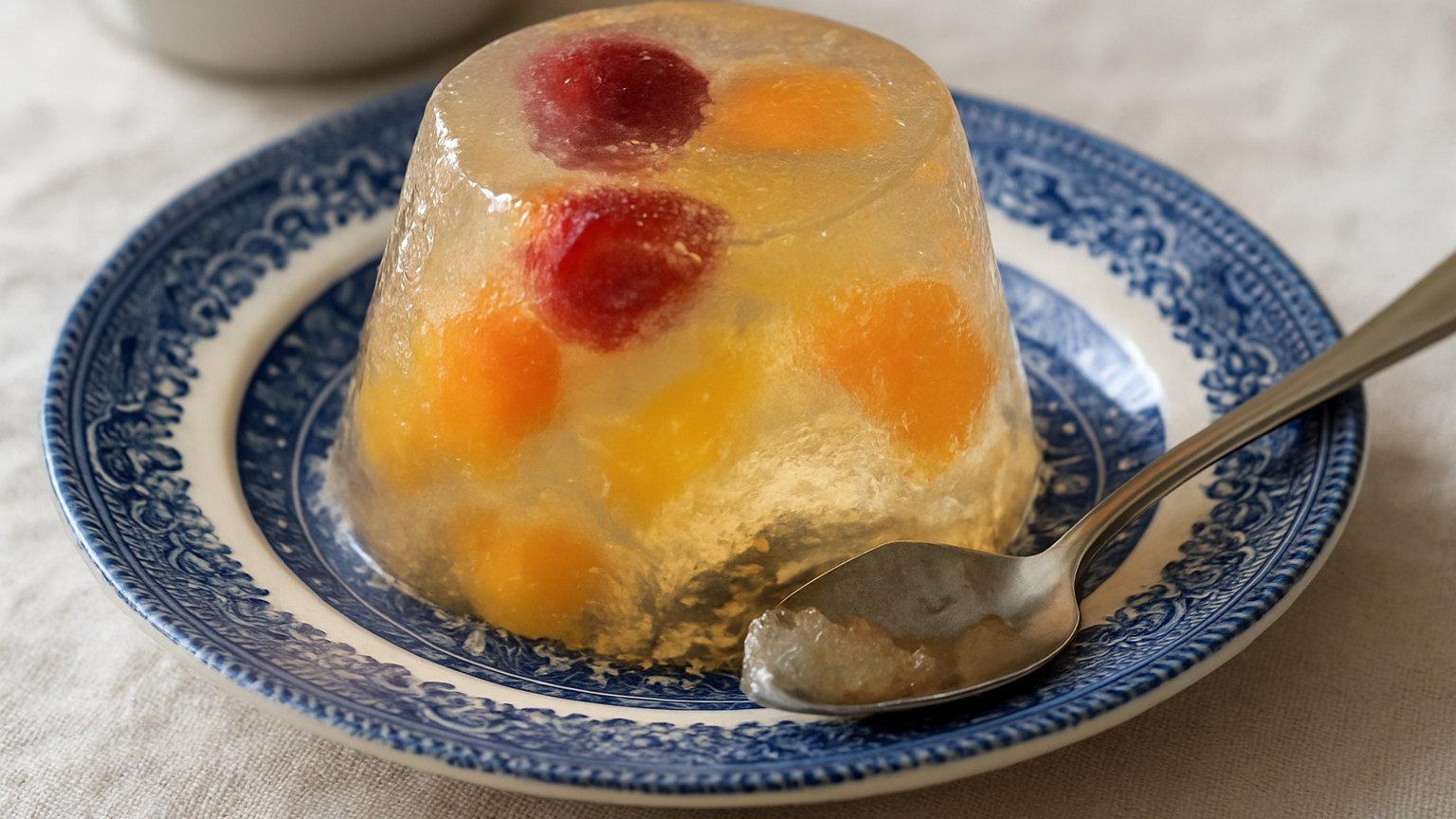
A jelly that stays liquid has almost always fallen foul of one of four things: the gelatine was boiled, the wrong fruit went in, there was not enough setting agent, or it simply has not had long enough. Working out which one it was is straightforward, and three of the four can be rescued.
What are the four causes?
| Cause | Sign | Rescue |
|---|---|---|
| Gelatine boiled | Never sets, however long | Remake with fresh gelatine |
| Enzyme fruit added | Stays completely liquid | Remove fruit, add fresh gelatine |
| Too little gelatine | Thick but never firm | Melt, add more, chill again |
| Not enough time | Slowly thickening | Wait, it will set |
Did you boil it?
Gelatine loses much of its setting power above about 85°C and is largely destroyed by boiling. If you brought the liquid to the boil with the gelatine in it, the jelly will not set at all and no amount of chilling will help. Warm the liquid only until it steams.
Which fruits stop jelly setting?
Fresh pineapple, kiwi, papaya, mango, figs and fresh ginger all contain protein-digesting enzymes that break gelatine down completely. This catches out a great many people. Tinned versions are always safe, since canning heats the fruit and destroys the enzymes, and briefly cooking fresh fruit does the same.
Fresh pineapple and kiwi will ruin a jelly every time: no amount of extra gelatine or longer chilling will overcome it. The fruit has to come out, or be cooked first.
Have you given it long enough?
Four hours for a soft set, six for a firm one and overnight for anything to be turned out. Gelatine continues firming for up to 24 hours. A jelly that is visibly thickening after four hours is working, and it needs patience rather than intervention.
Is there enough gelatine in it?
Five leaves per 600ml is right for a jelly firm enough to turn out, and four for one set in a glass. Alcohol, acid and a high sugar content all interfere slightly with setting, so a boozy or very sharp jelly needs a little more than a plain fruit one.
How do you rescue a liquid jelly?
Pour it into a pan and warm a quarter of it gently, not above 70°C. Soak two fresh gelatine leaves, squeeze them out and dissolve them in the warm portion, then stir it back into the rest. Chill again for six hours. This works for every cause except enzyme fruit.
Why is it cloudy rather than clear?
Either the juice itself was cloudy, or the mixture was whisked, which incorporates air bubbles that stay trapped in the set. Stir gently rather than whisking, skim any foam from the surface before pouring, and use a clear juice rather than a cloudy one.
Why is it rubbery instead of wobbly?
Too much gelatine, which cannot be corrected once set without remelting. Melt it down, add more liquid to dilute the gelatine and chill again. When making it, remember that too little gelatine gives something soft and pleasant, while too much gives something unpleasantly bouncy.
Does the juice make a difference?
Yes. Very acidic juices such as lemon, lime and cranberry interfere slightly with setting, so add half a sheet more gelatine for those. Cloudy juices set just as well as clear ones but look less appealing. Freshly squeezed juice sets no differently from a carton.
Does it matter where it chills?
A little. The back of the fridge is coldest and most stable, and a jelly set there firms faster than one in the door, where the temperature rises every time the fridge is opened. Leaving it at room temperature will not set a gelatine jelly at all.
What if you are using agar?
Agar fails for the opposite reason to gelatine: it must be boiled for a minute or two to activate, and a mixture that was merely warmed will never set. It also sets at room temperature rather than needing the fridge, so an unset agar jelly means it did not boil.


