
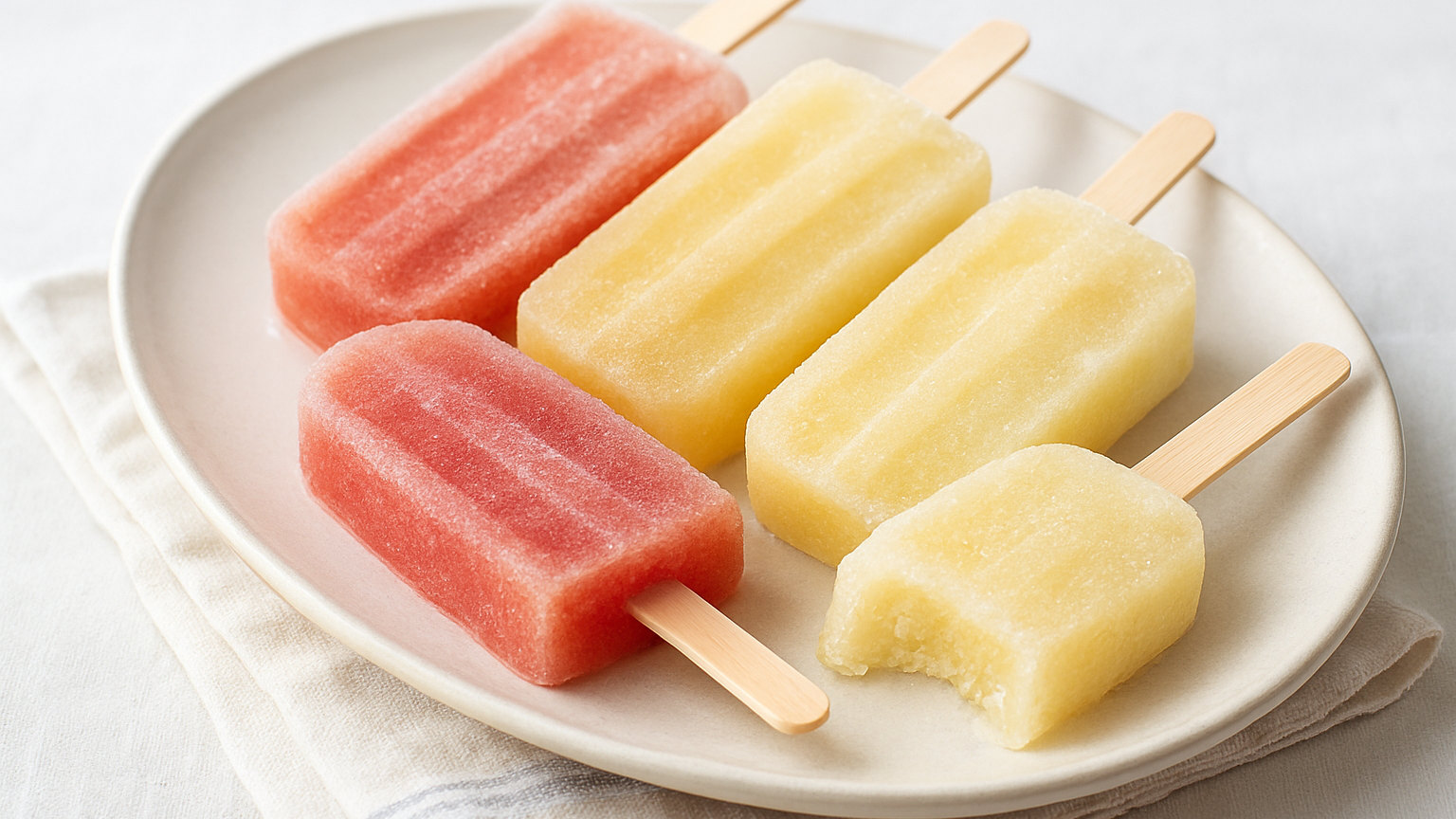
Most ice lolly problems come down to three things: too little sugar, which makes them rock hard; a mixture that tasted right unfrozen and therefore tastes bland frozen; and lollies unmoulded before they had fully set. All three are easy to avoid once you know what is happening.
What are the common problems?
| Problem | Cause | Fix |
|---|---|---|
| Rock hard, shatters when bitten | Too little sugar or fat | Add sugar syrup or use dairy |
| Tastes weak and watery | Mixture not strong enough | Make it taste too strong unfrozen |
| Stick pulls out | Not frozen through | Freeze for at least six hours |
| Lolly splits in half | Air pockets in the mould | Tap the moulds as you fill them |
| Frosty white surface | Left uncovered in the freezer | Store in a sealed bag |
| Will not release | Not frozen solid, or gripping mould | Dip in warm water, freeze longer |
Why are they so hard?
Because water freezes solid and there is not enough dissolved sugar to prevent it. Sugar lowers the freezing point, so part of the mixture stays soft. A lolly made from juice or water alone sets into a block of ice. Adding a simple sugar syrup, or using yoghurt, cream or coconut milk for fat, solves it.
Do not remove the sugar to make lollies healthier: it is structural, not just sweetening. Use naturally sweet ripe fruit instead if you want to reduce added sugar.
Why do they taste bland?
Cold suppresses our perception of both sweetness and acidity, so anything intended to be eaten frozen must taste too strong at room temperature. Taste the mixture before it goes into the moulds: if it tastes exactly right, it will be disappointing frozen. If it tastes slightly too sweet and too sharp, it is correct.
Why does the stick pull out?
The middle of the lolly is the last part to freeze, and that is where the stick is anchored. If it slides out, the lolly needs longer. Six hours is the minimum for a standard mould and overnight is safer, particularly for anything containing dairy or coconut, which freezes more slowly.
Why do they break in half?
Air pockets. A thick mixture traps air as it goes into a narrow mould, and those pockets freeze as hollow gaps that the lolly snaps along. Tapping each mould firmly on the worktop as you fill it releases them. It takes seconds and prevents the problem entirely.
Why is the surface frosty?
Moisture evaporating from the lolly and refreezing on the surface, which is freezer burn. It is harmless and melts instantly, but it looks unappetising. Unmould the lollies once solid and store them in a sealed bag or box rather than leaving them exposed in the moulds.
Can you refreeze a lolly that has melted?
Better not to. Refreezing produces large ice crystals and a coarse, grainy texture, and with anything dairy-based there is a food safety consideration if it has been out for a while. Take out only what you need and return the rest to the freezer straight away.
How do you fix a batch that is already too hard?
You cannot fix them in the mould, but you can use them. Blitz the unmoulded lollies in a food processor with a splash of cream or juice, which gives a very good slushie or a soft-scoop sorbet. Next time, add a sugar syrup to the same mixture.
How much sugar should a lolly contain?
Around a fifth to a quarter of the total weight for a fruit or juice lolly. That sounds like a great deal, and it is less than most shop-bought lollies contain. Dairy-based lollies need less added sugar, since the fat does some of the same work in keeping the texture soft.
Why do dairy lollies freeze softer?
Fat interrupts ice crystals as they form, in exactly the way it does in ice cream. A lolly made with yoghurt, cream, condensed milk or coconut milk will always be softer and creamier than one made with juice, whatever the sugar content. It is the easiest route to a good texture.


