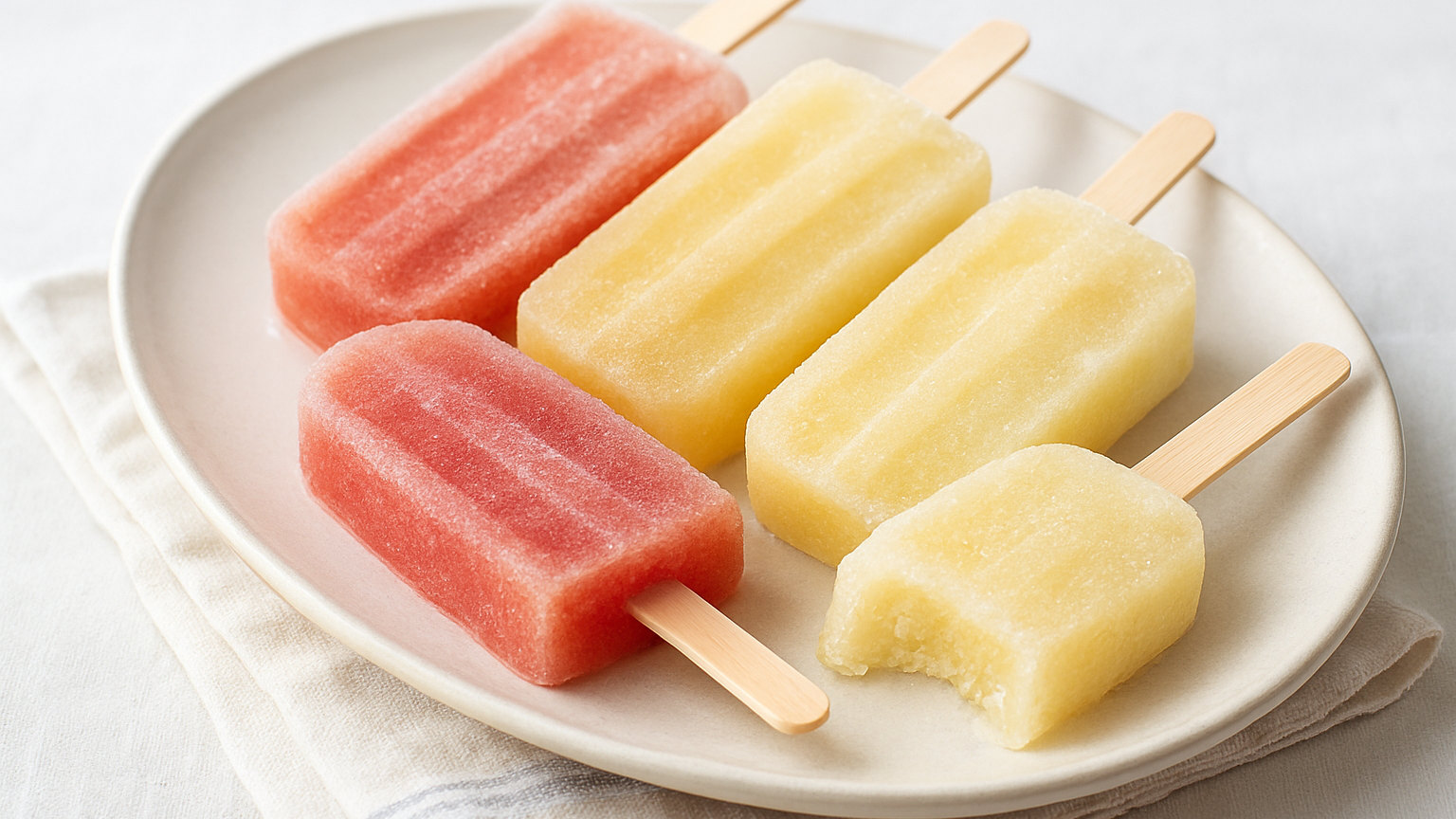
The reliable way to unmould an ice lolly is to dip the outside of the mould in warm water for a few seconds, which melts a thin film at the surface and releases it. The most common problem is not the technique but the timing: a lolly that has not frozen completely solid will let go of its stick rather than come out of the mould.
How do you do it?
- Fill a jug or a deep bowl with warm, not hot, water.
- Take the moulds straight from the freezer.
- Dip one mould in up to the rim for five to ten seconds, keeping the top above the water.
- Lift it out and pull the stick gently and straight upwards.
- If it resists, dip for another three seconds rather than pulling harder.
- Repeat with the rest, one at a time, and return any you are not eating to the freezer immediately.
Use warm water, not hot: hot water melts the surface far too quickly, so the lolly loses its shape and the outside becomes slushy while the middle is still solid.
Why does the stick pull out?
Because the lolly is not frozen solid all the way through. The stick is anchored in the centre, which is the last part to freeze, so if the middle is still soft the stick simply slides out. Give it another two hours in the freezer and try again.
How long should lollies freeze?
At least six hours for a standard mould, and overnight is safer. Creamy lollies containing dairy or coconut take longer than fruit juice ones, since fat freezes more slowly. A lolly that is firm at the edges after four hours may still be soft in the middle.
Do silicone moulds need the warm water?
Usually not. Silicone flexes, so you can peel it back from the lolly and push gently from the base, which releases it cleanly. This is the main practical advantage of silicone and the reason it suits children, who can often unmould their own lollies without help.
Why has the surface gone frosty?
Ice crystals form on the surface when a lolly is exposed to air in the freezer, particularly if the moulds have no lid. It is harmless and it melts in a moment. To avoid it, unmould the lollies once solid and store them in a sealed bag or box rather than leaving them in the moulds.
Can you refreeze a lolly that has started to melt?
It is better not to. Refreezing gives large ice crystals and a coarse, grainy texture, and with a dairy-based lolly there is also a food safety consideration if it has been out for a while. Take out only what you need and return the rest to the freezer immediately.
How should you store unmoulded lollies?
Individually wrapped in baking paper or small bags, then all together in a larger freezer bag or rigid box. This stops them sticking to one another, protects them from freezer smells and frees up the moulds. Label the bag, since frozen lollies are hard to tell apart.
What if the lolly breaks as it comes out?
It has usually been frozen too hard and the stick has cracked away from the centre, or it was pulled at an angle. Pull straight up and slowly. A broken lolly is still perfectly good eaten from a bowl with a spoon, which is worth remembering with children.
Why do lollies stick more in some moulds?
Narrow, tapered moulds grip more than wide, straight-sided ones, since there is more surface area in contact and less room for the lolly to slide. Rigid plastic grips more than silicone. Anything containing dairy or coconut also releases less easily than a plain fruit lolly.
How long should you dip for?
Five to ten seconds in warm water is enough for most moulds. Count it rather than guessing, and dip again briefly if needed. Leaving a mould in the water for thirty seconds melts a great deal of the lolly, and what comes out is misshapen and dripping.