
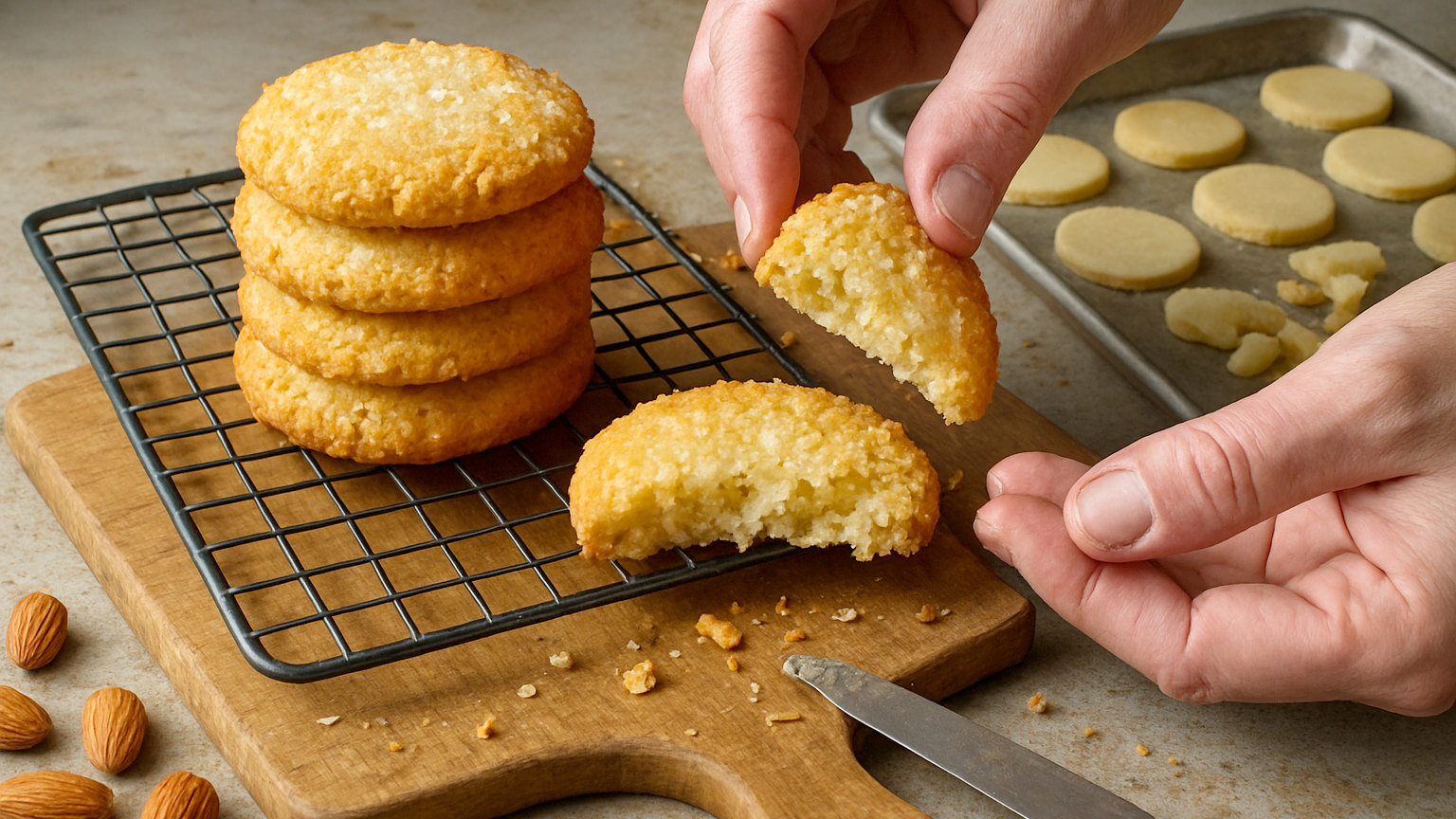
Nice biscuits are thin, crisp coconut biscuits with a sprinkling of coarse sugar on top. They are among the plainest biscuits in the British tin, which is exactly their appeal: light, fragrant with coconut and ideal alongside a cup of tea or served with ice cream. Homemade versions taste considerably more of coconut than the packet kind, because you can use as much as you like.
How do you pronounce the name?
This is one of the great low-stakes British debates. Some people say it as the English word nice, while others say it like the French city of Nice, on the assumption that the biscuit was named after it. There is no firm evidence for the French connection, and biscuit manufacturers have generally declined to settle the argument. Both pronunciations are widely used.
What ingredients do you need?
Makes about 24 biscuits.
- 175g plain flour
- 75g desiccated coconut
- 100g caster sugar
- ½ tsp baking powder
- A pinch of fine salt
- 125g cold unsalted butter, cubed
- 1 large egg yolk
- 2 to 3 tbsp cold milk
- Granulated sugar, for sprinkling
How do you make Nice biscuits?
- Mix the flour, desiccated coconut, caster sugar, baking powder and salt in a bowl.
- Rub in the cold butter with your fingertips until the mixture resembles breadcrumbs.
- Add the egg yolk and enough milk to bring the dough together.
- Wrap and chill for 30 minutes.
- Heat the oven to 180°C (160°C fan), gas 4, and line two baking trays.
- Roll out to 3mm thick between two sheets of baking paper.
- Cut into rectangles about 4cm by 6cm, or use a cutter.
- Transfer to the trays and sprinkle generously with granulated sugar.
- Bake for 10 to 12 minutes, until golden at the edges.
- Cool on the tray for five minutes, then transfer to a wire rack, where they crisp as they cool.
Roll them thin: at 3mm these bake to a proper snap. Any thicker and the coconut keeps them soft in the middle, which loses the character of the biscuit.
Why use granulated rather than caster sugar on top?
Granulated sugar has larger crystals that stay visible and crunchy after baking, giving the sparkling top that identifies a Nice biscuit. Caster sugar largely dissolves into the surface and disappears. Demerara is another good option and adds a slight caramel note.
Should you use desiccated or fresh coconut?
Desiccated coconut is right here. It is finely shredded and dried, so it mixes evenly into the dough and does not add moisture. Fresh or frozen grated coconut contains too much water and makes the biscuits soft and prone to spoiling. Toasting the desiccated coconut first deepens the flavour if you like it stronger.
Why do they need an egg yolk?
The yolk binds the dough and adds richness without the extra liquid of a whole egg, which would make the biscuits puff and soften. It also helps them brown evenly. Keep the white for a meringue or for glazing Easter biscuits.
Can you make them dairy-free?
Yes. Use a firm dairy-free block butter in place of the butter and a plant milk instead of the cow's milk. The coconut flavour carries the biscuit, so the change is barely noticeable. Check your sugar and coconut are suitable if you are baking for someone with strict requirements.
How long do they keep?
Nice biscuits keep for up to two weeks in an airtight tin and stay crisp, as they contain little moisture. Refresh them in a low oven if they soften. The raw dough freezes for three months, and cut biscuits can be baked from frozen with an extra two minutes.
What can you use them for?
Beyond eating them with tea, crushed Nice biscuits make an excellent cheesecake base, particularly under a lemon, mango or passion fruit filling, where the coconut suits the tropical flavours. They are also good crumbled over a fruit fool or served alongside a sorbet.


