
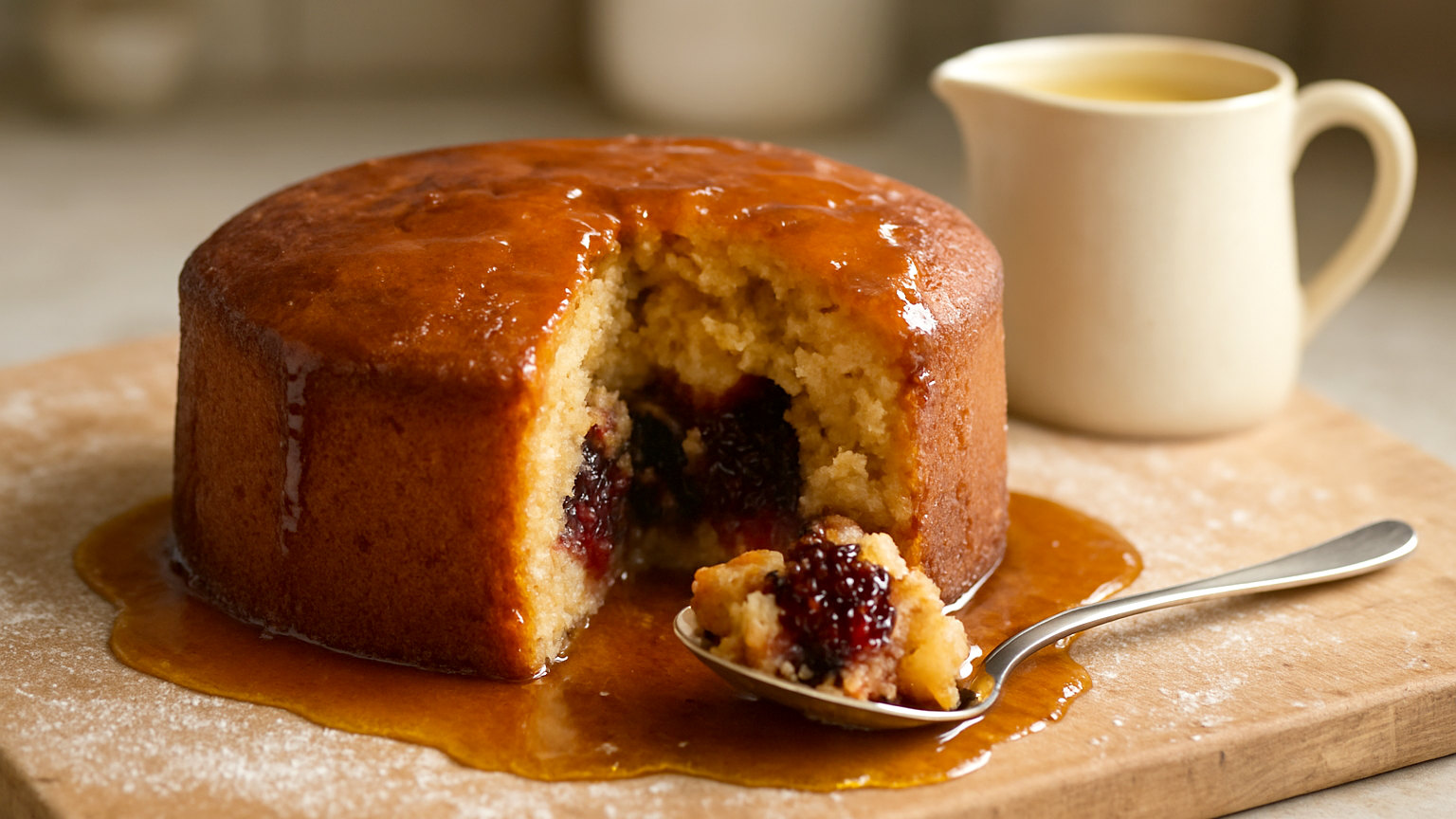
A steamed apple and blackberry sponge has a layer of lightly cooked autumn fruit in the base of the basin and a soft sponge steamed above it. When it is turned out, the deep purple fruit sits on top and its juices soak down into the sponge. It is the best possible use for blackberries picked from a hedgerow in September alongside the first cooking apples.
What ingredients do you need?
Serves 6.
For the fruit
- 2 Bramley apples, peeled, cored and diced
- 200g blackberries
- 75g caster sugar
- 1 tsp ground cinnamon
- 1 tbsp cornflour
For the sponge
- 175g unsalted butter, softened
- 175g caster sugar
- 3 large eggs
- 175g self-raising flour
- 1 tsp baking powder
- 2 tbsp milk
How do you make it?
- Grease a 1.2 litre pudding basin thoroughly with butter.
- Cook the diced apple with the sugar and cinnamon in a covered pan for five minutes, until just softening.
- Stir in the cornflour, take off the heat and fold in the blackberries. Cool for 10 minutes.
- Spoon the fruit into the base of the basin.
- Beat the butter and caster sugar until pale, then beat in the eggs one at a time.
- Fold in the flour, baking powder and milk to a soft dropping consistency.
- Spoon gently over the fruit, leaving 3cm at the top.
- Cover with pleated baking paper and foil, tie securely and steam for one hour 45 minutes.
- Rest for five minutes, then turn out onto a deep plate.
Add the cornflour to the fruit: without it, the juices stay thin and run everywhere when the pudding is turned out, leaving the sponge sitting in a puddle rather than wearing a glossy topping.
How do you stop the sponge going soggy?
Cook the apples briefly first so they release some juice before they go into the basin, thicken what remains with cornflour, and let the fruit cool before the sponge goes on. Warm fruit starts melting the butter in the raw sponge mixture, which makes the underside heavy and greasy.
When is blackberry season?
Wild blackberries ripen in Britain from late July through to the end of September, with the best fruit in late August and early September. Pick berries that are plump, glossy and fully black, avoid bushes beside busy roads, and wash them before using. Frozen blackberries work perfectly well out of season, added straight from frozen.
Can you use other fruit?
Yes. Apple alone is the classic, and plums, damsons, gooseberries and rhubarb all work. Sharp fruit suits the sweet sponge best. For very juicy fruit such as rhubarb, increase the cornflour to two tablespoons. Tinned or frozen fruit is fine, though it should be drained well.
Do you need to cook the apples first?
Yes, briefly. Raw apple takes longer to soften than the sponge takes to cook, so it would stay firm and the pudding would be unbalanced. Five minutes in a covered pan is enough to start it softening without turning it to purée. Blackberries need no pre-cooking at all.
What should you serve with it?
Custard is traditional, and its vanilla works well against the sharp fruit. Pouring cream is lighter, and vanilla ice cream gives the hot and cold contrast that suits any steamed pudding. A little extra blackberry compote spooned over looks striking.
How long does it keep?
It keeps for three days in the fridge and reheats by steaming for 30 minutes. Because of the fresh fruit, it does not keep as long as a plain sponge. It freezes for two months in the basin, covered.
Can you make it in the microwave?
Yes, in about six minutes. Use a microwaveable basin, cover loosely with pierced cling film and cook on high for five to six minutes until risen and just firm. Stand for two minutes before turning out. Cook the fruit on the hob first exactly as described, and let it cool before the sponge goes on, as the microwave will not forgive a warm fruit layer.


