
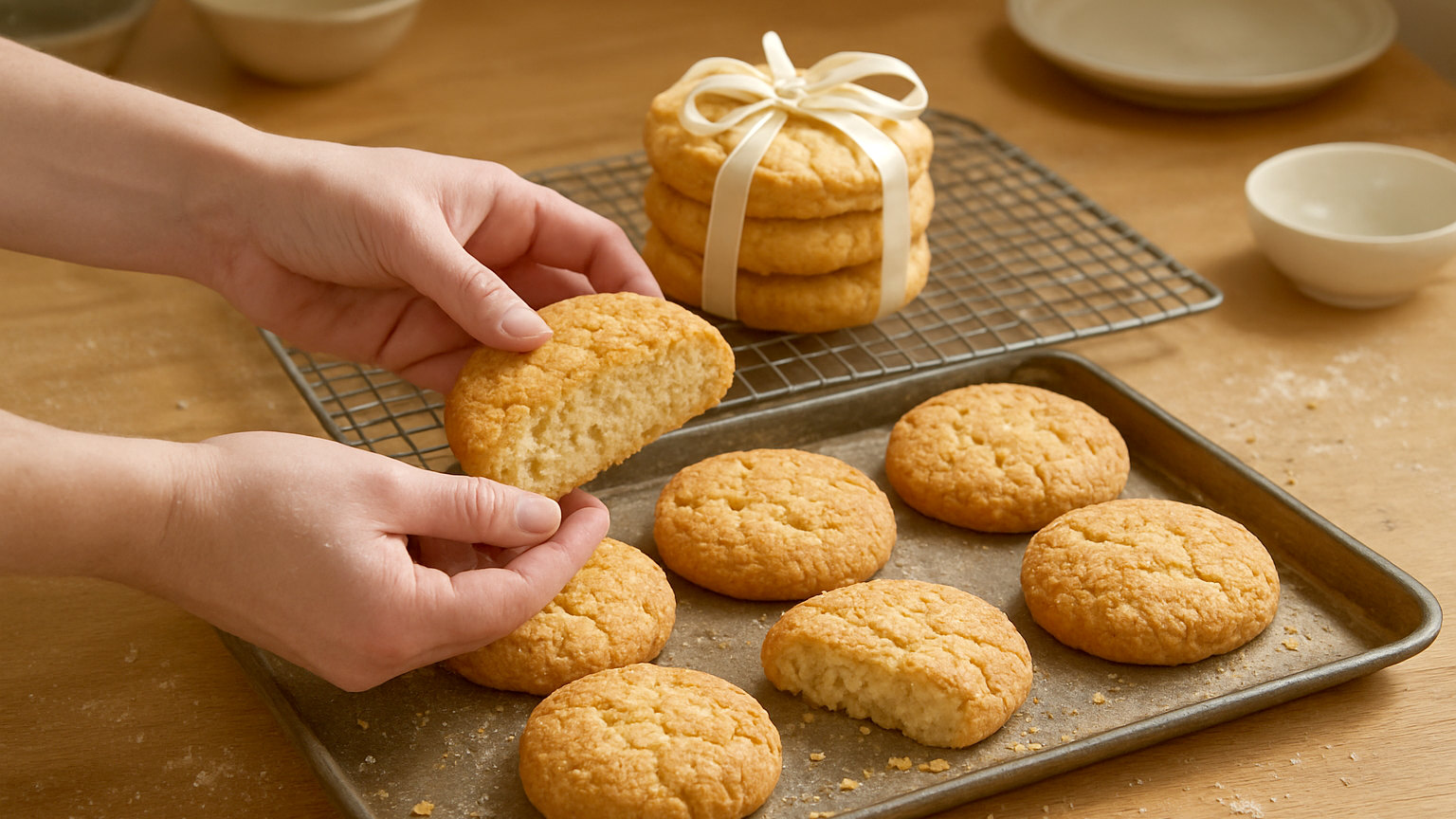
Cornish fairings are crisp, golden ginger biscuits with deeply cracked tops and a warm, complex spice mix. They are noticeably lighter and crisper than a ginger nut, with more cinnamon and mixed spice alongside the ginger. The name comes from the fairings, or gifts, traditionally bought at Cornish fairs, and the biscuits have been made and sold in Cornwall for well over a century.
What are fairings?
A fairing was originally any small gift or trinket bought at a fair, and in Cornwall the word came to mean these spiced ginger biscuits in particular. They were sold from stalls at fairs across the county and given as presents. A bakery in Truro has been associated with them since the nineteenth century, and tins of Cornish fairings are still sold across the West Country today.
What ingredients do you need?
Makes about 20 biscuits.
- 200g plain flour
- 2 tsp baking powder
- 1 tsp bicarbonate of soda
- 2 tsp ground ginger
- 1 tsp ground cinnamon
- 1 tsp mixed spice
- 100g unsalted butter, cubed
- 100g caster sugar
- 4 tbsp golden syrup
How do you make Cornish fairings?
- Heat the oven to 200°C (180°C fan), gas 6. Line two baking trays with baking paper.
- Sift the flour, baking powder, bicarbonate of soda and all the spices into a bowl.
- Rub in the butter with your fingertips until the mixture resembles fine breadcrumbs.
- Stir in the caster sugar.
- Warm the golden syrup gently until runny, pour it into the bowl and mix to a firm dough.
- Roll into balls slightly smaller than a walnut, about 20g each.
- Place well apart on the trays, at least 6cm, as they spread considerably.
- Bake for 8 minutes, then open the oven and bang the trays firmly down on the shelf.
- Bake for another 3 to 4 minutes, until deep golden and cracked.
- Cool on the tray for five minutes, then transfer to a wire rack.
Bang the trays: knocking the trays down partway through baking collapses the risen biscuits and creates the deep cracks that fairings are known for. It feels wrong, and it works.
Why do they crack so dramatically?
The generous quantity of baking powder and bicarbonate of soda makes the biscuits rise quickly and then fall as they set, splitting the surface. Banging the trays exaggerates the effect. The cracks are not just decorative: they increase the surface area and help the biscuits dry out, which is what makes them so crisp.
How is the spice mix different from ginger nuts?
Ginger nuts rely almost entirely on ground ginger with a deep treacle background. Cornish fairings use a more balanced mix of ginger, cinnamon and mixed spice, with golden syrup rather than black treacle. The result is lighter in colour and more fragrant, with the warm spices as noticeable as the ginger itself.
Why golden syrup rather than treacle?
Golden syrup is pale and mellow, which keeps the biscuits light in colour and lets the spice mix come through. Black treacle would darken them considerably and add a bitter note that competes with the cinnamon and mixed spice. A teaspoon of treacle can be added for depth, but no more.
Why do they need so much space on the tray?
Fairings spread to two or three times their raw size. Six balls to a large tray is plenty. If they run into one another you can cut them apart while warm, but the edges will be soft and uneven rather than crisp all the way round.
How long do they keep?
Cornish fairings keep for up to two weeks in an airtight tin and stay crisp, which is exactly why they travelled well as fairground gifts. If they soften in damp weather, refresh them in an oven at 150°C (130°C fan) for five minutes and cool them on a rack.
What should you serve them with?
Fairings are a tea biscuit first and foremost, and their crispness suits dunking. They are also good crumbled over ice cream or stewed apple, and a few crushed into a cheesecake base gives a warm, gingery flavour that works well with lemon fillings.


