
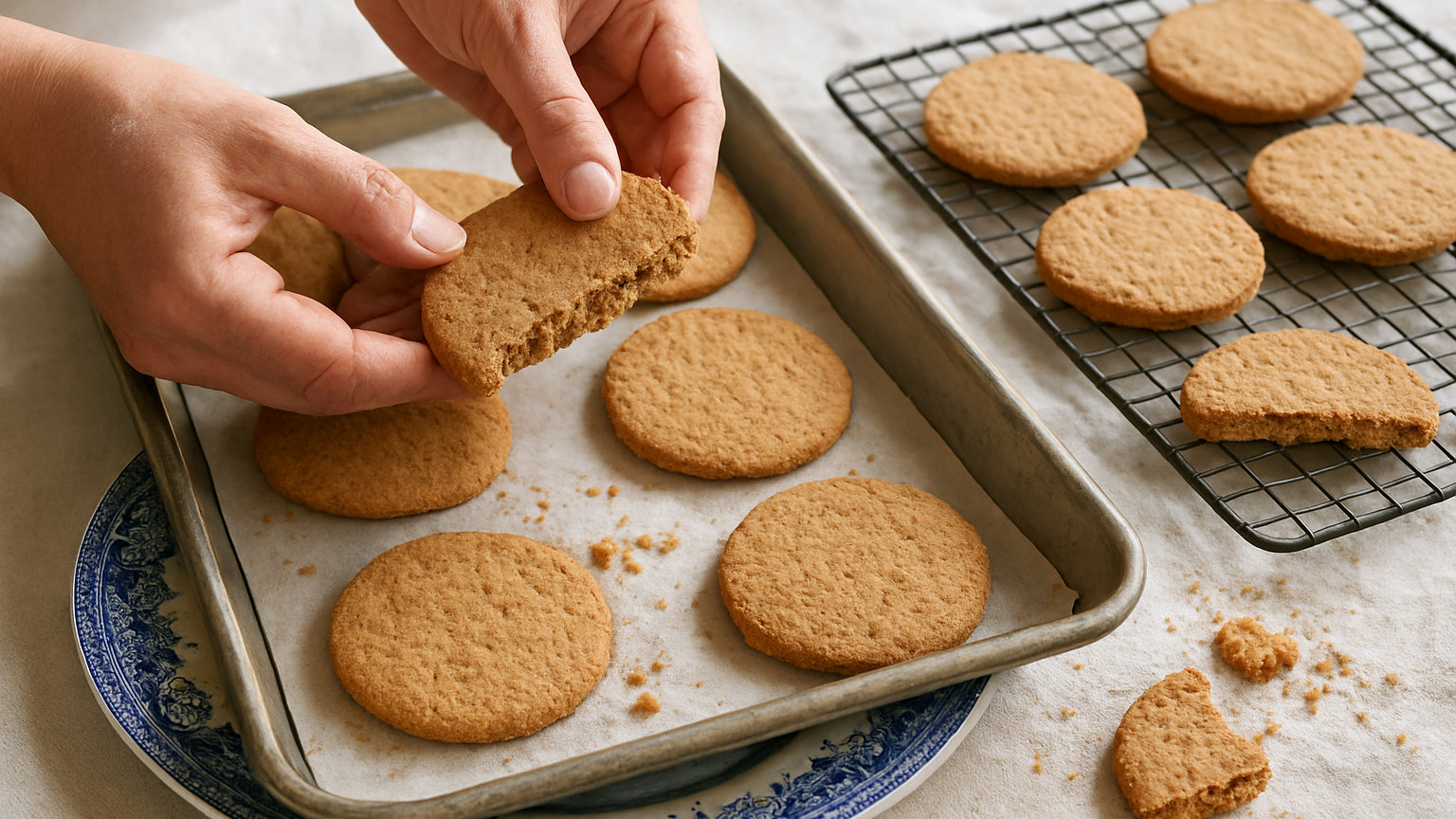
Homemade digestive biscuits are wholemeal, lightly sweet and faintly malty, with a crumbly, sandy texture. They are simple to make from store cupboard ingredients, and the result is noticeably fresher and more wheaty than the packet version. They are the foundation of countless cheesecake bases and are perfectly good on their own with cheese or a cup of tea.
Why are they called digestive biscuits?
The name dates from the nineteenth century, when the biscuits were developed in Scotland and the bicarbonate of soda in them was believed to aid digestion. That belief has not held up, and digestive biscuits have no particular digestive benefit. Under current food labelling rules in Britain, the name survives as a traditional term rather than a health claim.
What ingredients do you need?
- 150g wholemeal flour
- 100g plain flour
- 75g medium oatmeal or porridge oats, blitzed
- 75g light brown soft sugar
- 1 tsp baking powder
- ½ tsp bicarbonate of soda
- ½ tsp fine salt
- 125g cold unsalted butter, cubed
- 4 to 5 tbsp cold milk
How do you make digestive biscuits?
- Blitz the oats briefly in a food processor until coarsely ground, leaving some texture.
- Mix with both flours, the brown sugar, baking powder, bicarbonate of soda and salt.
- Rub in the cold butter with your fingertips until the mixture looks like breadcrumbs.
- Add the milk a tablespoon at a time, mixing until the dough just comes together.
- Wrap and chill for 30 minutes.
- Heat the oven to 180°C (160°C fan), gas 4, and line two baking trays.
- Roll the dough out to 4mm thick between two sheets of baking paper and cut 7cm rounds.
- Prick each biscuit several times with a fork and place on the trays.
- Bake for 12 to 15 minutes, until evenly golden brown.
- Cool on the tray for five minutes, then transfer to a wire rack. They crisp as they cool.
Roll them thin: 4mm is thinner than it feels right, but a thick digestive stays soft in the middle and never develops the proper snap.
What gives them their flavour?
The wholemeal flour and oatmeal provide the wheaty, nutty background, and the brown sugar adds a light caramel note. The bicarbonate of soda contributes the faint malty, slightly savoury flavour that makes a digestive taste like a digestive rather than a plain sweet biscuit. A good pinch of salt is important too.
Should you use oatmeal or oats?
Medium oatmeal gives the most authentic texture and is worth buying if you make these often. Porridge oats blitzed briefly in a processor are an excellent substitute and are more likely to be in the cupboard. Do not grind them to flour, as the small pieces are what give the biscuit its slightly rough, sandy bite.
How do you make chocolate digestives?
Melt 200g of dark or milk chocolate and spread a thin layer over the flat base of each cooled biscuit, then set them chocolate side up on a rack. Drag a fork across the chocolate in wavy lines once it begins to firm. Leave to set completely at room temperature rather than in the fridge, which can dull the chocolate.
Why prick the biscuits?
Pricking lets steam escape so the biscuits stay flat rather than puffing into domes. It also gives the familiar dotted appearance. Use a fork and go right through the dough, making the holes before the biscuits go into the oven.
How long do they keep?
Homemade digestives keep for a week in an airtight tin, though they soften a little faster than shop-bought ones because they contain no preservatives. Refresh them in a low oven for five minutes. The raw dough freezes for three months, either as a disc or as cut rounds ready to bake.
What else can you use them for?
Crushed digestives are the standard base for cheesecakes, banoffee pie and chocolate tarts, mixed with melted butter and pressed into a tin. They are also traditionally served with cheese, particularly a sharp Cheddar or a blue cheese, where their wheaty flavour works better than a sweet biscuit.


