
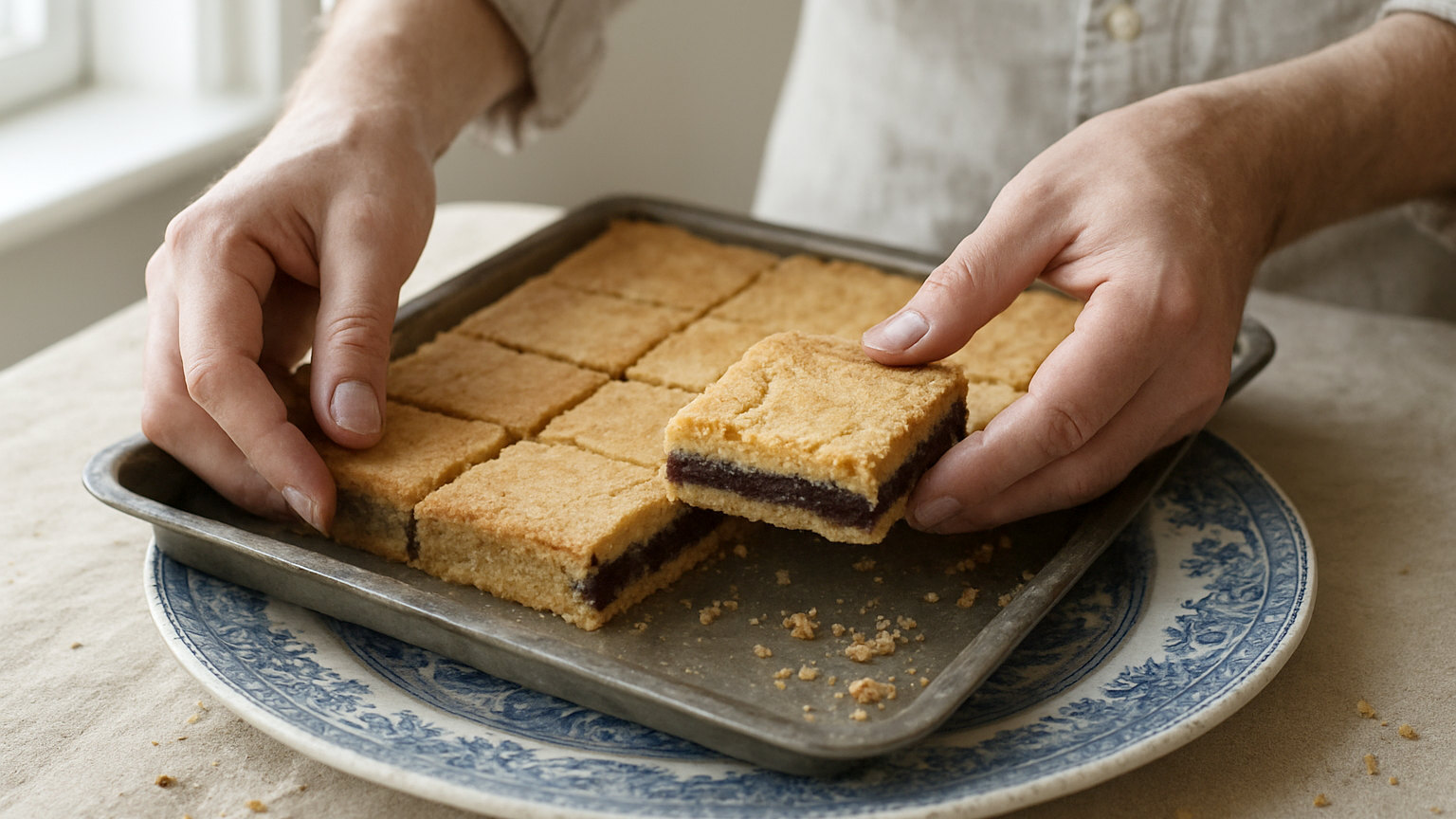
Garibaldi biscuits are thin, crisp, lightly sweet biscuits with a layer of currants sandwiched between two sheets of dough and rolled flat. They are known affectionately in Britain as squashed fly biscuits, which describes the appearance rather better than it sells them. Homemade ones are crisper and more buttery than the packet version, and they are surprisingly simple to make.
Where does the name come from?
The biscuit is named after Giuseppe Garibaldi, the Italian general and a central figure in the unification of Italy, who was widely celebrated in Britain and visited in the 1860s. A London biscuit manufacturer produced a biscuit in his honour, and the name stuck. It remains one of the few British biscuits named after a foreign political figure.
What ingredients do you need?
Makes about 20 biscuits.
- 225g plain flour
- 50g caster sugar, plus extra for sprinkling
- 1 tsp baking powder
- A pinch of fine salt
- 75g cold unsalted butter, cubed
- 4 to 5 tbsp cold milk
- 200g dried currants
- 1 beaten egg, to glaze
How do you make garibaldi biscuits?
- Rub the butter into the flour, sugar, baking powder and salt until it resembles breadcrumbs.
- Add the milk a tablespoon at a time and mix to a firm dough. Wrap and chill for 20 minutes.
- Heat the oven to 200°C (180°C fan), gas 6, and line two baking trays.
- Divide the dough in two and roll each piece into a rectangle about 2mm thick, on a lightly floured surface.
- Scatter the currants evenly over one rectangle, leaving a small border.
- Lay the second rectangle on top and press down firmly all over.
- Roll gently over the top with the rolling pin to flatten the currants into the dough and seal the layers.
- Trim the edges and cut into rectangles about 4cm by 7cm.
- Transfer to the trays, brush with beaten egg and sprinkle with caster sugar.
- Bake for 10 to 12 minutes, until golden and crisp. Cool on a wire rack.
Roll them very thin: 2mm for each sheet feels too thin, but the currants add bulk and the finished biscuit should snap. Thick garibaldis are doughy and disappointing.
Why are they called squashed fly biscuits?
The nickname comes from the appearance of the flattened currants showing through the thin pale dough. It is used affectionately and is widely understood in Britain. Children often find it funnier than adults, and it is one of the best-known biscuit nicknames in the country.
Should you soak the currants?
It is not necessary, and soaked currants make the dough wet and harder to roll. If yours are very dry or have been in the cupboard a long time, cover them with boiling water for five minutes, then drain and pat them thoroughly dry before using.
How do you stop the currants falling out?
Leave a clear border around the edge when scattering them, press the top sheet down firmly, and roll over the whole thing with a rolling pin to bed the fruit into the dough. Cutting the biscuits with a sharp knife rather than a cutter also helps keep the edges sealed.
Why brush with egg?
The egg glaze gives the biscuits their golden, slightly glossy finish and holds the sprinkled sugar in place. It also helps seal the cut edges. Brush it thinly, as too much pools at the edges and can make them soft.
How long do they keep?
Garibaldi biscuits keep for up to two weeks in an airtight tin and stay crisp, as they contain relatively little butter. If they soften, refresh them for five minutes in an oven at 150°C (130°C fan). They freeze well for three months.
Can you use other dried fruit?
Currants give the traditional look, as they are small and flatten neatly between the sheets of dough. Chopped raisins or sultanas work if you cut them small, and finely chopped dried apricots or cranberries make an unusual but good variation. Avoid anything sticky, which makes the layers hard to seal.


