
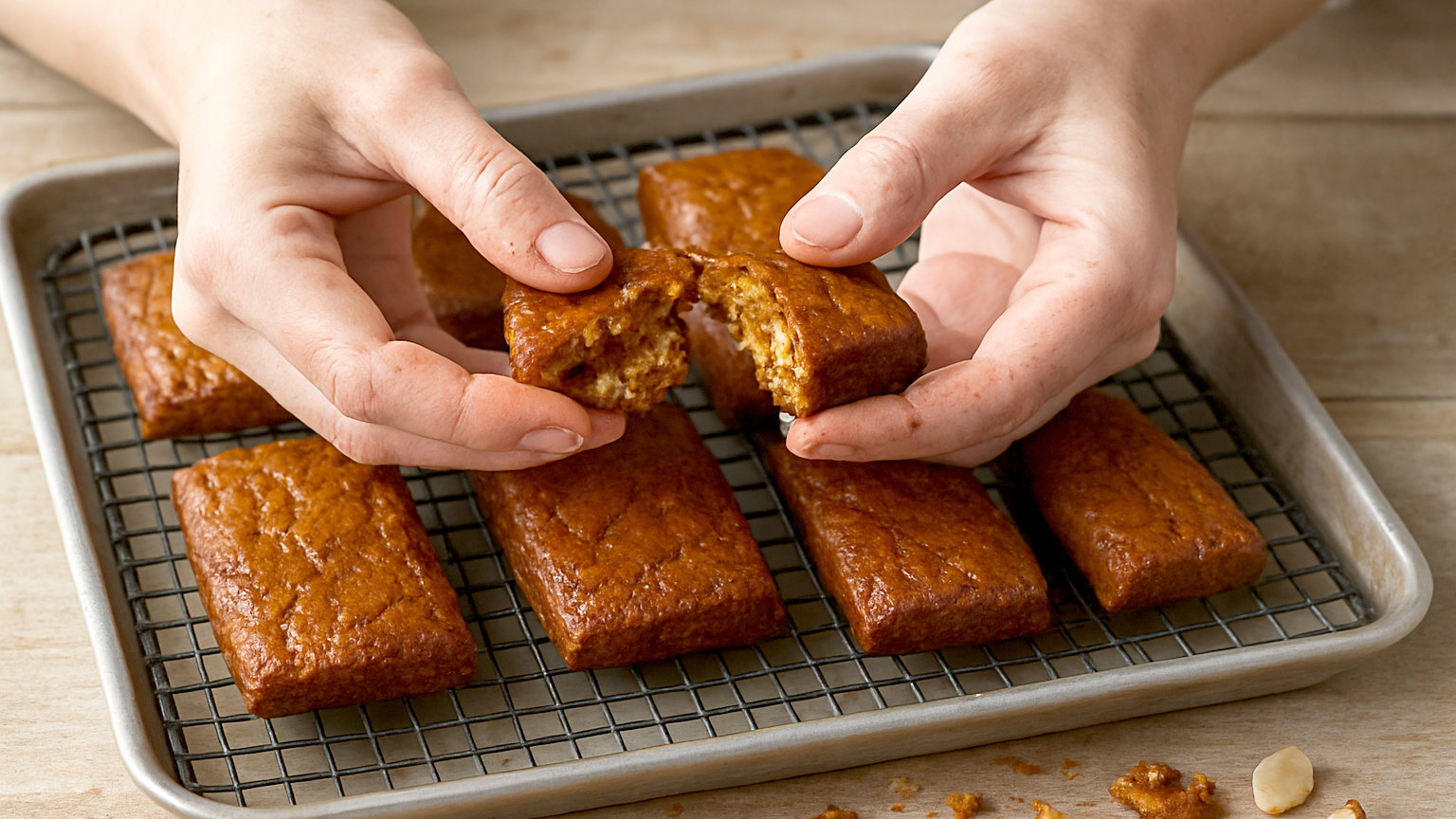
Ginger nuts are hard, crunchy ginger biscuits with a deep, dark flavour from golden syrup and treacle and a snap that makes them the classic dunking biscuit. Despite the name they contain no nuts; nut here means hard, as in hard as a nut. Homemade ones have a much stronger ginger hit than shop-bought, and the cracked, crazed tops happen naturally as they spread and set.
Why are they called ginger nuts?
The nut in the name refers to the hardness of the biscuit rather than any nut in the recipe. The same usage appears in other old British food names. This matters for anyone with a nut allergy, who can eat ginger nuts safely as long as the ingredients and factory have been checked, though the name understandably causes hesitation.
What ingredients do you need?
- 350g self-raising flour
- 2 tbsp ground ginger
- 1 tsp ground cinnamon
- 1 tsp bicarbonate of soda
- 175g light brown soft sugar
- 125g unsalted butter
- 4 tbsp golden syrup
- 1 tbsp black treacle
- 1 large egg, beaten
- Demerara sugar, for rolling
How do you make ginger nuts?
- Heat the oven to 180°C (160°C fan), gas 4. Line two baking trays with baking paper.
- Sift the flour, ground ginger, cinnamon and bicarbonate of soda into a large bowl, then stir in the brown sugar.
- Melt the butter, golden syrup and black treacle together in a pan, then cool for five minutes.
- Pour into the dry ingredients with the beaten egg and mix to a firm dough.
- Roll into walnut-sized balls, about 25g each, and roll each one in demerara sugar.
- Place well apart on the trays, at least 5cm, as they spread a great deal.
- Bake for 12 to 15 minutes, until deep golden and cracked across the top.
- Leave on the tray for five minutes, then transfer to a wire rack. They firm up as they cool.
Leave plenty of space: these biscuits spread to more than twice their size. Eight to a tray is plenty, and crowding them makes one large sheet rather than individual biscuits.
What makes them so crunchy?
Three things. The high proportion of sugar and syrup sets hard as it cools, like a soft toffee. The dough is relatively dry, with no milk or extra liquid. And they are baked until fully golden, which drives off moisture. A biscuit taken out pale and soft will stay chewy rather than snapping.
Why do the tops crack?
The bicarbonate of soda makes the biscuits rise and spread quickly in the oven. As the surface sets before the middle has finished expanding, it splits into the crazed, cracked pattern that ginger nuts are known for. Rolling the balls in demerara sugar exaggerates the effect and adds crunch.
Can you make them softer and chewier?
Yes. Bake them for two or three minutes less, taking them out when the edges are set but the centres still look slightly underdone. Adding an extra tablespoon of golden syrup also helps. Stored in an airtight tin with a slice of apple, they soften further within a day.
How strong should the ginger be?
Two tablespoons of ground ginger gives a proper, warming heat, considerably stronger than most shop-bought versions. Reduce it to one tablespoon for a milder biscuit. For extra depth, add 50g of finely chopped stem ginger to the dough, or a pinch of ground black pepper, which sharpens the heat.
How long do they keep?
Ginger nuts keep for two weeks in an airtight tin and stay crunchy, as the syrup helps preserve them. If they soften, refresh them for five minutes in an oven at 150°C (130°C fan). The raw dough freezes well as rolled balls, ready to bake from frozen with an extra two minutes.
Are they suitable for dunking?
Ginger nuts are widely considered the best dunking biscuit, because the hard, dry structure holds together in hot tea for several seconds before softening. Dunk for about three seconds and lift promptly. A biscuit that has gone soft in the tin will disintegrate immediately, which is another reason to keep them properly sealed.


