
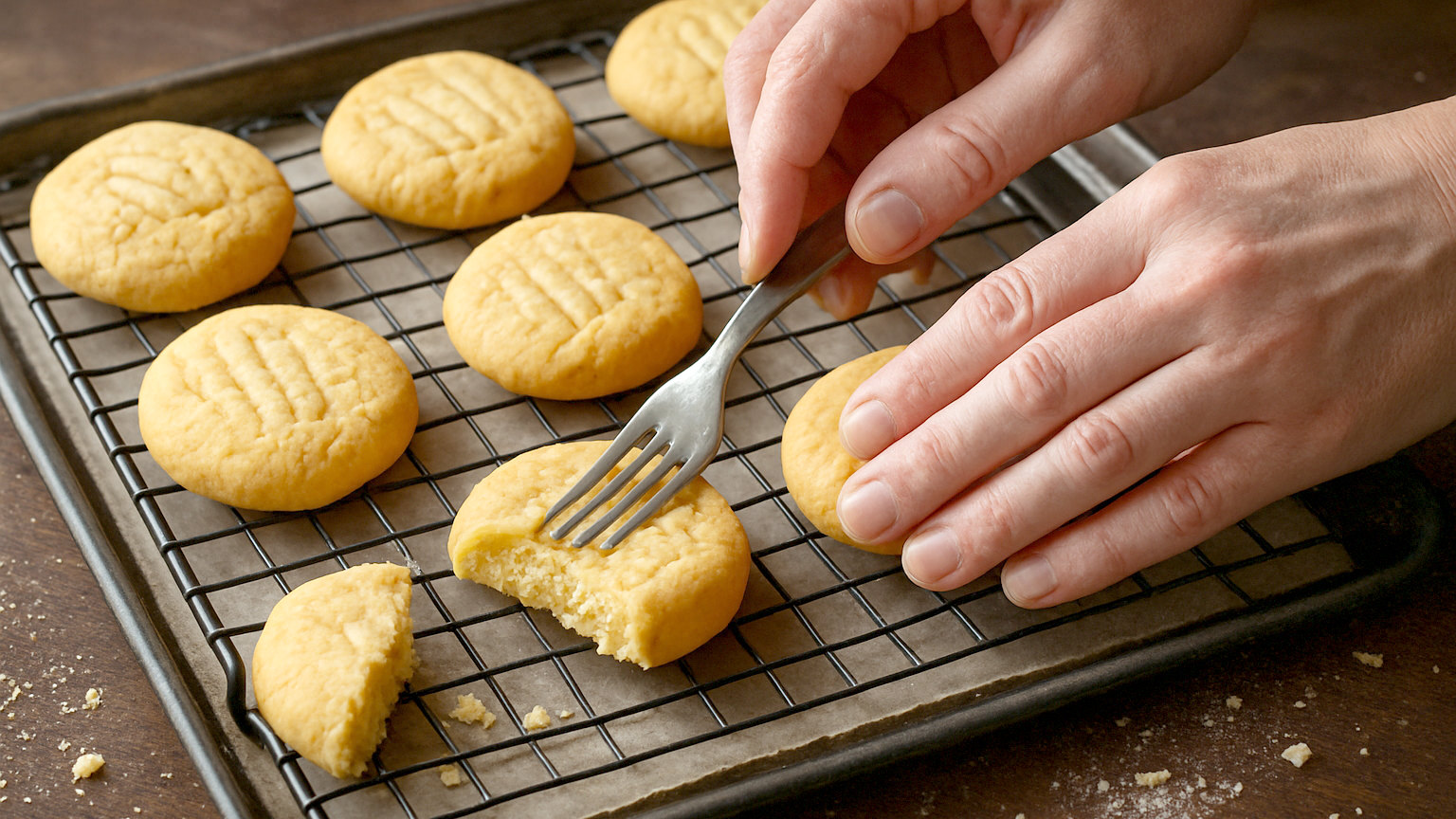
Melting moments are soft, buttery biscuits rolled in porridge oats before baking and finished with half a glacé cherry pressed into the top. The oats toast in the oven and give a nutty crunch around a crumbly, melting centre. They are an old-fashioned British tea-time biscuit that appears in countless community cookbooks, and they are one of the easiest biscuits to make with children.
What are melting moments?
In Britain, melting moments are rolled in oats and topped with a cherry, giving a rustic, slightly craggy biscuit. In Australia and New Zealand, the same name describes something quite different: a pair of very pale, smooth biscuits made with cornflour and sandwiched with buttercream. Both are short and crumbly, which is where the name comes from, but the recipes are not related.
What ingredients do you need?
Makes about 20 biscuits.
- 175g unsalted butter, softened
- 125g caster sugar
- 1 large egg yolk
- 1 tsp vanilla extract
- 225g self-raising flour
- 75g porridge oats
- 10 glacé cherries, halved
How do you make melting moments?
- Heat the oven to 180°C (160°C fan), gas 4. Line two baking trays with baking paper.
- Beat the butter and caster sugar together until pale and creamy.
- Beat in the egg yolk and vanilla extract.
- Sift in the self-raising flour and mix to a soft dough.
- Put the porridge oats in a shallow bowl.
- Roll the dough into walnut-sized balls, about 20g each, then roll each one in the oats to coat.
- Place well apart on the trays, as they spread.
- Flatten each one slightly and press half a glacé cherry into the centre.
- Bake for 12 to 15 minutes, until the oats are golden and the edges are set.
- Leave on the tray for five minutes, then transfer to a wire rack.
Chill if the dough is sticky: this is a soft mixture, and warm hands make it hard to roll. Ten minutes in the fridge firms it enough to shape neatly.
Why roll them in oats?
The oats give the biscuits their distinctive look and add a nutty, toasted flavour and a little crunch against the soft centre. They also stop the biscuits sticking to each other in the tin. Porridge oats are the right size; jumbo oats are too large and fall off, while fine oatmeal disappears into the dough.
Do you have to use glacé cherries?
Not at all, though they are traditional and give the biscuits their familiar look. A blanched almond, a piece of walnut, a small square of chocolate or simply a thumbprint filled with jam after baking all work well. Rinse and dry glacé cherries before using, as the syrup makes them slippery.
Why use only the egg yolk?
The yolk adds richness and helps bind the dough without adding much liquid, which keeps the biscuits short and crumbly. A whole egg makes the mixture wetter and the finished biscuit more cake-like. Keep the white for an Easter biscuit glaze or a small meringue.
Why do they spread so much?
Melting moments contain a high proportion of butter and no chilling step in the traditional recipe, so they relax and spread as the butter melts. That is expected and gives the flat, craggy shape. If they spread more than you would like, chill the shaped balls for 15 minutes before baking.
Can you make them with plain flour?
Yes, but add a teaspoon of baking powder, as self-raising flour already contains a raising agent. Without it the biscuits are denser and flatter. The raising agent gives them their slightly puffed, soft centre.
How long do they keep?
Melting moments keep for a week in an airtight tin and stay soft. They freeze well for three months, and the raw dough can be frozen as rolled, oat-coated balls ready to bake from frozen with an extra two minutes.
Can you sandwich them together?
Yes, and this brings the British version closer to its Australian namesake. Leave off the cherries, bake the biscuits slightly flatter, and sandwich them in pairs with vanilla buttercream or lemon curd once cool. Filled biscuits should be eaten within three days.


