
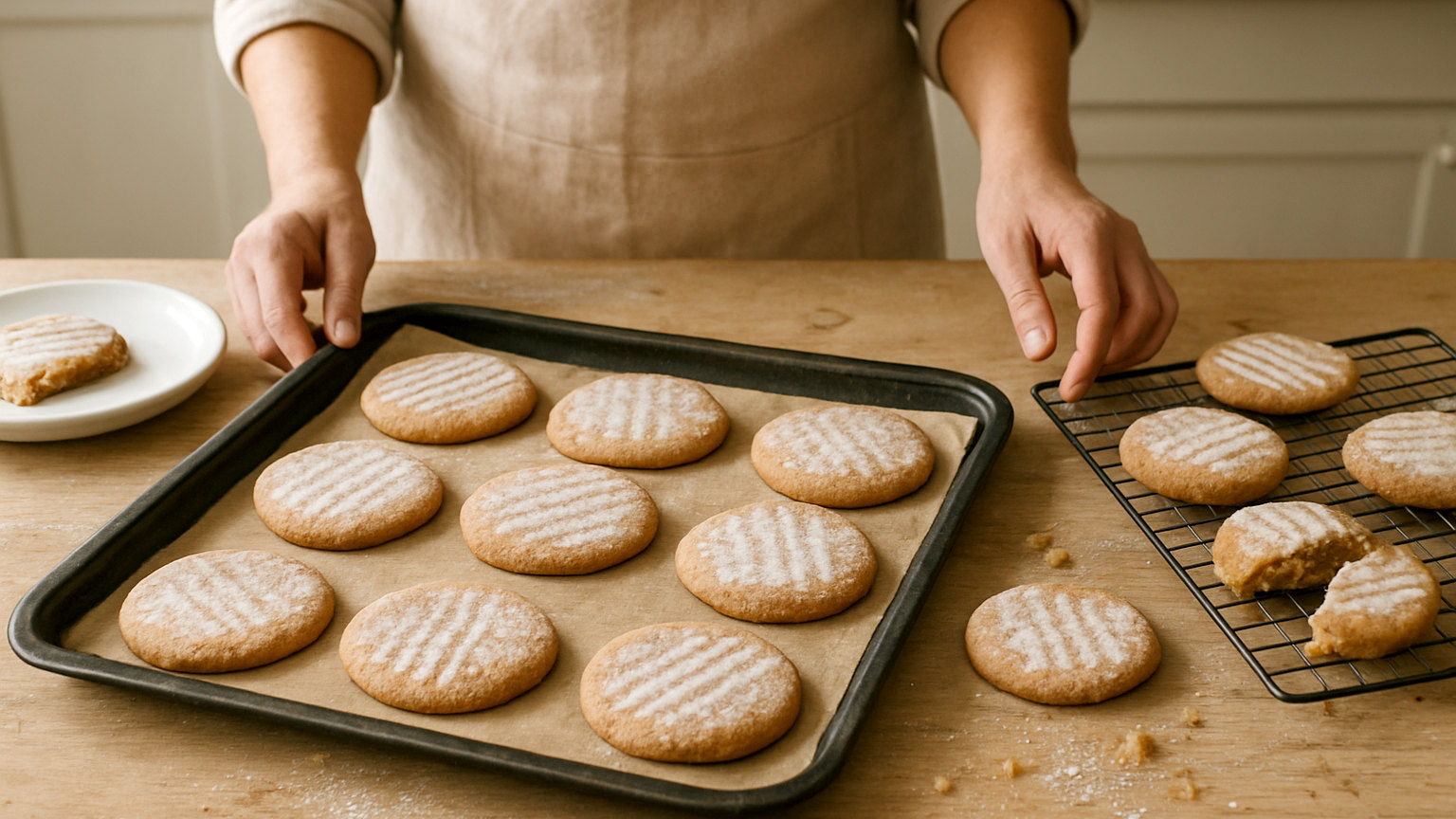
Easter biscuits are soft, lightly spiced biscuits studded with currants and scented with lemon, brushed with egg white and sprinkled with sugar before baking so they develop a crisp, frosted top. They are a West Country tradition, particularly associated with Somerset and Devon, and are given and eaten over the Easter weekend. They are quicker and simpler than most Easter baking.
What makes them Easter biscuits?
The spices and currants connect them to a family of British Easter baking that includes hot cross buns and Simnel cake, all of which use dried fruit and warm spice. Traditionally they were given in bundles of three, tied with ribbon, as an Easter gift. Some old West Country recipes flavour them with oil of cassia, a spice related to cinnamon, though most modern versions use mixed spice.
What ingredients do you need?
Makes about 18 biscuits.
- 200g unsalted butter, softened
- 150g caster sugar, plus extra for sprinkling
- 1 large egg, separated
- 350g plain flour
- 1 tsp mixed spice
- ½ tsp ground cinnamon
- Finely grated zest of 1 lemon
- 100g dried currants
- 1 to 2 tbsp milk
How do you make Easter biscuits?
- Beat the butter and caster sugar together until pale and fluffy.
- Beat in the egg yolk, keeping the white for later.
- Sift in the flour, mixed spice and cinnamon, then add the lemon zest and currants.
- Mix to a firm dough, adding a little milk if it is too dry.
- Wrap and chill for 30 minutes.
- Heat the oven to 180°C (160°C fan), gas 4, and line two baking trays.
- Roll out to 5mm thick and cut out rounds with a 7cm fluted cutter.
- Place on the trays, brush with lightly beaten egg white and sprinkle generously with caster sugar.
- Bake for 12 to 15 minutes, until just golden at the edges.
- Cool on the tray for five minutes, then transfer to a wire rack.
Brush lightly with egg white: a thin coat sets into a delicate, crisp, frosted layer with the sugar. Too much makes the tops sticky and uneven.
Why brush with egg white and sugar?
The egg white dries in the oven into a thin, glassy layer that holds the sugar in place and gives the biscuits their characteristic sparkling, slightly crunchy top. It is the same technique used on some traditional shortbread and Shrewsbury biscuits, and it takes only a moment.
Should you use currants or other dried fruit?
Currants are traditional and their small size suits a biscuit, distributing evenly without making it hard to cut out neat shapes. Sultanas and raisins are larger and can tear the dough, so chop them if you use them. Mixed peel is a good addition for a more fragrant biscuit, in place of some of the currants.
Why chill the dough?
Chilling firms the butter, which stops the biscuits spreading too much and keeps the fluted edges sharp. It also relaxes the dough so it rolls without shrinking back. Thirty minutes is enough; if the dough has been in the fridge overnight, let it sit for 10 minutes before rolling.
How thick should you roll them?
Five millimetres gives a biscuit that is crisp at the edges and slightly soft in the middle, which is the traditional texture. Rolled thinner they become crisp all the way through, which is pleasant but less characteristic. Keep the thickness even so they bake at the same rate.
Can you make them without spice?
Yes. A plain lemon and currant biscuit is very good, and worth making for anyone who dislikes mixed spice. Increase the lemon zest to two lemons for more flavour, or add a teaspoon of vanilla extract. Orange zest works well too, particularly with a pinch of cinnamon.
How long do they keep?
Easter biscuits keep for a week in an airtight tin, though they are best in the first few days while the sugar top is still crisp. They freeze for up to three months, either baked or as cut rounds ready to bake from frozen with an extra two minutes.


