
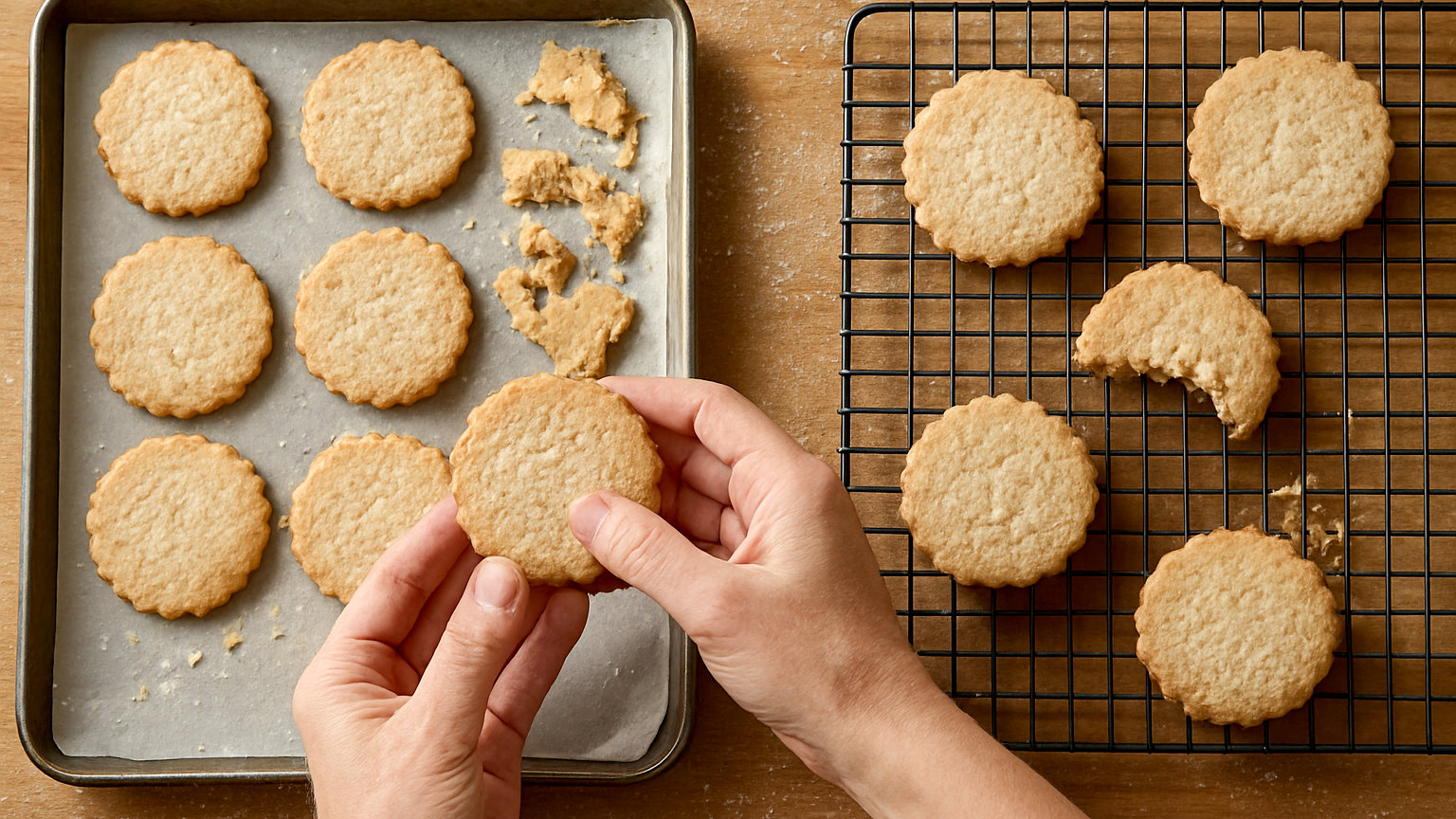
Shrewsbury biscuits are crisp, buttery biscuits scented with lemon zest, cut with a fluted cutter and sprinkled with sugar. Some versions add caraway seeds or currants. They are named after the Shropshire town and are among the oldest named biscuits in England, appearing in cookery writing and in literature from the seventeenth century onwards.
How old are they?
References to Shrewsbury cakes, as they were then called, appear in English writing from the seventeenth century, and the biscuits were already well known enough by then to be sold as a local speciality. The word cake at that time covered many small baked goods that we would now call biscuits. The recipe has changed little: butter, sugar, flour, egg and flavouring.
What ingredients do you need?
Makes about 20 biscuits.
- 175g unsalted butter, softened
- 175g caster sugar, plus extra for sprinkling
- 1 large egg
- Finely grated zest of 1 lemon
- 350g plain flour
- A pinch of fine salt
- 1 tsp caraway seeds, optional
- 75g dried currants, optional
How do you make Shrewsbury biscuits?
- Beat the butter and caster sugar together until pale and creamy.
- Beat in the egg and the lemon zest.
- Sift in the plain flour and salt, and add the caraway seeds or currants if using.
- Mix to a firm dough, then wrap and chill for 30 minutes.
- Heat the oven to 180°C (160°C fan), gas 4, and line two baking trays.
- Roll out to 5mm thick on a lightly floured surface.
- Cut out rounds with a 6cm fluted cutter and place on the trays.
- Sprinkle each biscuit with a little caster sugar.
- Bake for 12 to 15 minutes, until pale golden at the edges.
- Cool on the tray for five minutes, then transfer to a wire rack to crisp.
Use a fluted cutter: the scalloped edge is part of what identifies a Shrewsbury biscuit, and it also strengthens the rim so the biscuits are less likely to break in the tin.
Should you add caraway seeds?
Caraway is the older, more traditional flavouring and gives the biscuits a warm, faintly aniseed note that many people find surprising in a sweet biscuit. It was common in British baking until the twentieth century, when tastes moved away from it. Start with one teaspoon if you are unsure, or leave it out entirely and rely on lemon.
Are they the same as Easter biscuits?
They are close relatives. Both are rolled, cut biscuits flavoured with lemon and often containing currants. Easter biscuits are spiced with mixed spice and cinnamon and glazed with egg white, while Shrewsbury biscuits are plainer, usually crisper and flavoured with lemon or caraway rather than warm spice.
Why are they so crisp?
The dough contains a whole egg and a relatively high proportion of flour to butter, which gives a firmer biscuit than shortbread. Rolled to 5mm and baked until golden at the edges, they dry out and snap cleanly. Rolled thicker they become softer and more cake-like in the centre.
Can you flavour them differently?
Yes. Orange zest works as well as lemon, and a teaspoon of ground cinnamon or mixed spice makes a warmer biscuit. Some recipes add a spoonful of rosewater, which was a fashionable flavouring when these biscuits were first written down, or a little sherry.
How long do they keep?
Shrewsbury biscuits keep for up to two weeks in an airtight tin and stay crisp. They freeze well for three months, either baked or as cut rounds ready to bake from frozen with an extra two minutes. The dough itself keeps in the fridge for three days.
Can you make them with currants?
Yes, and many traditional recipes include them. Add 75g of dried currants with the flour, which gives a fruitier biscuit closer to an Easter biscuit. Keep the pieces of fruit away from the very edge when you cut the rounds, or they will catch and burn on the tray.
Why does the dough need chilling?
Chilling firms the butter so the fluted edges stay sharp in the oven rather than softening into a rounded shape. It also relaxes the dough so it rolls evenly without shrinking back, which matters when you are cutting a lot of rounds from one sheet.


