
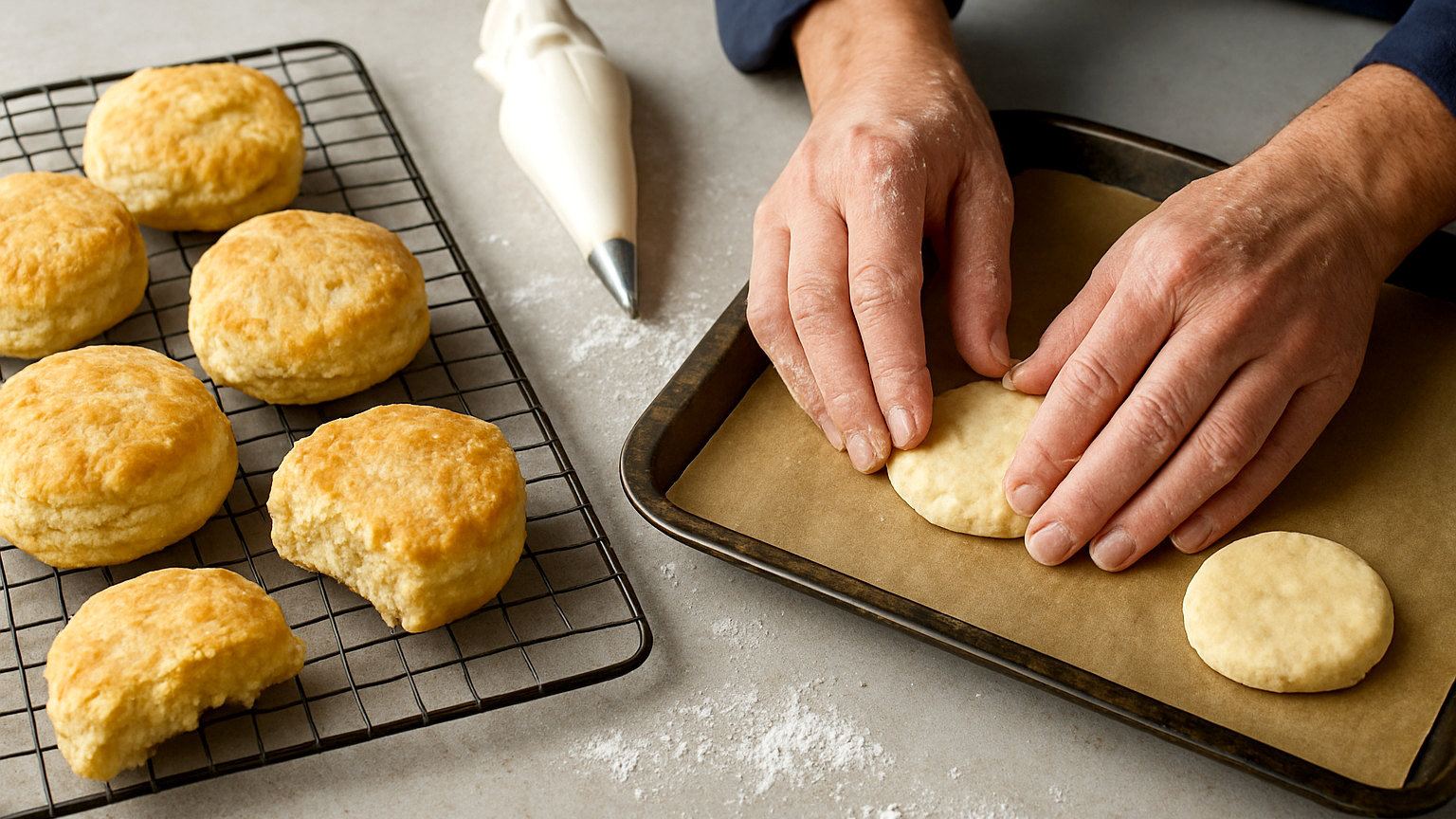
Biscuits spread because the fat in the dough melts before the structure has set. The usual culprits are butter that was too soft, dough that was not chilled, a tray that was still warm from the last batch, or an oven that is running cool. Some spreading is normal and desirable, but a tray of biscuits that merges into one sheet has almost always been let down by one of these.
What makes biscuits spread?
When a biscuit goes into the oven, the butter melts and the dough loosens before the flour and eggs set into a firm structure. The longer that gap lasts, the further the biscuit spreads. Anything that makes the butter melt sooner, or the structure set later, increases spread. Understanding that one principle explains almost every fix below.
What are the common causes?
| What you see | Likely cause | Fix |
|---|---|---|
| Biscuits merge into one sheet | Dough too warm | Chill for 30 minutes before baking |
| Thin, greasy, lacy edges | Butter too soft or melted | Use butter at cool room temperature |
| Spread more on the second batch | Warm baking tray | Cool trays fully between batches |
| Pale and very flat | Oven too cool | Check with an oven thermometer |
| Puffed then collapsed flat | Too much raising agent | Measure with proper spoons |
Does chilling the dough help?
It is the single most effective fix. Chilling firms the butter so it takes longer to melt in the oven, giving the flour time to set. It also lets the flour absorb moisture, which strengthens the dough. Thirty minutes in the fridge is usually enough; for cut-out biscuits, chill again on the tray for 15 minutes just before baking.
Should you reuse a warm baking tray?
No, and this catches out a great many people. Dough placed on a tray that is still hot from the previous batch starts melting before it reaches the oven, so the second tray always spreads more than the first. Keep two or three trays in rotation, or run the hot one under cold water and dry it thoroughly.
Weigh your flour: measuring flour by the cup or by eye can leave a dough short by 20g or more, and too little flour is a frequent cause of excessive spread. Digital scales solve it instantly.
Does the type of sugar matter?
Yes. Caster sugar dissolves quickly and encourages spread, while icing sugar gives a denser biscuit that holds its shape better. Brown sugar is slightly acidic and holds moisture, producing softer, chewier biscuits that spread moderately. If a recipe spreads more than you like, swapping a third of the caster sugar for icing sugar helps.
Can too much raising agent cause it?
It can. Bicarbonate of soda in particular makes dough rise quickly and then collapse, spreading outwards as it falls. Always use proper measuring spoons, levelled off, rather than cutlery. Check the date on the packet too, as old raising agents behave unpredictably.
Is some spreading normal?
Yes. Ginger nuts, Cornish fairings and chocolate chip cookies are all meant to spread, and the cracked, flattened shape is part of what they are. The aim is to control spreading rather than prevent it. Problems only arise when a biscuit that should hold its shape, such as a cut-out or a piped biscuit, loses its edges.
How do you rescue spread biscuits?
While they are still hot from the oven, push the edges back into a neat round with a large cutter or a palette knife, working quickly. They will set as they cool. Biscuits that have merged can be cut apart with a sharp knife within a minute of coming out, before they become brittle.
Does the type of tray matter?
It does. Heavy, light-coloured baking trays conduct heat evenly and give the best results. Thin, dark trays heat quickly and can set the base before the biscuit has spread evenly, while a warped tray tips the melting butter to one side. Line trays with baking paper rather than greasing them, as extra fat encourages spread.


