
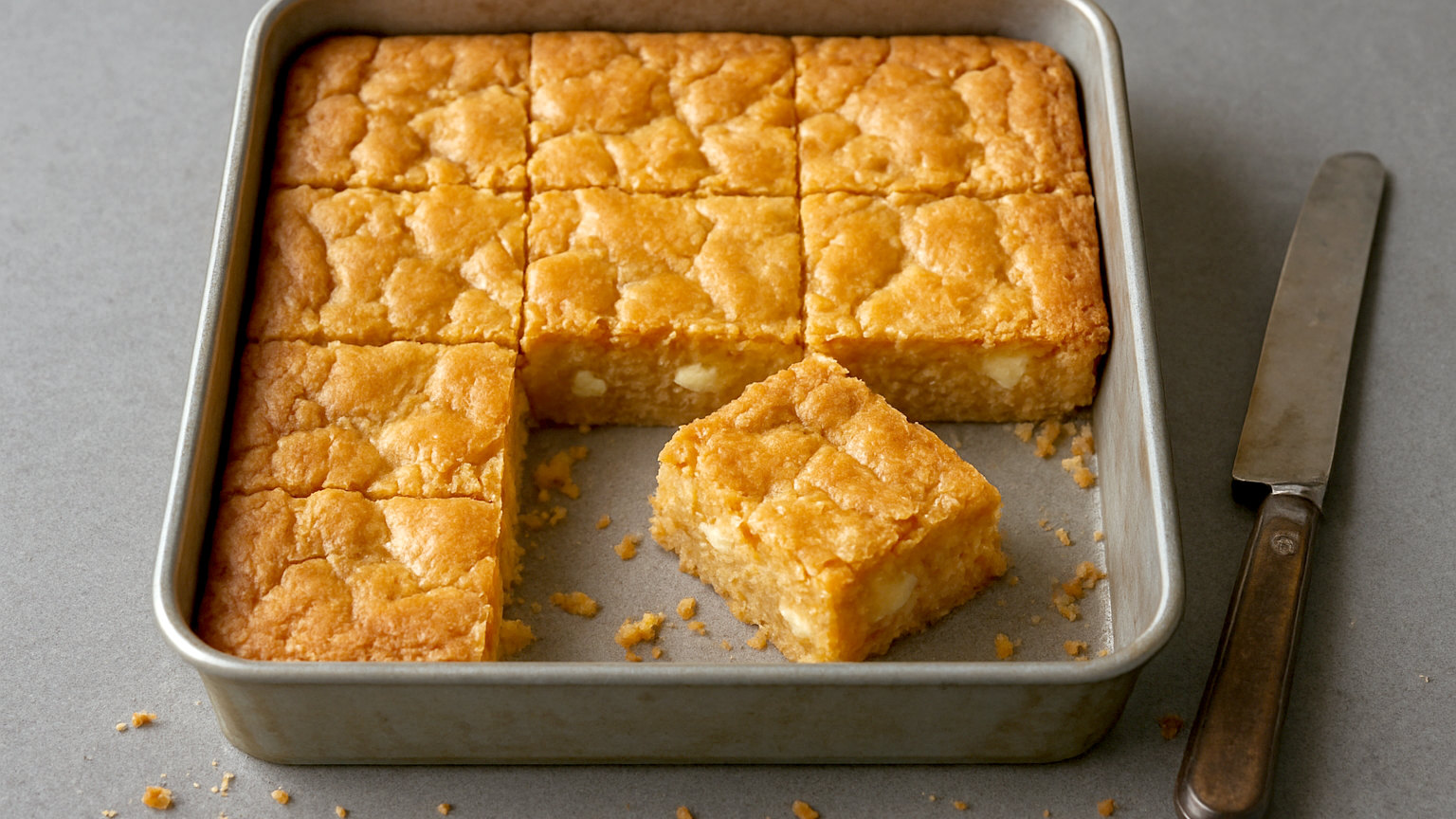
Blondies are the pale cousin of the brownie: chewy, dense squares with a deep caramel and butterscotch flavour that comes from brown sugar and melted butter rather than chocolate. They contain no cocoa at all, which is what distinguishes them. White chocolate chunks and a good pinch of salt keep them from being simply sweet, and they take even less effort than brownies.
How are blondies different from brownies?
A brownie gets its colour and flavour from cocoa and melted chocolate. A blondie gets its flavour from brown sugar and butter, which together taste of butterscotch and caramel. The texture is the same: dense, chewy and fudgy rather than cakey. Some people describe blondies as a chocolate chip cookie in traybake form, which is fairly close.
What ingredients do you need?
Makes 16 blondies.
- 200g unsalted butter, melted and cooled slightly
- 300g light brown soft sugar
- 2 large eggs plus 1 yolk
- 2 tsp vanilla extract
- 250g plain flour
- ¾ tsp fine salt
- 200g white chocolate, chopped into chunks
- Flaked sea salt, to finish
How do you make blondies?
- Heat the oven to 180°C (160°C fan), gas 4. Line a 20cm square tin with baking paper.
- Whisk the melted butter and brown sugar together for a minute, until smooth and glossy.
- Whisk in the eggs, yolk and vanilla until the mixture thickens slightly.
- Fold in the flour and salt until just combined, with no dry streaks.
- Fold in most of the white chocolate chunks.
- Spread into the tin, scatter the remaining chunks over the top and level gently.
- Bake for 25 to 30 minutes, until golden, set at the edges and only just firm in the centre.
- Sprinkle with flaked sea salt and cool completely in the tin before cutting.
Use light brown sugar generously: it is the entire flavour of a blondie. Caster sugar gives a pale, sweet square with none of the butterscotch character.
Why brown sugar rather than caster?
Brown sugar contains molasses, which provides both the caramel flavour and extra moisture. The molasses is slightly acidic and hygroscopic, meaning it holds on to water, which keeps blondies chewy for days. Dark brown sugar gives an even stronger, more treacly flavour if you prefer.
Why add flaked sea salt?
White chocolate and brown sugar together are very sweet, and salt is the simplest correction. A good pinch in the batter and a scattering of flakes on top sharpen the flavour and make the butterscotch notes more noticeable. Without it, blondies can taste one-dimensional.
What else can you add?
Chopped pecans or walnuts are traditional and add welcome bitterness. Dark chocolate chunks give contrast, and a swirl of salted caramel or biscuit spread through the batter works beautifully. Dried cranberries, fudge pieces and chopped stem ginger are all good. Keep additions to about 200g in total.
Should you brown the butter?
It is an excellent option. Browning the butter first, until the milk solids turn golden and smell nutty, deepens the butterscotch flavour considerably. Let it cool for 20 minutes before mixing, and note that browning drives off water, so the batter will be slightly stiffer.
Why are mine cakey?
Too much flour or too much egg. Blondies should have just enough flour to hold together, and a whisked, aerated batter makes them rise like a cake. Mix the eggs in by hand rather than with an electric mixer on high, and weigh the flour. Overbaking also dries them out.
How long do they keep?
Blondies keep for five days in an airtight tin and stay chewy thanks to the brown sugar. They freeze for three months, whole or cut into squares, and defrost at room temperature in about an hour.
Why are they called blondies?
The name came later than the bake itself, coined to describe a pale brownie once brownies were well established. Recipes for brown sugar squares of this kind appear in American cookery writing before the chocolate brownie became widespread, so the blondie is arguably the older of the two, despite being named after its darker relative.


