
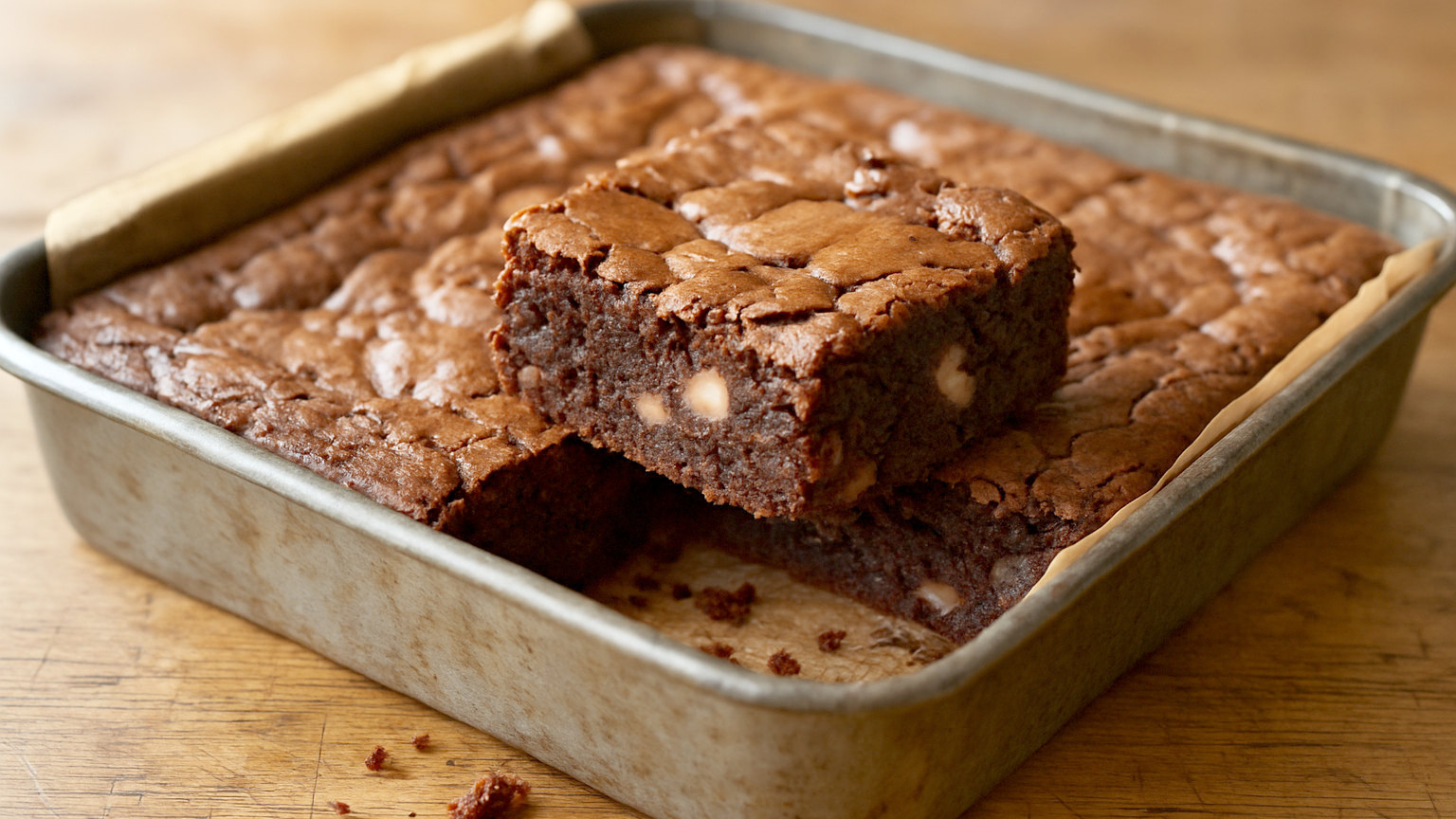
Triple chocolate brownies use three kinds of chocolate: dark chocolate melted into the batter for depth, with milk and white chocolate chunks folded through so they stay as soft, melting pockets. The contrast between the dense dark base and the sweeter chunks is what makes them worth the extra ingredients, and the flecks of white chocolate look striking against the dark crumb.
What ingredients do you need?
Makes 16 brownies.
- 200g dark chocolate, 60 to 70% cocoa solids, chopped
- 175g unsalted butter, cubed
- 3 large eggs
- 275g caster sugar
- 1 tsp vanilla extract
- 100g plain flour
- 30g cocoa powder
- ½ tsp fine salt
- 100g milk chocolate, chopped into chunks
- 100g white chocolate, chopped into chunks
How do you make triple chocolate brownies?
- Heat the oven to 180°C (160°C fan), gas 4. Line a 20cm square tin with baking paper.
- Melt the dark chocolate and butter together in a bowl over barely simmering water, then cool for 10 minutes.
- Whisk the eggs, caster sugar and vanilla with an electric mixer for four to five minutes, until thick and pale.
- Fold in the melted chocolate gently.
- Sift in the flour, cocoa powder and salt, and fold until just combined.
- Toss the milk and white chocolate chunks in a teaspoon of flour, then fold in most of them.
- Pour into the tin, scatter the remaining chunks over the top and level gently.
- Bake for 28 to 32 minutes, until the top is set and papery and the centre still wobbles slightly.
- Cool completely in the tin before lifting out and cutting.
Toss the chunks in flour: a light coating stops them sliding straight to the bottom of the tin, where they burn against the base rather than melting into pockets.
Why use three kinds of chocolate?
Each does a different job. Dark chocolate melted into the batter provides the backbone and stops the brownies being too sweet. Milk chocolate chunks stay soft and give creamy pockets. White chocolate adds sweetness and visual contrast. Using only dark chocolate throughout gives a fine brownie, but a flatter, more uniform one.
How do you stop the chunks sinking?
Besides tossing them in flour, cut them reasonably small, around 1cm, so they are lighter for their size. Keeping the batter thick helps, which means not overwhisking after the flour goes in. Scattering some chunks on top after the batter is in the tin guarantees visible chocolate on the surface.
Which chocolate should you buy?
For the dark chocolate, 60 to 70% cocoa solids is ideal. For the white chocolate, look for a bar with cocoa butter high in the ingredients, as cheaper versions taste waxy. Avoid chocolate chips for the chunks, since their stabilisers stop them melting into pools. Chopping bars gives a much better result.
When are they ready?
The top should be set and papery all over, the edges firm, and the centre should still wobble gently when you nudge the tin. A skewer is not much help with a fudgy brownie, as it will always come out sticky. Trust the wobble, and remember they continue cooking in the hot tin.
Can you add anything else?
Chopped nuts, particularly pecans or hazelnuts, work well against the chocolate. A swirl of salted caramel or a handful of raspberries adds contrast. Keep any additions to about 100g so the brownies still hold together cleanly when cut.
How long do they keep?
They keep for five days in an airtight tin at room temperature and are often better on the second day. They freeze for three months, whole or in squares, and defrost at room temperature in about an hour.
Why are mine cakey rather than fudgy?
Too much flour or too much air. Weigh the flour rather than measuring by volume, and fold it in gently rather than beating. Whisking the eggs and sugar is important for the crackled top, but once the flour goes in, stop as soon as the streaks disappear. Overbaking also pushes brownies towards cakey.


