
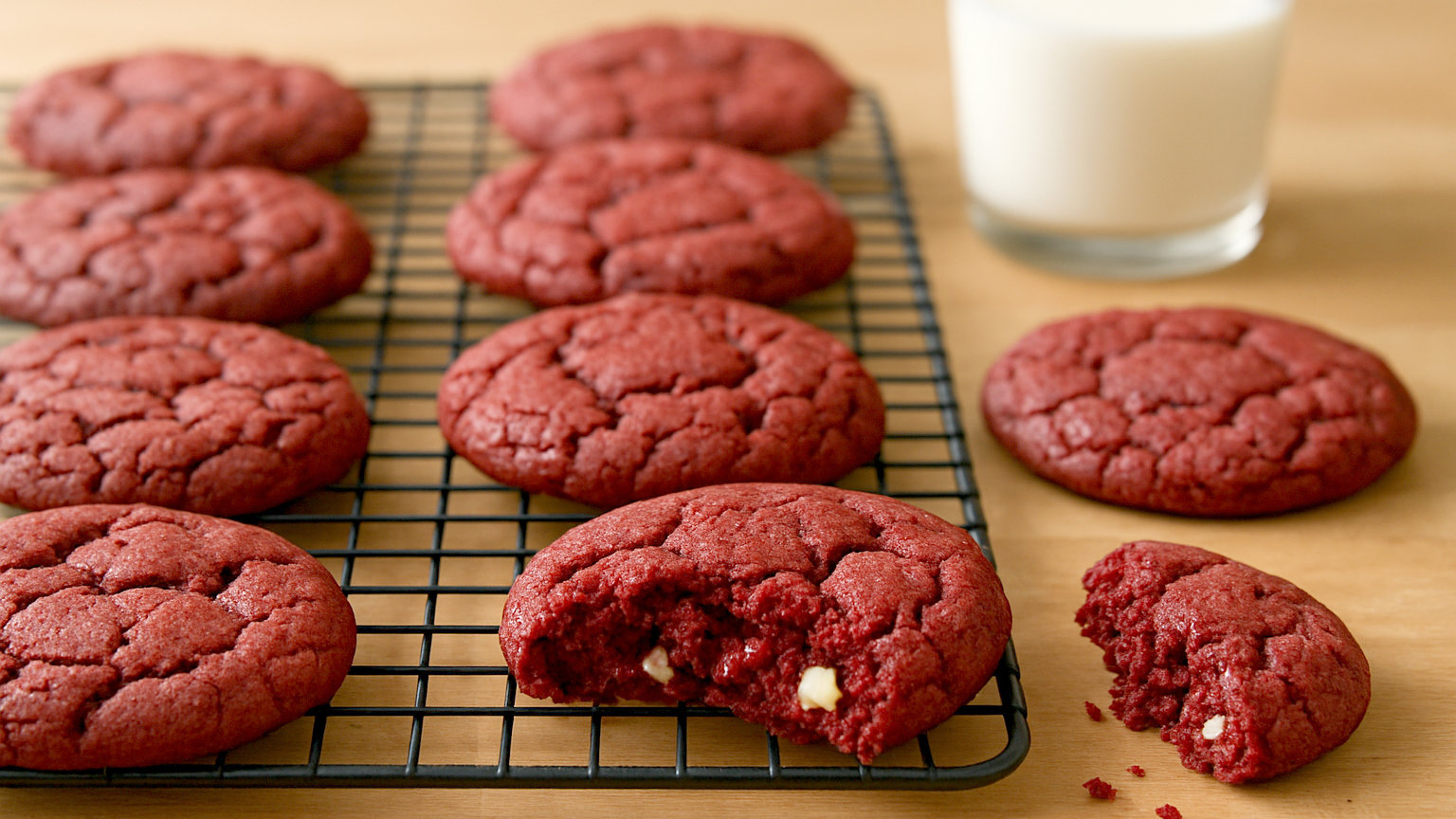
Red velvet cookies take the flavour of red velvet cake, a mild cocoa taste with a gentle tang, and give it a soft, chewy cookie texture. Chunks of white chocolate stand out against the deep red dough, and a cream cheese drizzle can be added if you want the full cake experience. They look striking on a plate, which makes them popular for Valentine's Day and parties.
What does red velvet taste like?
Red velvet is not simply chocolate dyed red. It contains only a small amount of cocoa, so the chocolate flavour is mild, and the tang comes from buttermilk and vinegar reacting with bicarbonate of soda. The result is soft, slightly sour and gently chocolatey. In a cookie, white chocolate replaces the cream cheese frosting that usually provides the sweetness.
Which food colouring should you use?
Gel colouring is essential. It is highly concentrated, so a small amount gives a deep red without adding liquid to the dough. Liquid colouring is far weaker and you would need enough to make the dough wet and the cookies spread. Look for a gel labelled red rather than pink, and add it gradually until the dough is slightly deeper than you want, as the colour lightens a little in the oven.
What ingredients do you need?
Makes about 16 cookies.
- 175g unsalted butter, softened
- 200g light brown soft sugar
- 75g caster sugar
- 1 large egg plus 1 yolk
- 1 tsp vanilla extract
- 2 tsp red gel colouring
- 1 tsp white vinegar
- 300g plain flour
- 25g cocoa powder
- 1 tsp bicarbonate of soda
- ½ tsp fine salt
- 200g white chocolate, chopped into chunks
How do you make red velvet cookies?
- Beat the butter and both sugars until creamy.
- Beat in the egg, yolk, vanilla, gel colouring and white vinegar until evenly coloured.
- Sift in the flour, cocoa powder, bicarbonate of soda and salt, and mix until just combined.
- Fold in the white chocolate chunks.
- Cover and chill for at least two hours.
- Heat the oven to 180°C (160°C fan), gas 4, and line two baking trays.
- Roll into 60g balls and bake six to a tray for 10 to 12 minutes, until the edges are set but the centres look soft.
- Press a few extra white chocolate chunks into the tops while hot.
- Cool on the tray for 10 minutes before moving to a rack.
Add the colouring to the wet ingredients: mixing gel into the finished dough leaves streaks and means overworking it. Beat it in with the eggs and it disperses evenly in seconds.
Why add vinegar?
A teaspoon of white vinegar adds the acidity that gives red velvet its characteristic slight tang, and it reacts with the bicarbonate of soda to help the cookies rise and stay tender. You will not taste the vinegar itself. Buttermilk does the same job in a cake, but it would make a cookie dough too wet.
Can you use natural colouring?
Natural colourings made from beetroot or other vegetables give a much softer, pinker shade rather than a deep red, and some fade in the oven. They work if you want a gentle colour without synthetic dye, but do not expect the dramatic look. A little extra cocoa also darkens the dough naturally, though it mutes the red.
How do you add a cream cheese drizzle?
Beat 100g full-fat cream cheese with 75g icing sugar and a teaspoon of milk until smooth and pourable, then drizzle over the cooled cookies. Keep drizzled cookies in the fridge and eat within two days. Without it, the cookies keep longer at room temperature.
How long do they keep?
They keep for five days in an airtight tin. The raw dough freezes as balls for three months and bakes from frozen with an extra two minutes.
Can you make them without cocoa?
Cocoa is what makes them red velvet rather than simply red cookies. Even the small amount here gives the characteristic mild chocolate background that the tang plays against. Leaving it out gives a pleasant vanilla cookie, but the flavour will be noticeably flatter.


