
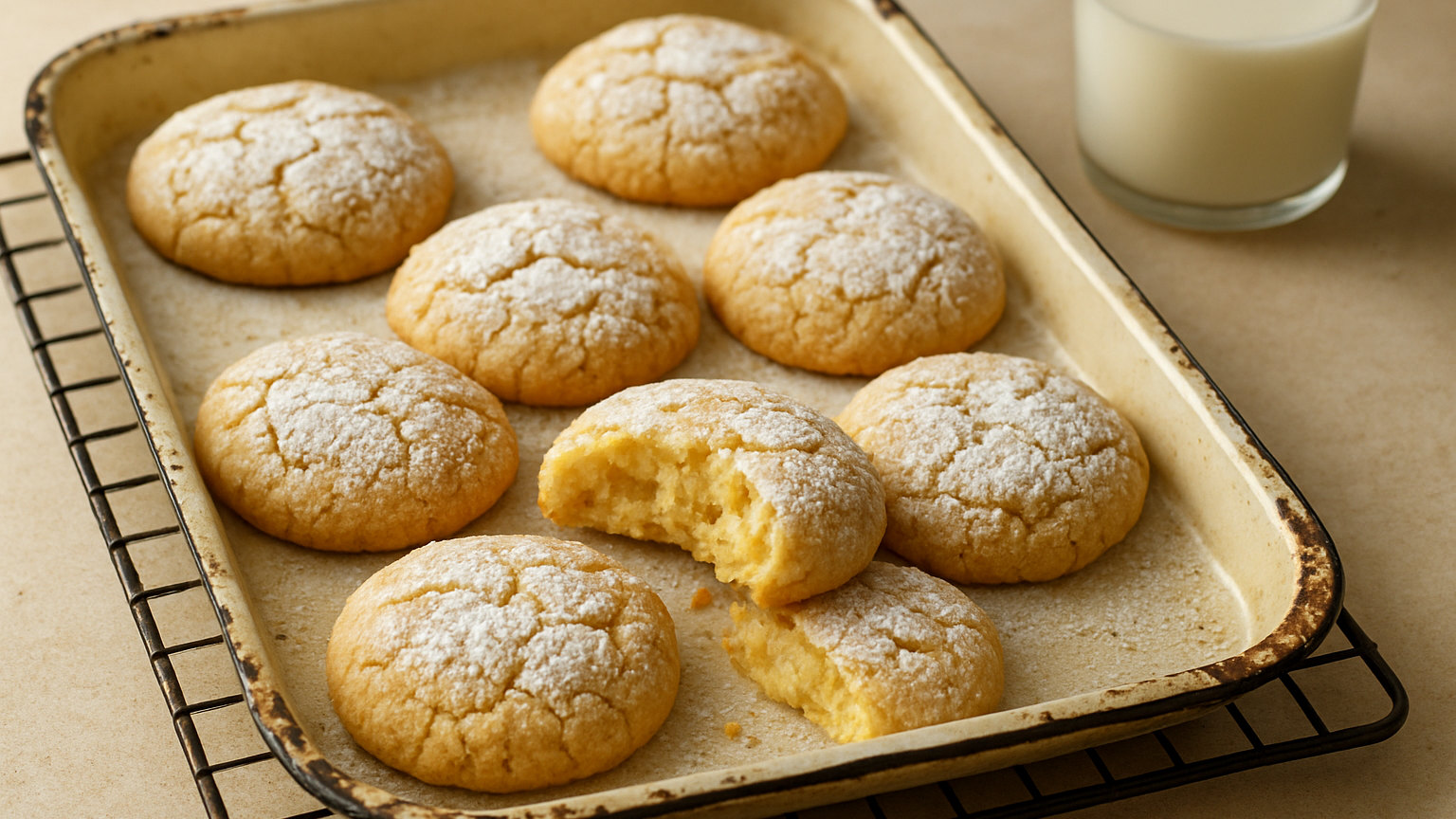
Soft lemon cookies are pillowy and cake-like rather than crisp, with a sharp citrus flavour and a crackled white surface from being rolled in icing sugar before baking. They are sometimes called lemon crinkle cookies. The tang comes from plenty of zest and a little cream cheese, which keeps the texture soft and adds a gentle sourness that stops them tasting merely sweet.
How do you get the strongest lemon flavour?
Most of the flavour in a lemon is in the oils of its zest, not the juice. Rub the finely grated zest into the sugar with your fingertips before you start; the sugar crystals break open the oil cells and the whole bowl becomes fragrant. Juice adds sharpness but mostly water, so too much makes the dough wet without adding much flavour.
What ingredients do you need?
Makes about 20 cookies.
- 125g unsalted butter, softened
- 75g full-fat cream cheese
- 250g caster sugar
- Finely grated zest of 3 unwaxed lemons
- 1 large egg
- 2 tbsp lemon juice
- 1 tsp vanilla extract
- 325g plain flour
- 1 tsp baking powder
- ¼ tsp bicarbonate of soda
- ½ tsp fine salt
- 100g icing sugar, for rolling
How do you make soft lemon cookies?
- Rub the lemon zest into the caster sugar with your fingertips until fragrant.
- Beat the butter, cream cheese and lemon sugar together until light and creamy.
- Beat in the egg, lemon juice and vanilla.
- Sift in the flour, baking powder, bicarbonate of soda and salt, and mix until just combined. The dough will be soft.
- Cover and chill for at least two hours, until firm enough to roll.
- Heat the oven to 180°C (160°C fan), gas 4, and line two baking trays.
- Put the icing sugar in a shallow bowl. Roll the dough into 40g balls and roll each one generously in icing sugar.
- Place well apart and bake for 10 to 12 minutes, until puffed and just set at the edges but still pale.
- Leave on the tray for five minutes, then cool on a rack.
Coat them heavily: a thin dusting of icing sugar disappears into the dough. Roll each ball twice for the thick white coating that cracks into the crinkle pattern.
Why do they crack?
The cookies puff up quickly in the oven, and the icing sugar coating sets and dries on the surface. As the cookie continues to expand and then settles, the dried sugar shell splits, revealing the yellow dough underneath. A thick coating and a hot enough oven both make the cracks more dramatic.
Why add cream cheese?
Cream cheese makes the cookies soft and slightly tangy, and its acidity works with the bicarbonate of soda to give a tender, cakey crumb. It also keeps them moist for days, where a purely butter-based cookie would firm up. Use full-fat cream cheese straight from the fridge.
Should you use unwaxed lemons?
Yes, where you can. Many lemons are coated in a thin layer of wax to keep them fresh, and since the zest is doing most of the work here, unwaxed fruit is better. If you only have waxed lemons, scrub them under warm running water and dry them thoroughly before zesting.
Can you make them with other citrus?
Yes. Orange, lime and grapefruit all work in the same quantities. Lime gives a sharper, more tropical cookie, and a mixture of lemon and lime is particularly good. Grapefruit is milder and slightly bitter, so add an extra tablespoon of juice.
How long do they keep?
They keep for five days in an airtight tin and stay soft thanks to the cream cheese. The raw dough freezes as coated balls for three months and bakes from frozen with an extra two minutes.
Can you add a glaze?
Yes. A simple glaze of 100g icing sugar mixed with a tablespoon of lemon juice, drizzled over the cooled cookies, adds another layer of sharpness. Let it set for an hour before storing. The icing sugar coating already gives a white finish, so a glaze is best kept thin.


