
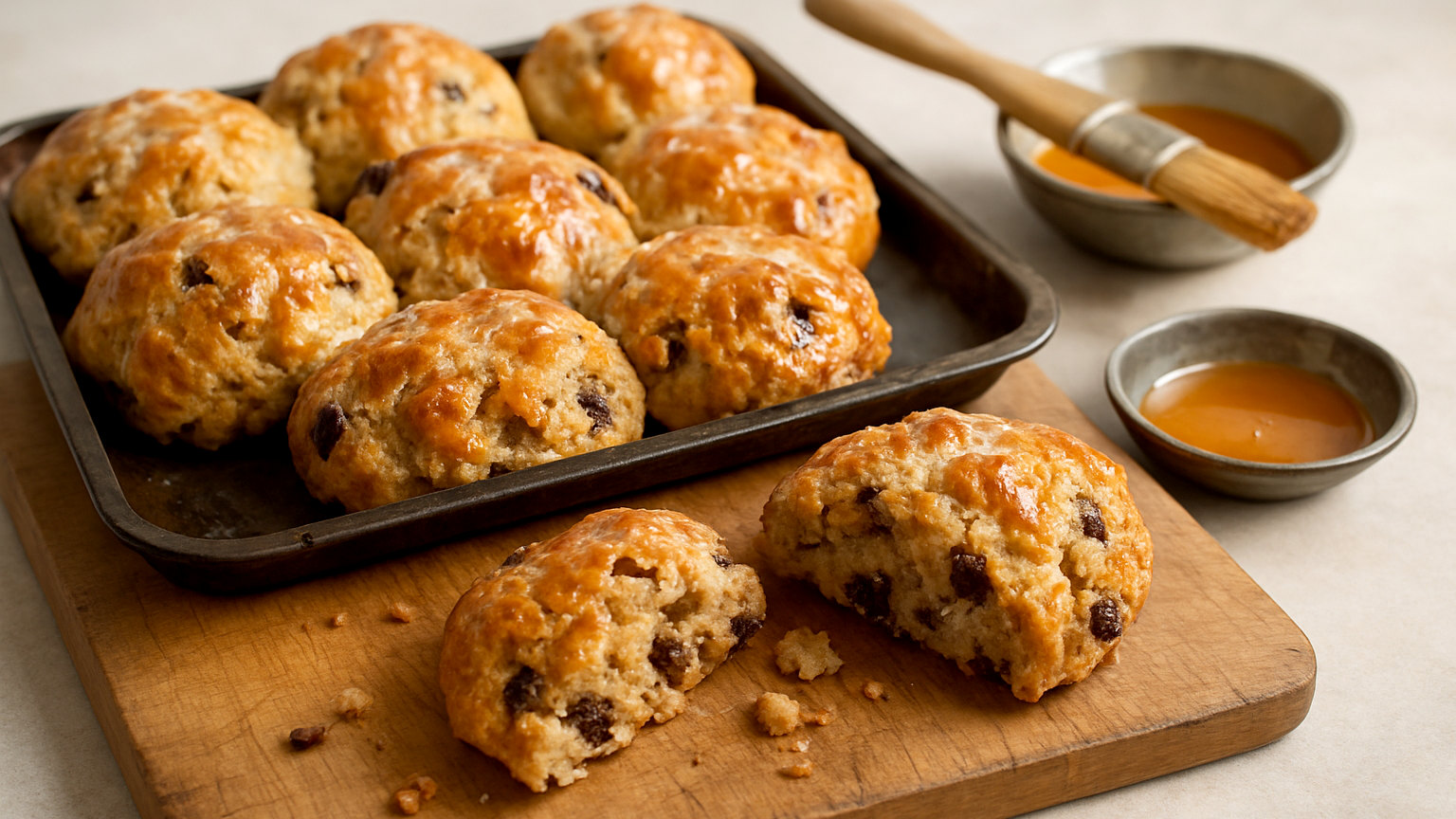
Rock cakes are small, craggy fruit buns with a crisp, sugary outside and a soft, scone-like crumb. The name refers to their rough, rocky appearance, not to how hard they are, which is worth knowing since a rock cake should never be tough. They are quick, cheap and forgiving, which made them a fixture of wartime and post-war home baking in Britain.
Why are they called rock cakes?
The name describes the shape. The mixture is spooned onto the tray in rough heaps rather than shaped or rolled, so the baked cakes have a craggy, irregular surface like small rocks. The name has caused confusion for generations, and a properly made rock cake is soft and crumbly inside rather than hard.
What ingredients do you need?
Makes 12 cakes.
- 350g self-raising flour
- 2 tsp mixed spice
- 175g cold unsalted butter, cubed
- 125g caster sugar
- 200g mixed dried fruit
- Finely grated zest of 1 lemon
- 2 large eggs, beaten
- 2 to 3 tbsp milk
- 2 tbsp demerara sugar, for sprinkling
How do you make rock cakes?
- Heat the oven to 190°C (170°C fan), gas 5, and line two baking trays.
- Rub the cold butter into the flour and mixed spice until it resembles breadcrumbs.
- Stir in the caster sugar, mixed dried fruit and lemon zest.
- Add the beaten eggs and just enough milk to bring the mixture together into a stiff, lumpy dough. It should hold together when pressed but look rough.
- Spoon 12 rough heaps onto the trays, spacing them well apart. Do not smooth them.
- Sprinkle with demerara sugar.
- Bake for 15 to 20 minutes, until golden and firm.
- Cool on the tray for five minutes, then transfer to a wire rack.
Leave them rough: the craggy surface is the whole point, and it also gives the crisp edges that make a rock cake worth eating. Resist the urge to tidy the heaps.
How stiff should the mixture be?
Stiffer than a cake batter and drier than a scone dough. It should hold together in a rough heap on the spoon without spreading. If it is too wet, the cakes flatten and lose their craggy shape; if too dry, they crumble. Add the milk a tablespoon at a time until it just clings together.
Why were they so popular during rationing?
Rock cakes use relatively little sugar and fat for the quantity they make, and they can be stretched with dried fruit, which was more readily available than butter or eggs. A wartime Ministry of Food recipe made them with dried egg. They also keep reasonably well, which mattered when baking was occasional.
What dried fruit should you use?
A standard bag of mixed dried fruit, containing raisins, sultanas, currants and a little mixed peel, is traditional and inexpensive. Chopped glacé cherries add colour, and chopped dried apricots or cranberries give a sharper flavour. Keep the total to about 200g so the mixture still holds together.
How should you serve them?
Warm from the oven, split and spread with butter, is the traditional way. They are also good cold with tea. Unlike scones, they are not usually served with jam and cream, as the fruit and sugar already make them sweet enough.
How long do they keep?
They keep for three days in an airtight tin, though they are best on the day they are baked, while the outside is still crisp. Refresh them for five minutes in a low oven. They freeze for three months and defrost in about an hour.
Why did mine spread flat?
The mixture was too wet, or the butter was too warm when it went in. Rock cakes need a stiff, lumpy mixture that holds its heap on the spoon. Use cold butter straight from the fridge, add the milk cautiously, and chill the shaped heaps for 10 minutes before baking if your kitchen is warm. A little extra flour also firms up a mixture that has gone too soft.


