
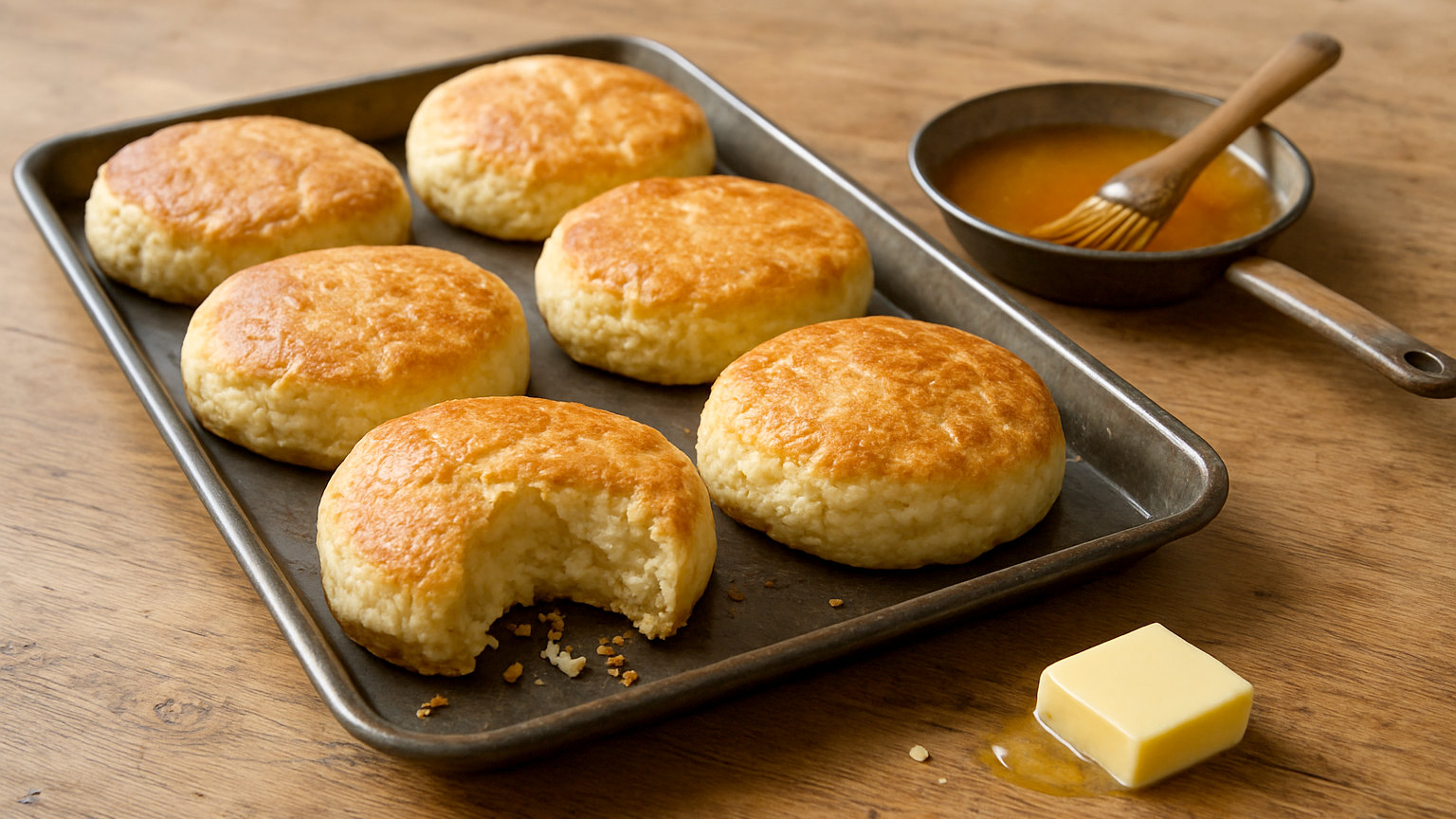
Scotch pancakes are small, thick pancakes about 8cm across, cooked on a griddle or heavy frying pan and eaten warm with butter and jam. They are also called drop scones, because the batter is dropped from a spoon rather than poured. They take fifteen minutes from start to plate, need no resting and use ingredients most people have in the cupboard.
How are they different from English pancakes?
English pancakes are large, thin and made from a batter with no raising agent, cooked in a wide pan and rolled with lemon and sugar. Scotch pancakes are small, thick and risen with self-raising flour or baking powder, giving a fluffy, cake-like texture. They are closer to an American pancake, though usually smaller and slightly denser.
What ingredients do you need?
Makes about 15 pancakes.
- 225g self-raising flour
- 1 tsp baking powder
- 50g caster sugar
- A pinch of fine salt
- 2 large eggs
- 250ml whole milk
- 25g unsalted butter, melted, plus extra for the pan
How do you make Scotch pancakes?
- Whisk the flour, baking powder, caster sugar and salt together in a bowl.
- Beat the eggs and milk together, then whisk into the dry ingredients until smooth.
- Stir in the melted butter. The batter should be thick and drop slowly from a spoon.
- Heat a heavy frying pan or griddle over a medium heat and grease very lightly with butter.
- Drop tablespoons of batter into the pan, spacing them well apart.
- Cook for two to three minutes, until bubbles rise to the surface and begin to burst.
- Flip and cook for another minute, until golden.
- Keep the cooked pancakes warm in a clean tea towel while you cook the rest.
Wait for the bubbles to burst: flipping too early gives a raw middle. When the bubbles on the surface pop and leave open holes, the underside is ready.
What consistency should the batter be?
Thick, roughly like double cream, so it drops from the spoon in a slow blob and spreads only slightly. A thin batter runs into large, flat pancakes rather than small, thick ones. If yours is too thick to drop easily, add a tablespoon of milk at a time.
Why keep them in a tea towel?
Stacking the cooked pancakes inside a folded clean tea towel keeps them warm and traps just enough steam to stop them drying out, while letting excess moisture escape. A plate under a lid makes them soggy, and an open plate lets them go cold and leathery within minutes.
How hot should the pan be?
Medium, not hot. Too hot and the outside browns in a minute while the inside stays raw, which is the most common problem. Test with one pancake first: it should take two to three minutes to develop bubbles and turn golden underneath. Adjust the heat before cooking the rest.
What should you serve them with?
Butter and jam is the traditional Scottish way, eaten while still warm. Honey, golden syrup, lemon curd and fresh berries all work. For something more substantial, serve them with bacon and maple syrup, which is closer to the American treatment.
How long do they keep?
They are at their best warm, within an hour of cooking. They keep for two days in an airtight container and can be warmed briefly in a dry pan or a toaster. They freeze for two months, interleaved with baking paper, and toast well from frozen.
Can you make the batter ahead?
Yes. The batter keeps in the fridge overnight, though it will thicken, so loosen it with a splash of milk before cooking. Some people find a rested batter gives a slightly more tender pancake. Give it a brief whisk before using, as the flour settles.
Why are mine flat?
Either the raising agent was old, or the batter was too thin. Self-raising flour loses its potency after about six months in an open packet, and the extra teaspoon of baking powder in this recipe compensates for that. A thin batter spreads before it can rise, so keep it thick.


