
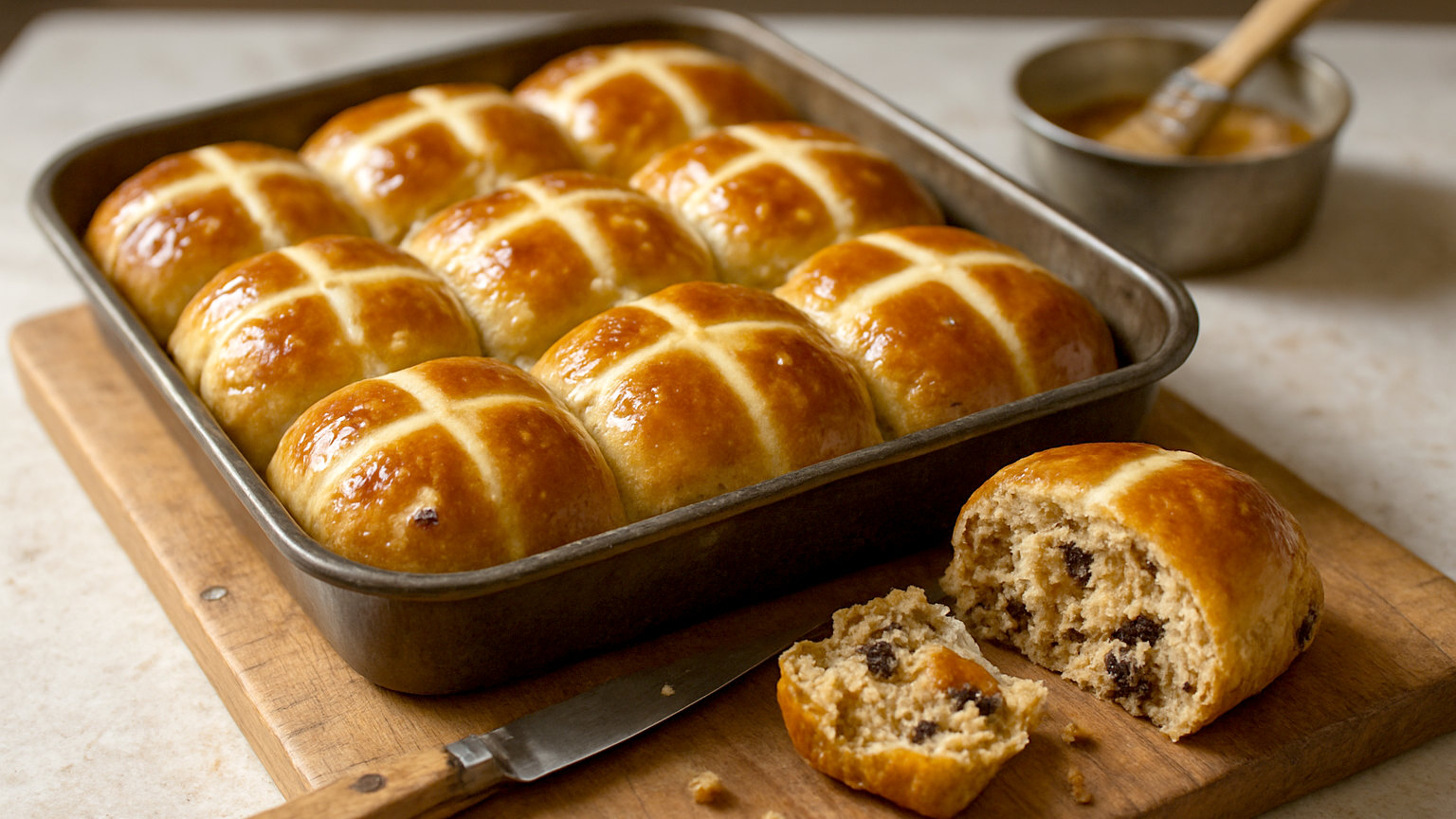
Hot cross buns are soft, lightly spiced yeasted buns studded with dried fruit, marked with a flour paste cross and finished with a sticky glaze while still warm. They are traditionally eaten on Good Friday, though supermarkets now sell them for most of the year. Homemade ones are softer and more fragrant than any shop-bought version, and the recipe is not difficult, only slow.
Why do they have a cross?
The cross is generally understood to represent the crucifixion, which is why the buns are associated with Good Friday. Marked buns of various kinds have a long history in British baking, and a number of stories circulate about medieval origins and Tudor laws restricting their sale. The details are hard to verify, but the Easter association is very well established.
What ingredients do you need?
Makes 12 buns.
For the dough
- 500g strong white bread flour
- 7g sachet fast-action dried yeast
- 75g caster sugar
- 1½ tsp fine salt
- 2 tsp mixed spice
- 1 tsp ground cinnamon
- 300ml warm whole milk
- 50g unsalted butter, melted
- 1 large egg
- 200g mixed dried fruit
- Finely grated zest of 1 orange
For the crosses and glaze
- 75g plain flour and 5 tbsp water
- 3 tbsp apricot jam
How do you make hot cross buns?
- Mix the bread flour, yeast, caster sugar, salt and spices in a large bowl, keeping the salt and yeast apart at first.
- Add the warm milk, melted butter and egg, and mix to a soft dough.
- Knead for 10 minutes by hand or five in a mixer, until smooth and elastic.
- Work in the dried fruit and orange zest, then cover and prove for one to two hours, until doubled.
- Knock back, divide into 12 pieces and shape into tight balls.
- Arrange in a lined 30 by 23cm tin, cover and prove for another 45 minutes to an hour, until puffy and touching.
- Heat the oven to 200°C (180°C fan), gas 6.
- Mix the plain flour and water into a smooth paste, pipe crosses over the buns and bake for 20 to 25 minutes.
- Warm the apricot jam, sieve it and brush over the hot buns.
Add the fruit after kneading: dried fruit worked in from the start tears the developing gluten and can scorch on the outside of the dough. Knead first, then fold it through.
How do you know when the dough has proved?
It should roughly double in size and feel soft and airy. Press a floured finger gently into it; the dent should spring back slowly without disappearing completely. Timing varies enormously with room temperature, so judge by the dough rather than the clock. A cold kitchen can double the time given in any recipe.
Why do the buns need to touch?
Baking them close together in a tin means they support each other as they rise, climbing upwards rather than spreading. It also keeps the sides soft and pale, so the buns tear apart in the traditional way. Spaced widely on a tray, they bake into individual round rolls with crusts all over.
Why glaze them while hot?
A warm bun absorbs the glaze slightly, so it sets into a sticky, glossy finish rather than sitting on top as a sugary layer. Sieved apricot jam is traditional because it is pale and mild. A simple syrup of equal sugar and water, boiled for a minute, works just as well.
How long do they keep?
They keep for two days in an airtight container and are best toasted after the first day. They freeze for three months, and a frozen bun can be defrosted and toasted straight away. Split, toasted and spread thickly with butter is how most people eat them after Good Friday.
Can you change the fruit and spice?
Yes, and many bakeries now do. Chocolate chips in place of the fruit are popular with children, and apple and cinnamon, or orange and cranberry, both work well. Keep the total weight of additions at about 200g. Traditionalists would say a hot cross bun needs currants and mixed spice, but the dough takes to almost anything.


