
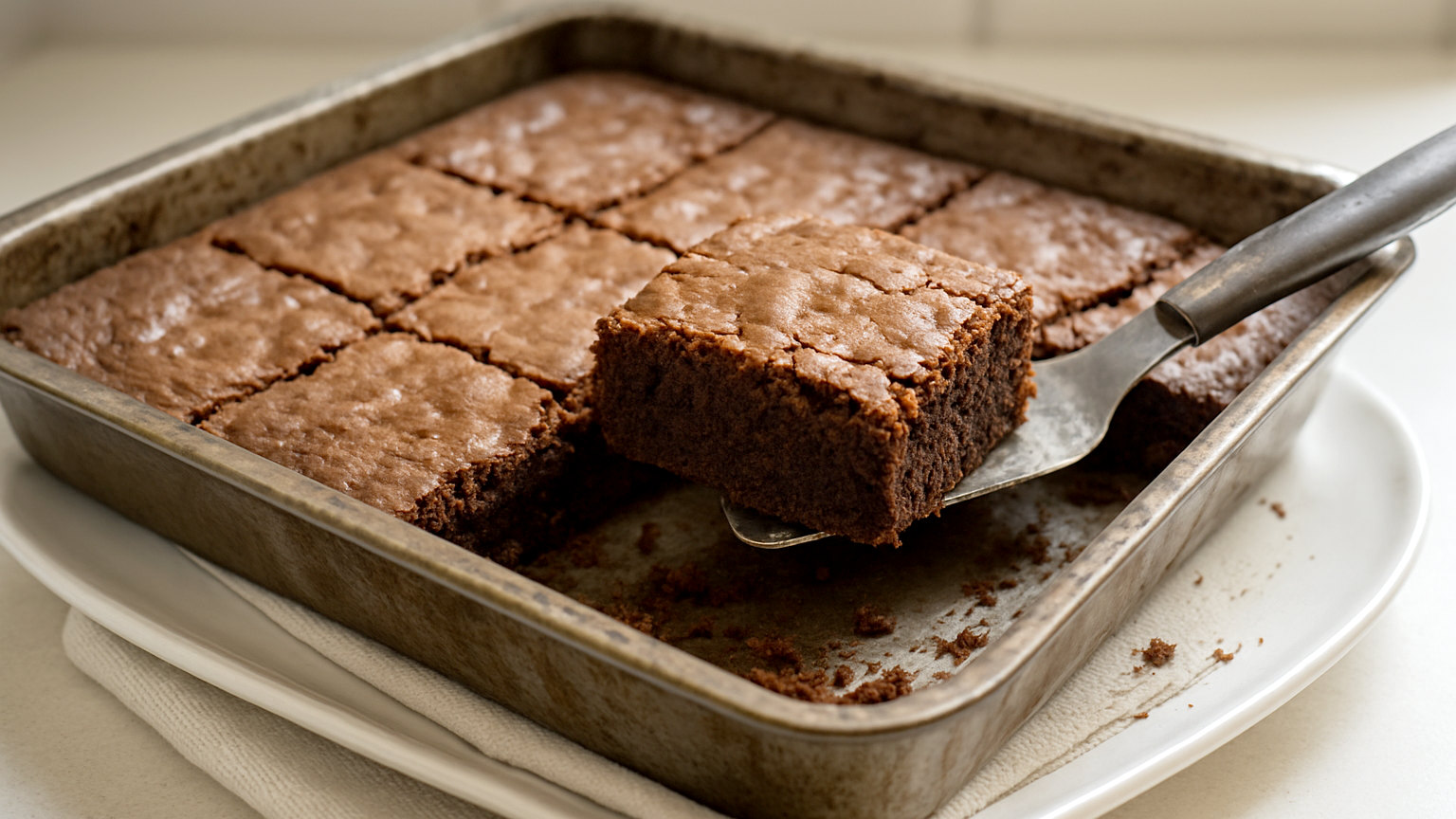
Most British traybake recipes are written for a 30 by 23cm tin, which is the size sold as a traybake tin in supermarkets and gives 20 generous squares. If your tin is a different size, you can still use the recipe by comparing the areas and adjusting the quantity and the baking time. Depth matters as much as width, and it changes the timing more than most people expect.
Which tin sizes are standard?
| Tin | Approximate area | Mixture, based on flour weight | Squares |
|---|---|---|---|
| 20cm square | 400 sq cm | 200g | 9 to 16 |
| 23cm square | 530 sq cm | 275g | 16 |
| 30 x 20cm | 600 sq cm | 300g | 15 to 18 |
| 30 x 23cm | 690 sq cm | 350g | 20 |
| 33 x 23cm | 760 sq cm | 400g | 24 |
The mixture column assumes an all-in-one sponge with equal weights of butter, sugar and self-raising flour.
How do you scale a recipe to a different tin?
Multiply the length by the width to get the area of each tin, then divide the new area by the original. A recipe for a 30 by 23cm tin has an area of 690 square centimetres; a 20cm square tin is 400, so you need roughly 0.58 of the mixture, or a little over half. Round to sensible egg quantities and adjust the milk slightly.
How does depth change the baking time?
A great deal. The same mixture spread thinly bakes much faster than the same mixture in a smaller, deeper tin. As a rough guide, a traybake 3cm deep takes 30 to 35 minutes at 180°C, while the same mixture 5cm deep takes 45 to 50 minutes and often needs the oven lowered by 10 degrees so the edges do not overcook.
Check early, not late: a shallow traybake goes from perfectly baked to dry in about five minutes. Start testing at the lower end of the time range every single time.
Can you use a roasting tin?
Yes, and many people do. A standard roasting tin is usually close to 30 by 23cm, though often deeper, which is fine as the mixture only fills part of it. Line it well with baking paper, as roasting tins are rarely non-stick and the corners are sharper. Avoid very thin, flimsy tins, which buckle and bake unevenly.
Does the tin material matter?
Light-coloured aluminium and tinned steel conduct heat evenly and give a pale, even bake. Dark non-stick tins absorb more heat and brown the base and edges faster, so check five minutes early. Glass and ceramic dishes heat slowly and can add 10 minutes. Whatever you use, line it with baking paper.
How should you line a traybake tin?
Cut a rectangle of baking paper large enough to line the base and overhang two of the sides by several centimetres. Those overhangs become handles for lifting the whole slab out once cool, which is far easier and neater than trying to cut and lift squares from inside the tin.
How full should the tin be?
Fill it no more than two-thirds deep with raw mixture, so there is room to rise without overflowing. If your mixture only comes a third of the way up, the traybake will be thin and will bake faster. If it fills the tin, either use a larger tin or hold some back and bake it as a few cupcakes.
How do you know when it is done?
The sponge should be golden, springy in the centre and just shrinking from the sides. A skewer pushed into the middle should come out clean, or with a few dry crumbs. For fruit-filled traybakes, test in two or three places, avoiding the fruit, which will always leave a damp trace.
Should you adjust the oven for a bigger tin?
For a wider but equally shallow tin, keep the temperature the same and simply check a few minutes earlier or later. For a deeper tin, lower the oven by 10 degrees and bake longer, so the middle sets before the outside dries. A very shallow tray can be raised by 10 degrees for a shorter bake, though this is rarely necessary.


