
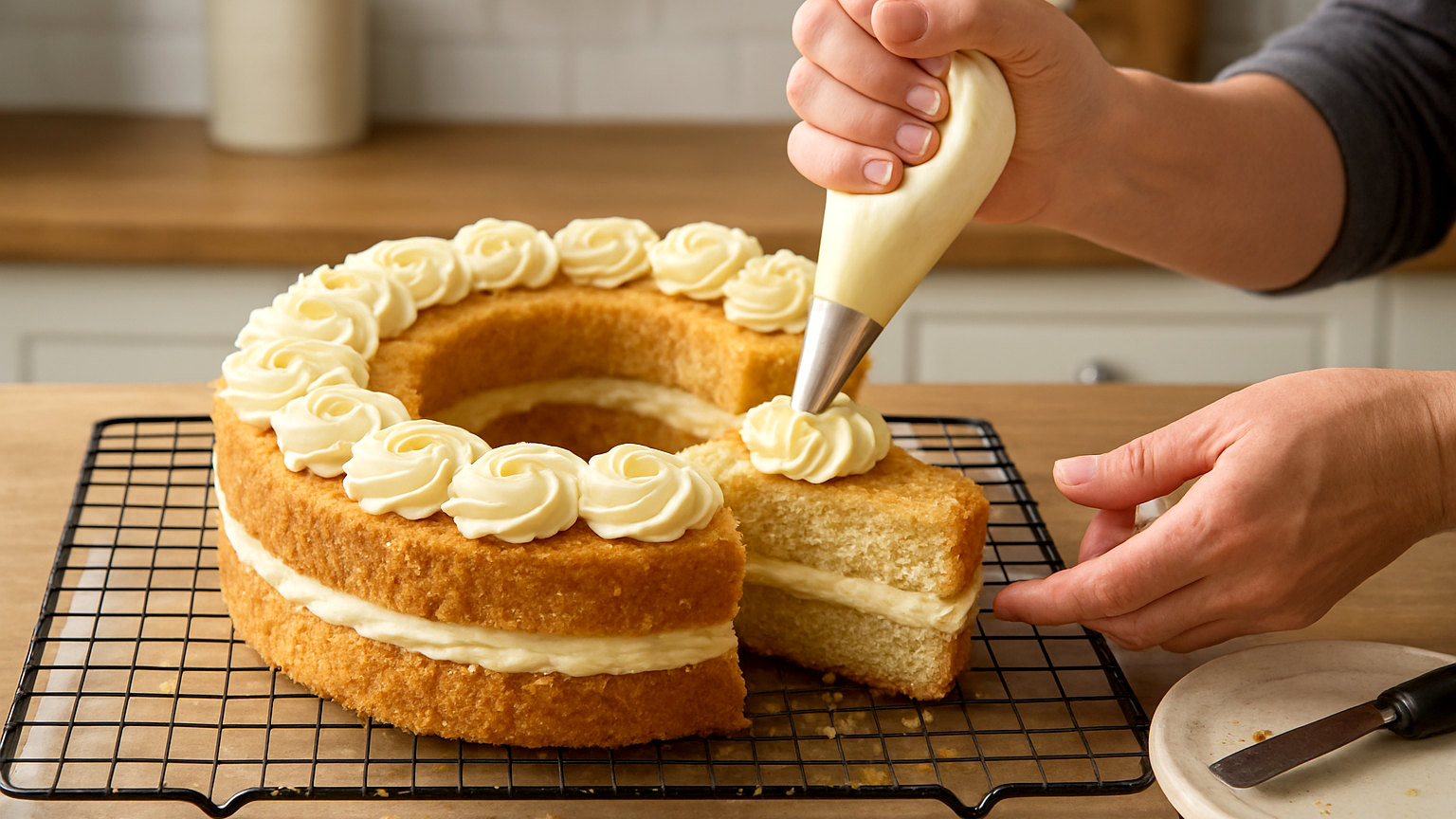
A number cake is made from two layers cut into the shape of a number, sandwiched and topped with piped cream, then decorated with fresh berries, flowers, macarons and meringues. The most popular modern style uses crisp almond biscuit layers rather than sponge, which hold a sharp shape and are easy to cut. It is a striking centrepiece for milestone birthdays and anniversaries, and a letter cake made the same way works well for names and initials.
Should you use biscuit or sponge?
The fashionable number cake uses biscuit layers made from an almond dough, a little like a soft shortbread. They are easy to cut into clean shapes and support the weight of the cream and decorations. The biscuit softens slightly under the cream after a few hours, becoming tender and cake-like. A sponge version, cut from a large sheet sponge, is softer but trickier to cut neatly. Both are covered below.
How do you make a template?
Print a number in a bold, simple font so it fills an A4 or A3 sheet, then cut it out. For a 30cm tall number, use A3 paper. Numbers with holes, such as 0, 6, 8 and 9, need the centres cut out. Chunky, rounded fonts work best, as thin sections break easily. Keep the template for the second layer.
What ingredients do you need?
For the biscuit layers
- 250g plain flour
- 100g ground almonds
- 125g icing sugar
- A pinch of fine salt
- 150g cold unsalted butter, cubed
- 1 large egg
- 1 tsp vanilla extract
For the cream
- 400ml double cream
- 250g mascarpone
- 60g icing sugar
- 1 tsp vanilla extract
To decorate
- Fresh berries, meringues, macarons and edible flowers
How do you make a number cake?
- Blitz the flour, ground almonds, icing sugar, salt and butter to fine crumbs in a food processor. Add the egg and vanilla and pulse until the dough comes together.
- Divide in two, flatten into discs, wrap and chill for 30 minutes.
- Roll each piece between two sheets of baking paper to about 5mm thick.
- Lay the template on top and cut around it with a sharp knife. Chill the shapes on their baking sheets for 15 minutes.
- Bake at 180°C (160°C fan), gas 4, for 12 to 15 minutes until pale golden. Cool completely on the sheets, as they are fragile while warm.
- Whip the double cream, mascarpone, icing sugar and vanilla to firm peaks and spoon into a piping bag fitted with a large round nozzle.
- Pipe blobs of cream all over the first biscuit layer, place the second on top and pipe again.
- Decorate with fresh berries, meringues, macarons and flowers.
Chill before cutting and baking: cold dough holds its shape in the oven. Warm dough spreads and softens the edges of the number.
How do you make a sponge number cake?
Bake a sponge in a large roasting tin or traybake tin, using a firm recipe such as a Madeira cake. Once cool and chilled, lay the template on top and cut around it with a small serrated knife. Split it into two layers if it is tall enough, then fill and pipe with buttercream or cream in the same way.
When should you assemble it?
Bake the biscuit layers up to two days ahead and store them in an airtight tin. Whip the cream and assemble the cake no more than four hours before serving, then keep it in the fridge. This gives the biscuit time to soften slightly without becoming soggy.
Which decorations work best?
Choose a colour scheme and a mixture of textures: soft berries, crisp meringues, glossy macarons and a few edible flowers. Only use flowers that are safe to eat and grown without pesticides, and remove non-edible flowers before serving. Fill small gaps with sprinkles or chocolate pieces.
Can you make it gluten-free?
Yes. The almond biscuit dough adapts well to a gluten-free plain flour blend, as the ground almonds help bind it. Add half a teaspoon of xanthan gum if your blend does not contain it, and chill the dough well before rolling, as gluten-free dough is more fragile. Check that your decorations are gluten-free too.


