
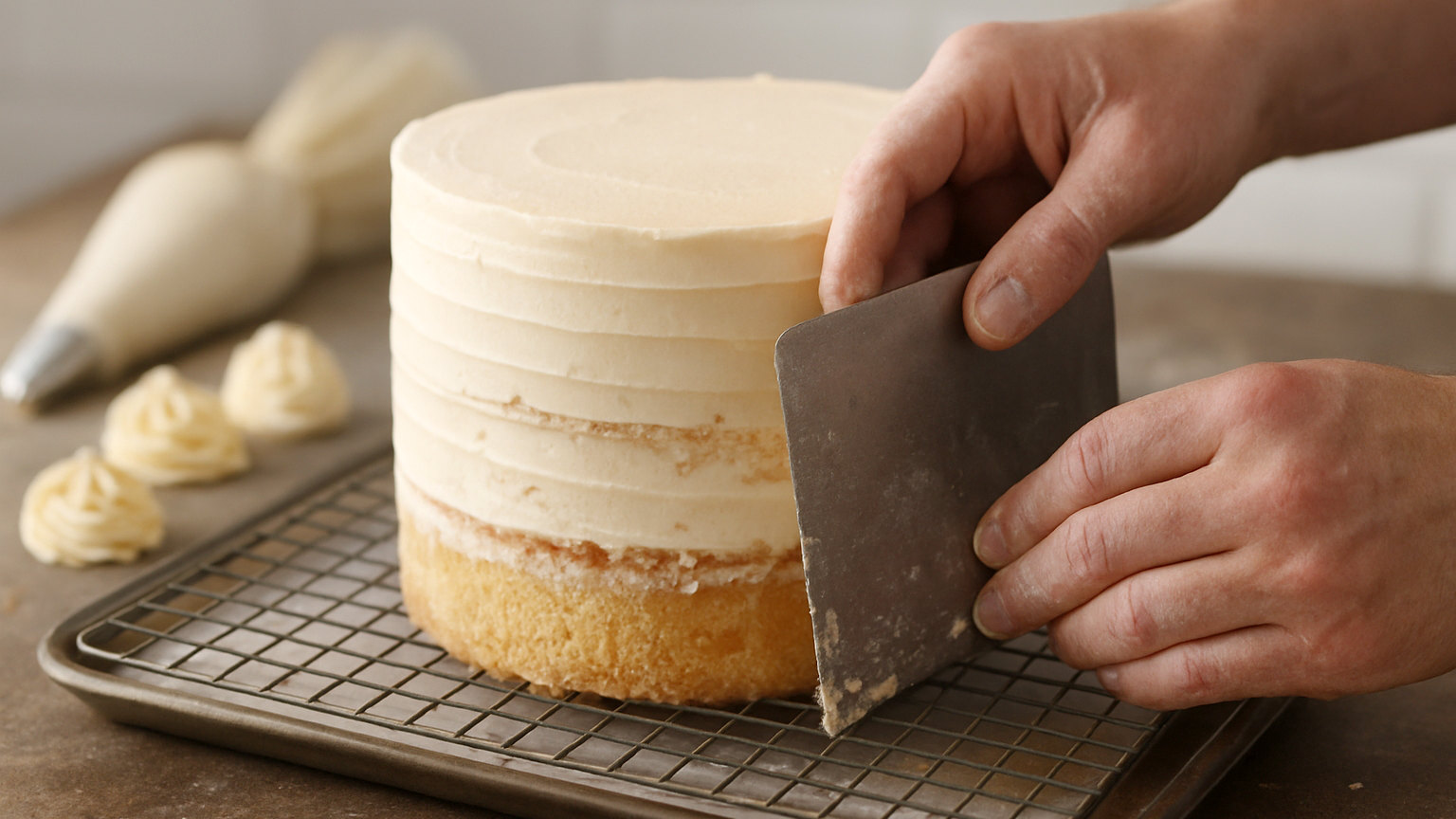
To stack and fill a layer cake neatly, you level each sponge so it is flat, fix the bottom layer to a cake board, spread even layers of filling, stack the sponges with their flat bases facing up, then seal the whole cake with a thin crumb coat before the final covering. Each step is simple, and together they make the difference between a leaning, lumpy cake and one that stands tall, straight and looks professional.
What equipment do you need?
You do not need much specialist equipment, but a few tools make stacking much easier. A long serrated knife levels the layers. A cake board gives a firm base that you can move around. A cake turntable lets you spin the cake while spreading, giving smoother sides. A palette knife and a straight-edged scraper help create a neat finish. A piping bag is useful for building a filling dam.
How do you level cake layers?
Most sponges bake with a slightly domed top. Let the layers cool completely, ideally chilling them for 30 minutes so they are firmer. Place a layer on the work surface and use a long serrated knife to slice off the dome with a gentle sawing motion, keeping the blade level and turning the cake as you cut. Keep the offcuts for cake pops or trifle.
How do you stack and fill the layers?
- Put a small dab of buttercream in the centre of the cake board to hold the first layer in place.
- Place the first sponge, cut side up, on the board.
- Spread an even layer of buttercream over the top, about 1cm thick. Weighing or scooping the same amount for each layer keeps them level.
- For soft fillings such as jam, curd or fruit, pipe a ring of stiff buttercream around the edge first, then spread the filling inside it.
- Place the next sponge on top and press down gently, checking from eye level that it is straight.
- Repeat, finishing with the final layer flat side up, which gives the smoothest top.
- Spread a thin crumb coat over the top and sides and chill for 30 minutes.
- Apply the final covering, using the turntable and scraper to smooth the sides.
Flat side up: turning the top layer upside down gives a perfectly flat, sharp-edged surface, because the base of a sponge bakes against the flat tin.
What is a buttercream dam?
A buttercream dam is a ring of firm buttercream piped around the outer edge of each layer before adding a soft filling. It stops jam, lemon curd, fruit or cream from squeezing out of the sides under the weight of the layers above, and prevents the filling from seeping through the outer covering. Use a stiffer buttercream for the dam than for the rest of the cake.
Which fillings work best?
| Filling | Stability | Tip |
|---|---|---|
| Buttercream | Very stable | Ideal for tall cakes |
| Chocolate ganache | Very stable once set | Let it thicken before using |
| Jam or curd | Soft | Use a buttercream dam |
| Whipped cream | Soft | Stabilise with mascarpone and chill |
| Fresh fruit | Soft and wet | Pat dry and add just before serving |
Does a tall cake need supports?
A cake of three or four sponge layers stands on its own if the filling is firm. Taller cakes, and any cake with separate tiers stacked on top of each other, need support. Push plastic or wooden cake dowels into the lower cake, trim them level with the top, and set the next tier on its own thin cake board. The dowels carry the weight, stopping the bottom tier from being crushed.
Why is my layer cake leaning?
A leaning cake usually has uneven layers, uneven filling or a filling that is too soft, especially in a warm room. Levelling each sponge, using the same amount of filling in each layer and chilling the cake between stages all help. If a cake starts to slide, chill it for 20 minutes to firm up before continuing.


