
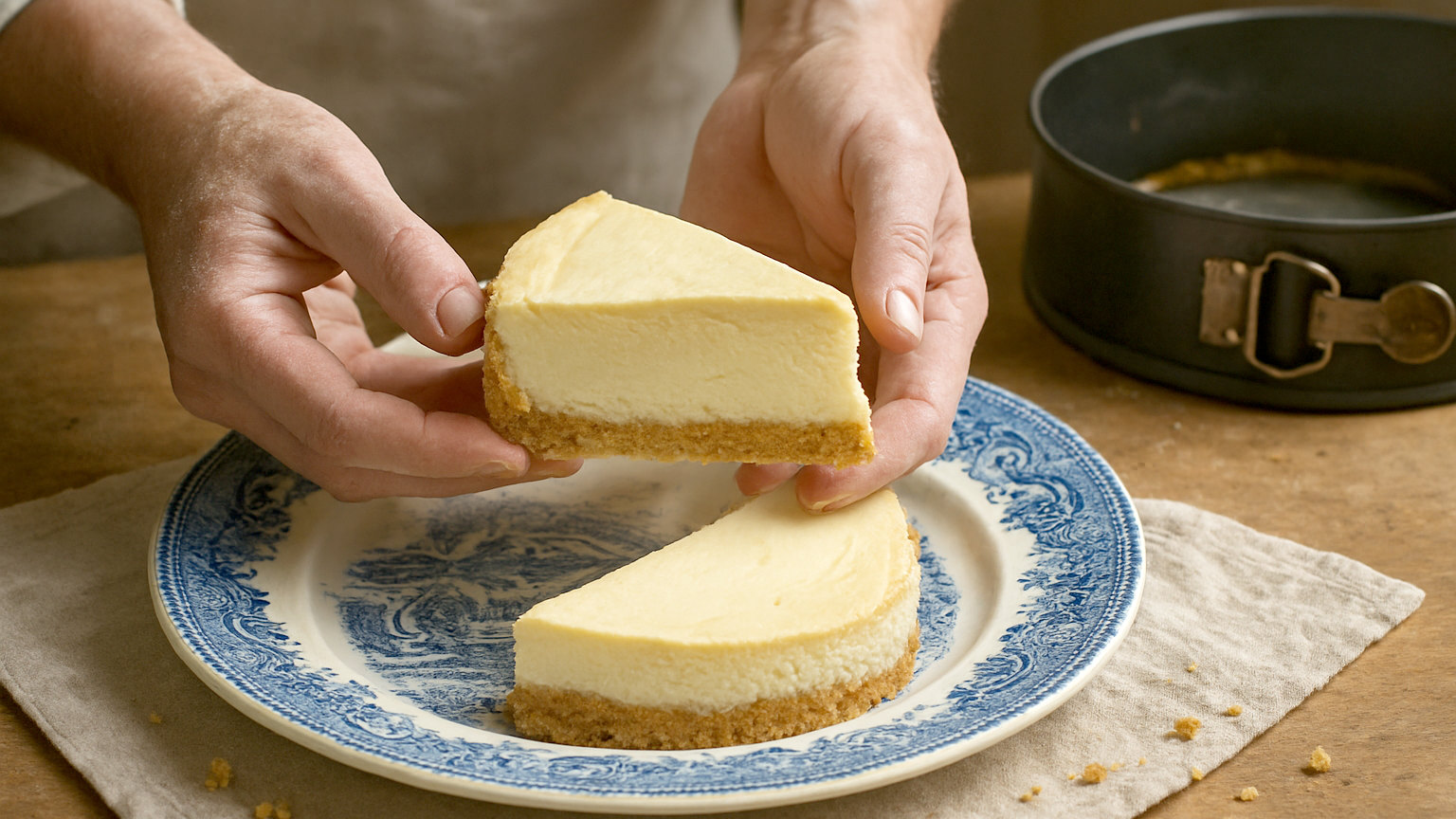
Gelatine gives a no-bake cheesecake a firm, clean set that holds up at room temperature and slices neatly. Most no-bake cheesecakes set perfectly well without it, thanks to full-fat cream cheese and whipped cream, but gelatine is useful when the filling contains a lot of liquid, such as fruit purée, or when you need the dessert to stand up to a warm day. Using it well is simply a matter of the right amount and the right technique.
When does a cheesecake need gelatine?
Add gelatine when the filling includes more than about 150ml of liquid, such as fruit purée, juice, coffee or a liqueur, which would otherwise make it too soft. It is also worth using for tall cheesecakes, mousse-style cheesecakes and those that will sit out at a buffet. A simple vanilla, lemon or chocolate no-bake cheesecake usually sets without it.
Should you use leaves or powder?
Both work. Gelatine leaves are the choice of most pastry chefs because they dissolve cleanly, are easy to measure and give a clear, smooth set with no taste. Powdered gelatine is widely available in sachets and is just as effective, but it can form lumps if not handled carefully. Leaves come in different strengths, known as grades, and most supermarkets sell platinum grade, which is the strongest.
How much gelatine should you use?
| Cheesecake | Platinum grade leaves | Powdered gelatine |
|---|---|---|
| 20cm, softly set | 2 to 3 leaves | 1½ tsp |
| 20cm, firm set with fruit purée | 3 to 4 leaves | 2 tsp |
| 23cm, firm set | 5 leaves | 1 tbsp |
Using too much gelatine makes a cheesecake rubbery and bouncy, so start with the lower amount unless your filling is very liquid.
How do you use gelatine leaves?
- Soak the leaves in a bowl of cold water for five minutes, until soft and floppy.
- Warm a small amount of liquid from the recipe, such as cream, juice or fruit purée, until hot but not boiling.
- Lift the leaves out, squeeze out the excess water and stir them into the hot liquid until completely dissolved.
- Let the mixture cool until just warm.
- Stir a large spoonful of the cream cheese filling into the gelatine mixture first, then pour it back into the rest of the filling and mix well.
Never boil gelatine: boiling weakens its setting power. Dissolve it in liquid that is steaming hot but well below boiling point.
How do you use powdered gelatine?
Sprinkle the powder evenly over three tablespoons of cold water in a small bowl, without stirring, and leave it for five minutes to swell. Then warm it gently, either over a pan of hot water or in the microwave in five-second bursts, until clear and liquid. Add it to the filling in the same way as leaves, tempering it with a little of the mixture first.
Why is my gelatine lumpy or stringy?
Lumps and strings form when warm gelatine hits a cold filling and sets instantly in threads. That is why the tempering step matters: mixing a little filling into the gelatine first brings them closer in temperature. Make sure your cream cheese is at room temperature, and stir quickly and thoroughly as soon as the gelatine goes in.
Which fruits stop gelatine setting?
Fresh pineapple, kiwi, papaya and figs contain enzymes that break down gelatine, so a filling containing them will not set. Cooking the fruit first or using tinned versions destroys the enzymes. Tinned mango purée is also a safe choice for fruit cheesecakes.
What is a vegetarian alternative?
Gelatine is made from animal collagen, so it is not suitable for vegetarians. Agar, made from seaweed, is the most common vegetarian alternative. Unlike gelatine, agar must be boiled for a minute or two to activate, and it sets firmly at room temperature. As a guide, about one teaspoon of agar powder sets 250ml of liquid, but brands vary, so follow the packet.


