
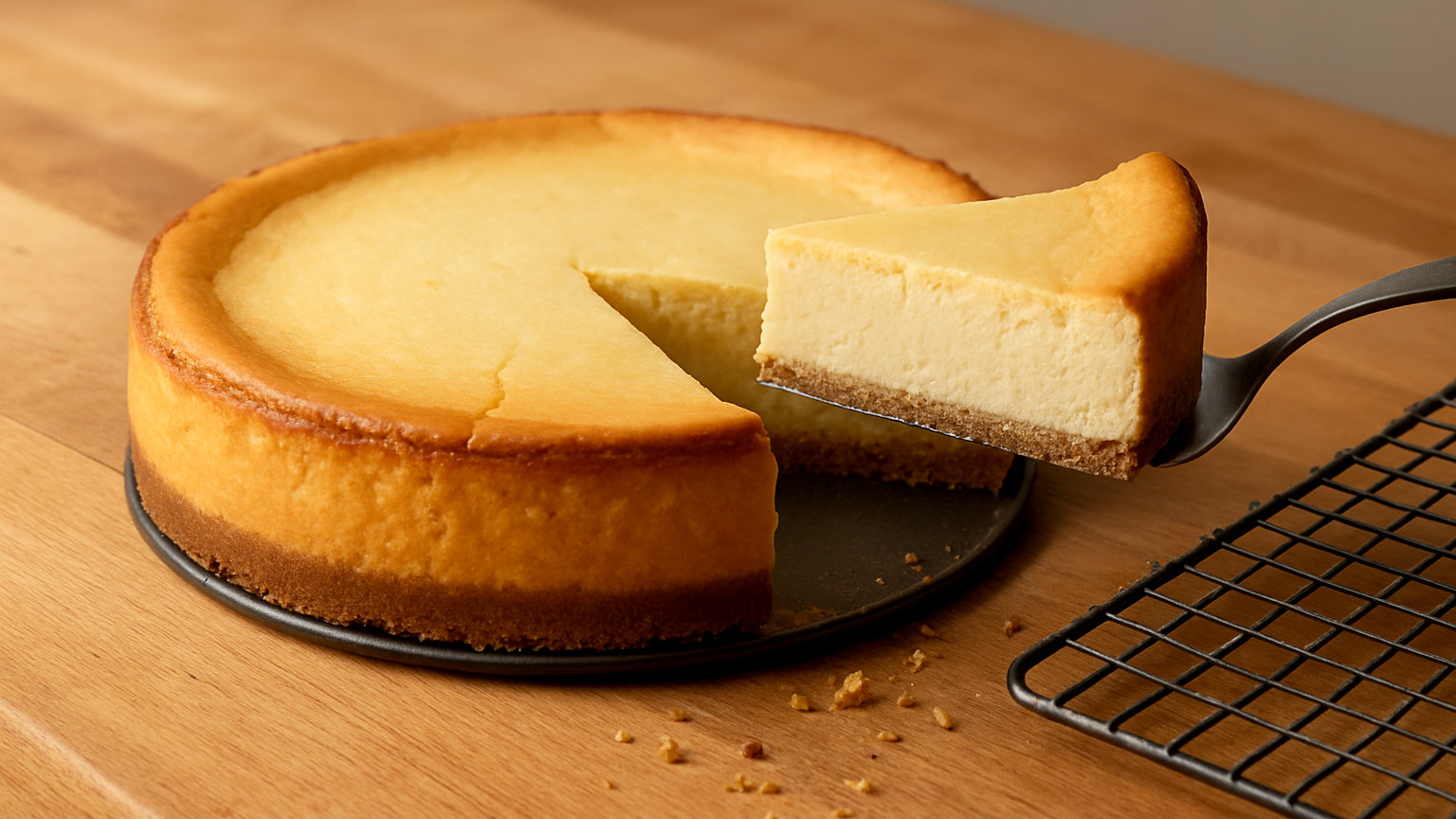
A baked cheesecake usually cracks because it was overbaked, baked too hot, mixed too hard or cooled too quickly. As the eggs in the filling set, the cheesecake shrinks slightly; if it dries out or sticks to the tin while that happens, the surface splits. A cheesecake crack does not affect the flavour, and it is easy to hide, but with a few simple changes you can bake a smooth-topped cheesecake every time.
What causes a cheesecake to crack?
A baked cheesecake is really a rich custard, set by eggs. Custards are delicate: they need gentle, even heat, and they shrink a little as they cool. Anything that heats the filling too fast, dries the surface or pulls it in two directions as it contracts can make it split. The table below covers the usual suspects.
| What happens | Why it cracks | How to prevent it |
|---|---|---|
| Crack in the centre | Overbaked | Stop when the middle still wobbles |
| Puffed up, then cracked | Too much air beaten in | Mix on a low speed |
| Cracks all over | Oven too hot | Bake at 150 to 160°C |
| Crack after cooling | Cooled too quickly | Cool slowly in the oven |
| Crack near the edge | Stuck to the tin | Run a knife round the edge |
Does overmixing cause cracks?
Yes. Beating the filling on a high speed, especially after adding the eggs, whips in air bubbles. In the oven, these bubbles expand and the cheesecake rises like a soufflé, then sinks and cracks as it cools. Beat the cream cheese until smooth before adding anything else, then mix on a low speed, adding the eggs one at a time and stopping as soon as each is combined.
What oven temperature stops cracking?
A low, steady oven temperature of 150 to 160°C (130 to 140°C fan) sets the filling gently and evenly. At higher temperatures the edges set and puff before the centre, and the surface can dry out. Every oven is different, so an oven thermometer is useful. Do not open the door during the first 45 minutes, as a sudden draught can cause the surface to split.
Do you need a water bath?
A water bath is the most reliable way to prevent a crack. Setting the springform tin in a larger roasting tin of hot water keeps the temperature around the filling gentle and adds moisture to the oven, so the top stays supple. Wrap the outside of the springform tin in a double layer of heavy foil first to stop water seeping in. If that sounds like too much trouble, a tray of hot water on the shelf underneath helps too.
How should you cool a baked cheesecake?
Sudden temperature changes are a common cause of cracks. When the cheesecake is ready, turn the oven off, open the door a little and leave it inside for an hour. Then run a thin knife around the edge so the filling can shrink away from the tin freely, and leave it to cool completely at room temperature before chilling. Never put a warm cheesecake straight into the fridge.
Grease the sides: a thin layer of butter on the sides of the springform tin lets the cheesecake contract without tearing as it cools.
How do you hide a cracked cheesecake?
A crack is only cosmetic. Spread a layer of soured cream mixed with a little sugar over the top and return it to the warm oven for 10 minutes to set. Alternatively, cover it with fresh berries, a fruit compote, lemon curd, chocolate ganache or salted caramel sauce. Once topped, nobody will ever know, and the texture underneath will be just as creamy.
Is a cracked cheesecake still safe to eat?
Yes. Cracks are purely a cosmetic issue and do not mean anything is wrong. However, a large crack often signals that the cheesecake has been slightly overbaked, so it may be a little firmer and drier than ideal. Next time, take it out a few minutes sooner, while the centre still wobbles.


