
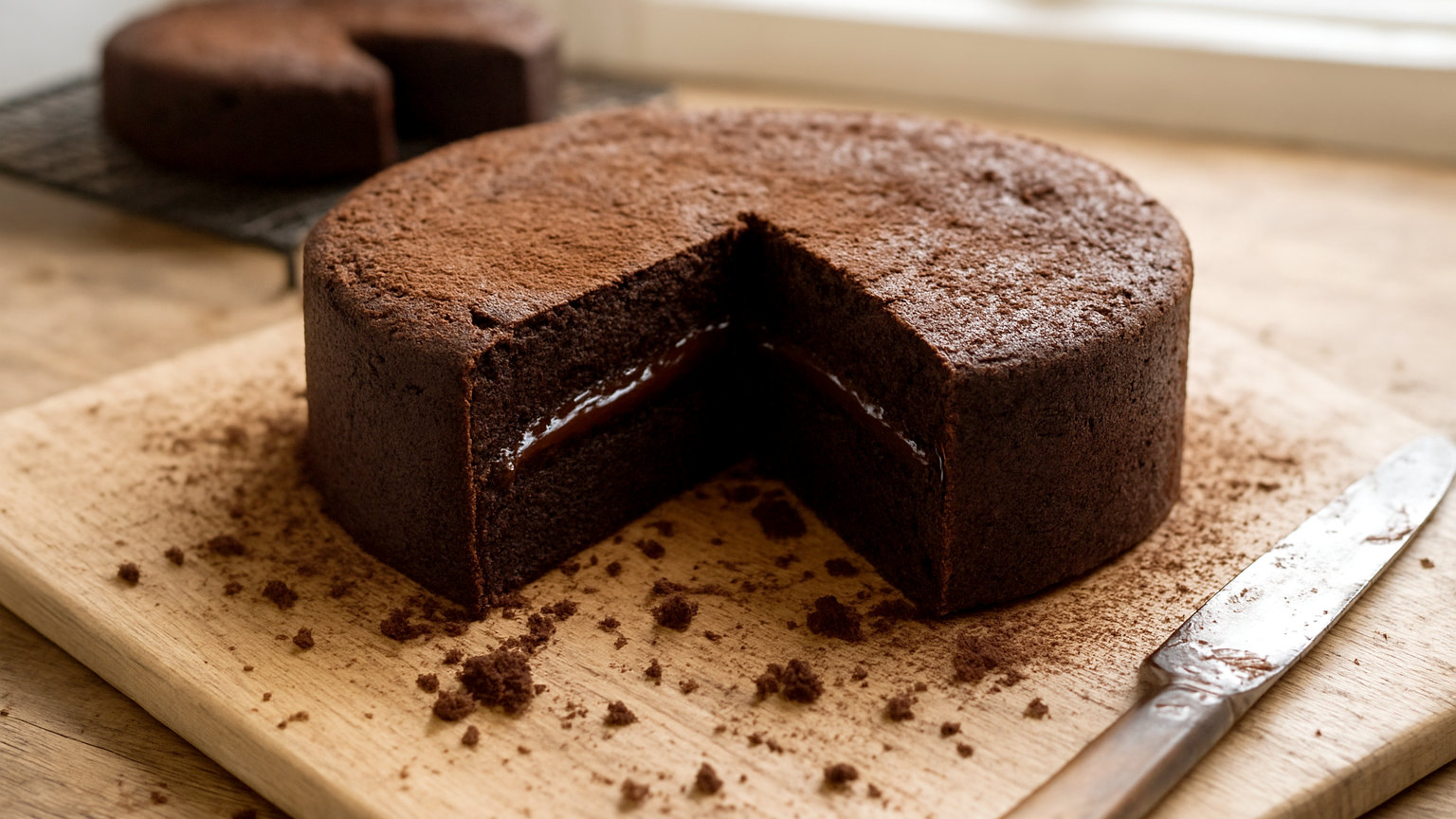
A chocolate mud cake is dense, moist and deeply chocolatey, with a tight crumb that cuts cleanly. Originally popular in Australia, it has become a favourite with home bakers who make celebration cakes, because it is firm enough to carve, stack and cover with ganache or fondant without crumbling. It also keeps for up to a week, so you can bake it well ahead of a party.
What is a mud cake?
A mud cake is made by melting butter and dark chocolate together with hot coffee and sugar, then whisking in flour, cocoa, eggs and buttermilk. It bakes slowly at a low temperature so the dense batter cooks through evenly without the outside drying or burning. The result is somewhere between a brownie and a sponge: heavier than a sandwich cake, but still soft and moist.
Why is it baked in a low oven?
The batter is very thick and rich in sugar and chocolate, both of which scorch easily. At a normal oven temperature, the outside would crust over and darken long before the middle set. Baking at around 150°C (130°C fan) lets the heat reach the centre slowly, so the cake bakes evenly from edge to middle and stays level on top, which is ideal when you plan to stack layers.
What ingredients do you need?
- 250g unsalted butter, cubed
- 200g dark chocolate, chopped
- 1 tbsp instant coffee granules
- 160ml hot water
- 330g caster sugar
- 150g self-raising flour
- 150g plain flour
- 40g cocoa powder
- ¼ tsp bicarbonate of soda
- 4 large eggs
- 2 tbsp vegetable oil
- 125ml buttermilk
How do you make a chocolate mud cake?
- Heat the oven to 150°C (130°C fan), gas 2. Grease a deep 20cm round tin and line the base and sides with a double layer of baking paper that stands 5cm above the rim.
- Put the butter, chocolate, coffee, hot water and sugar into a large pan over a low heat. Stir until melted and smooth, then cool for 15 minutes.
- Sift both flours, the cocoa powder and bicarbonate of soda into a bowl.
- Whisk the eggs, oil and buttermilk together, then whisk into the chocolate mixture.
- Add the dry ingredients and whisk until smooth.
- Pour into the tin and bake for 1 hour 30 to 1 hour 45 minutes, until a skewer comes out with a few moist crumbs.
- Leave to cool completely in the tin, ideally overnight, before turning out.
Level for stacking: once cold, trim any dome from the top with a long serrated knife. Turn the cake upside down so the flat base becomes the top for the neatest finish.
How do you tell when a mud cake is baked?
The top should be firm with a thin crust and may crack slightly. Push a skewer into the centre: it should come out with a few damp crumbs but no liquid batter. Because the cake is so rich, an instant-read thermometer is a reliable check; the centre should reach about 98°C. The cake firms up a great deal as it cools, so a slightly soft centre when warm is normal.
Why is it so good for celebration cakes?
The dense crumb supports the weight of other layers, and it carves neatly into shapes such as numbers or characters. It also holds a sharp edge under ganache, which is why many bakers use it for tiered and stacking cakes. Because it stays moist for a week, you can bake several days before decorating without the cake drying out.
How should you store it?
Wrap the cooled cake tightly in cling film and keep it at room temperature for up to a week, or freeze for up to three months. Wrapped cake is easier to slice and level when chilled for an hour. Once covered in ganache, store it in a cool place, away from direct sunlight, and serve at room temperature for the best texture.
Can you make a white chocolate version?
Yes. Replace the dark chocolate with the same weight of good white chocolate, swap the cocoa for an extra 40g plain flour and leave out the coffee. White chocolate burns easily, so melt the mixture over the lowest heat and stir constantly. Bake at the same low temperature, but start checking after 1 hour 20 minutes, because white chocolate mud cake browns sooner. It pairs beautifully with raspberry jam or a lemon curd filling.


