
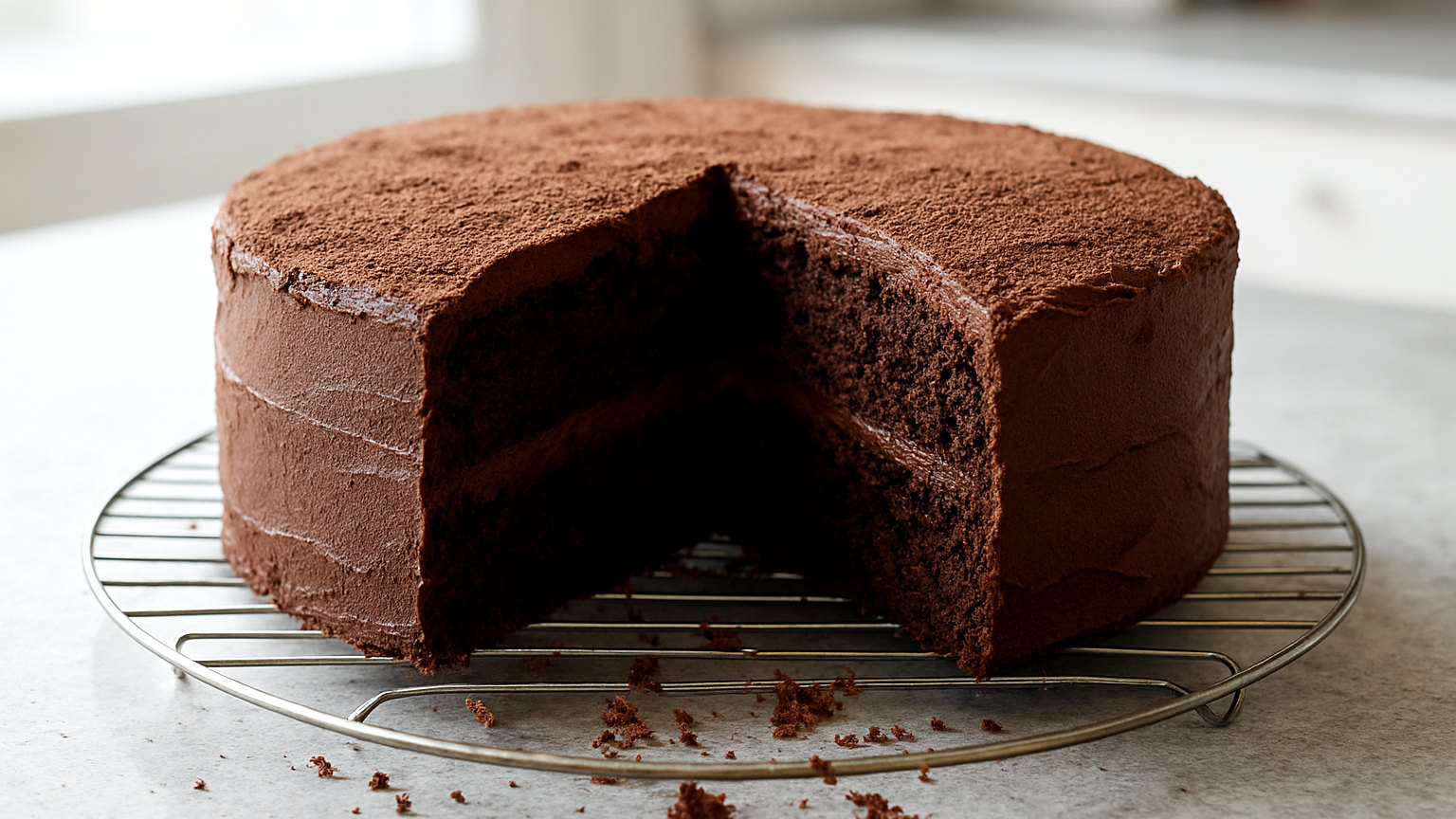
A classic chocolate sponge cake is essentially a Victoria sponge with cocoa. It uses the creaming method, where butter and sugar are beaten until pale and airy, which gives a lighter, springier crumb than an oil-based fudge cake. Filled and topped with chocolate buttercream, it is the traditional choice for a birthday tea or a cake stall, and it is a good recipe for learning how a sponge should look and feel.
How is it different from a chocolate fudge cake?
A fudge cake is dense, dark and moist, usually made with oil and brown sugar. A chocolate sponge is lighter and more delicate, with a finer crumb that holds its shape when sliced. The flavour is milder too, because the recipe uses only a small amount of cocoa powder so it does not weigh the sponge down. Choose the sponge when you want something light, and the fudge cake when you want richness.
What ingredients do you need?
For the sponge
- 200g unsalted butter, softened
- 200g caster sugar
- 4 large eggs, at room temperature
- 170g self-raising flour
- 30g cocoa powder
- 1 tsp baking powder
- 2 tbsp milk
For the chocolate buttercream
- 125g unsalted butter, softened
- 250g icing sugar
- 30g cocoa powder
- 2 to 3 tbsp milk
How do you make a chocolate sponge?
- Heat the oven to 180°C (160°C fan), gas 4. Grease two 20cm sandwich tins and line the bases.
- Beat the butter and caster sugar together for three to four minutes, until pale and fluffy. This step traps the air that makes the sponge rise.
- Beat in the eggs one at a time, adding a spoonful of the flour with the last egg if the mixture starts to look curdled.
- Sift in the remaining flour, cocoa powder and baking powder, then fold in gently with a large metal spoon along with the milk.
- Divide between the tins, level the tops and bake for 20 to 25 minutes, until risen and springy.
- Cool for five minutes in the tins, then turn out onto a wire rack.
- For the buttercream, beat the butter until very soft, then gradually beat in the icing sugar and cocoa, adding milk until smooth and spreadable.
- Sandwich the sponges with half the buttercream and swirl the rest over the top.
Room temperature matters: cold eggs can make the creamed butter seize and split. Take eggs and butter out of the fridge an hour before you start.
Why add milk to a sponge mixture?
Cocoa powder is dry and absorbs liquid, which can leave a chocolate sponge mixture stiffer than a plain one. A couple of spoonfuls of milk bring it back to what bakers call a dropping consistency, meaning it falls from a spoon in about five seconds when you tap it. Mixture at that consistency spreads evenly in the tin and bakes into a level, tender cake.
How do you stop a sponge from doming?
A domed top usually means the oven is too hot, so the outside sets before the middle has finished rising. Check your oven with a thermometer if it happens often. Spreading the mixture so it is slightly lower in the centre than at the edges also helps. For perfectly flat layers, wrap damp strips of old tea towel around the outside of the tins; the edges bake more slowly and the cake rises evenly.
How long does a chocolate sponge keep?
Filled with buttercream, the cake keeps for three days in an airtight container at room temperature. Un-iced sponges freeze well for up to three months. Buttercream can also be frozen, then beaten again once it has come back to room temperature.
Can you make it with the all-in-one method?
Yes. Put every sponge ingredient into a bowl and beat with an electric mixer for about two minutes until smooth. Add an extra half teaspoon of baking powder, because this method traps less air than creaming. The result is slightly denser but still light, and it is a good option when time is short.


