
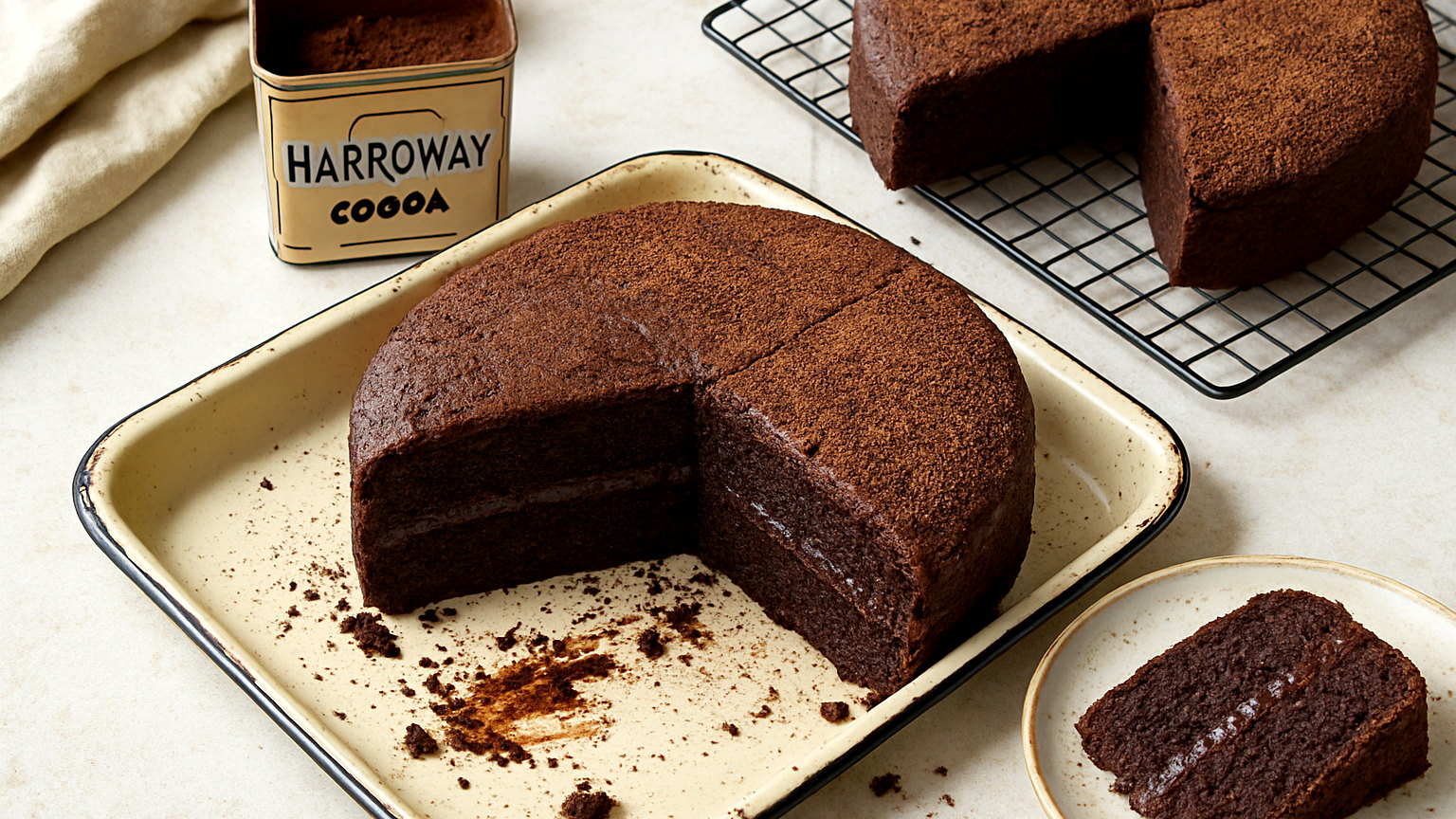
Cocoa powder gives a cake the strongest chocolate flavour and a lighter crumb, while melted chocolate gives a richer, denser and fudgier texture. Many of the best chocolate cake recipes use both: cocoa for depth of flavour and colour, and a little melted chocolate for richness. Understanding what each one does makes it much easier to choose the right recipe, fix a disappointing bake or adapt a recipe to suit what you have in the cupboard.
What is the difference between cocoa and chocolate?
Both start as roasted cocoa beans ground into a paste. To make cocoa powder, most of the fat, known as cocoa butter, is pressed out and the remaining solids are dried and ground. To make chocolate, cocoa butter and sugar are added back to the paste, along with milk powder for milk chocolate. So cocoa powder is concentrated flavour with very little fat or sugar, and chocolate is flavour plus fat and sugar in one ingredient.
Which gives a more chocolatey cake?
Gram for gram, cocoa powder has far more flavour, because it is almost pure cocoa solids. A cake made with 50g of cocoa usually tastes more intensely of chocolate than one made with 50g of dark chocolate. Melted chocolate, on the other hand, adds cocoa butter, which gives a smooth, melting richness and a fudgier texture. That is why a brownie made with plenty of chocolate feels so dense.
| Cocoa powder | Melted chocolate | |
|---|---|---|
| Flavour | Strong and slightly bitter | Rounder and sweeter |
| Texture | Light and tender | Dense, moist and fudgy |
| Fat and sugar | Very little | Plenty of both |
| Best for | Sponges and layer cakes | Mud cakes and brownies |
Should you use natural or alkalised cocoa?
Natural cocoa is slightly acidic and has a fruity, sharp flavour. It reacts with bicarbonate of soda, so recipes that rely on bicarbonate often assume natural cocoa. Alkalised cocoa, sometimes called Dutch-processed, has been treated to reduce its acidity, which makes it darker and milder. It works best with baking powder. Many supermarket cocoas are alkalised; look for an acidity regulator such as potassium carbonate in the ingredients. For most British recipes either will work, because they tend to use self-raising flour or baking powder.
Can you swap cocoa for melted chocolate?
You can, but not weight for weight, because chocolate brings extra fat and sugar. As a starting point, replace every 15g of cocoa powder with about 30g of 70% dark chocolate, then reduce the butter or oil by around 10g and the sugar by around 15g. Expect a denser, moister cake. It is usually safer to swap only half of the cocoa, which gives you a richer result without upsetting the balance of the recipe.
Which chocolate percentage is best for baking?
For most cakes, dark chocolate with 60 to 70% cocoa solids gives the best flavour without making the cake bitter. Chocolate with 50 to 55% is sweeter and suits recipes for children. Milk chocolate adds sweetness and creaminess but little chocolate flavour, so it is better in frostings than in the sponge itself. Avoid cake covering, which contains vegetable fat instead of cocoa butter and tastes waxy.
Bloom your cocoa: whisking cocoa powder into a hot liquid such as coffee, milk or water before adding it to the batter dissolves lumps and releases more flavour.
Do cocoa and chocolate affect raising agents?
Yes. Cocoa is dry and absorbs liquid, so batters with a lot of cocoa can become stiff and need extra milk. Natural cocoa also adds acidity that activates bicarbonate of soda. Melted chocolate adds weight and fat, which can stop a sponge rising as much, so recipes using a lot of it often add an extra egg for structure. When you change the cocoa or chocolate in a recipe, check the batter feels similar to the original before baking.
When should you use both?
Using both gives you the best of each. Cocoa powder provides colour and a deep, clear chocolate flavour, while a smaller amount of melted chocolate adds richness and a moist, melting texture. This combination is common in celebration cakes and mud cakes, where you want a strong flavour and a crumb that stays soft for days. A typical balance is about two parts cocoa to one part chocolate by weight.


