
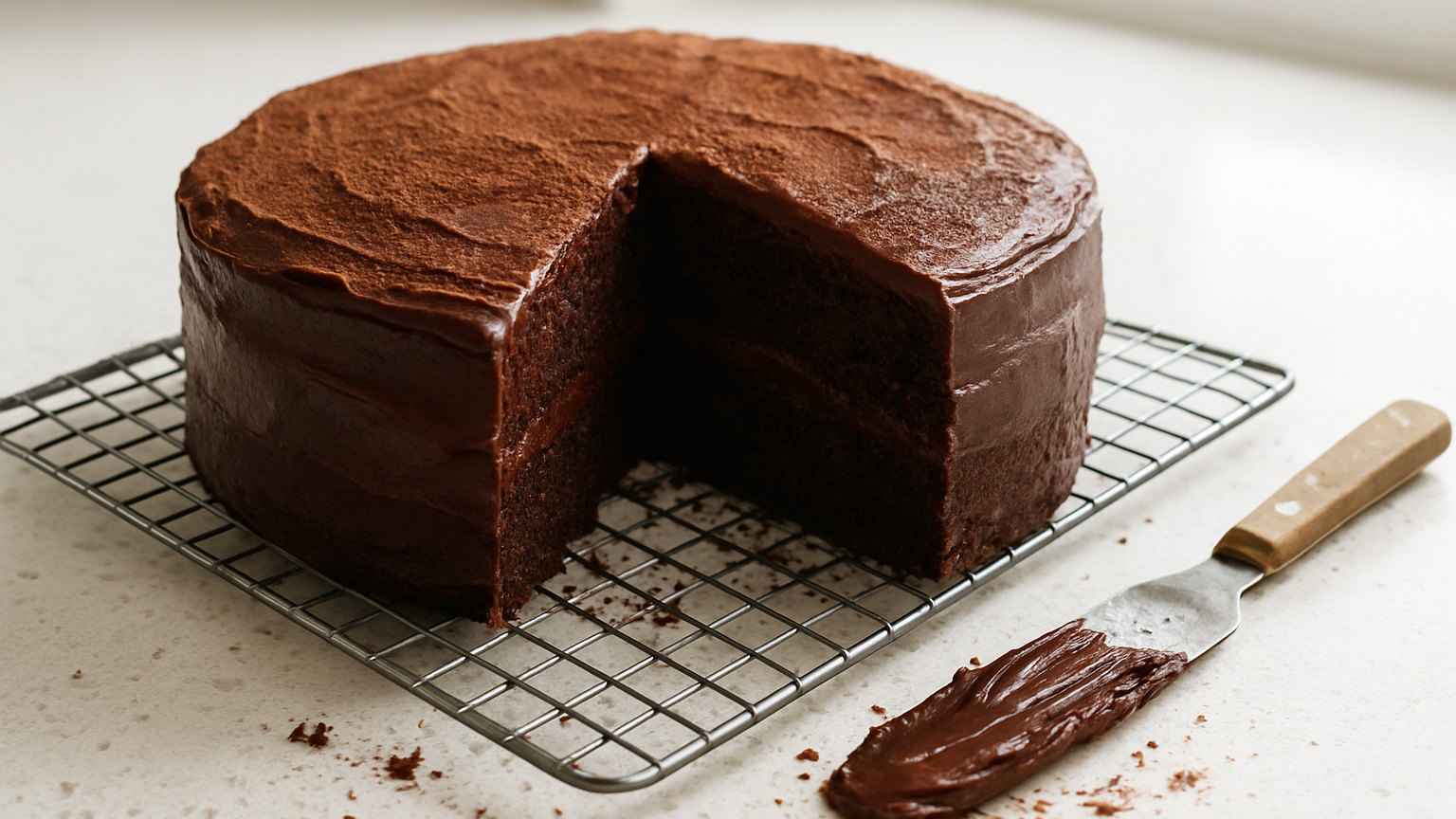
A vegan chocolate cake can be every bit as soft and rich as a traditional one, and this version is simpler than most. It uses oil instead of butter, plant milk instead of dairy, and a little vinegar reacting with bicarbonate of soda to lift the sponge in place of eggs. The result is a moist, dark two-layer cake that nobody will guess is plant-based unless you tell them.
How does a vegan cake rise without eggs?
In an ordinary sponge, eggs trap air and help set the structure. Here the lift comes from chemistry. Bicarbonate of soda is an alkali, and when it meets an acid such as cider vinegar it releases carbon dioxide, which forms bubbles in the batter. The heat of the oven then sets the flour around those bubbles. Because the reaction starts as soon as the wet and dry ingredients meet, get the cake into the oven promptly once mixed.
Which plant milk works best?
Soya milk and oat milk give the best results because they contain enough protein and body to keep the crumb tender. Almond milk works but gives a slightly thinner batter. Use unsweetened versions so you can control the sugar. Water also works in a pinch, and some bakers prefer it, since it lets the cocoa flavour come through more clearly.
What ingredients do you need?
For the cake
- 250g plain flour
- 225g caster sugar
- 50g cocoa powder
- 1½ tsp bicarbonate of soda
- ½ tsp fine salt
- 330ml unsweetened soya or oat milk
- 100ml vegetable oil
- 1 tbsp cider vinegar
- 1 tsp vanilla extract
For the dairy-free frosting
- 125g vegan butter block, softened
- 250g icing sugar
- 30g cocoa powder
- 1 to 2 tbsp plant milk
How do you make a vegan chocolate cake?
- Heat the oven to 180°C (160°C fan), gas 4. Grease two 20cm sandwich tins and line the bases.
- Whisk the flour, sugar, cocoa powder, bicarbonate of soda and salt together in a large bowl.
- In a jug, mix the plant milk, oil, cider vinegar and vanilla.
- Pour the wet ingredients into the dry and whisk until just smooth, without overmixing.
- Divide between the tins and bake straight away for 25 to 30 minutes, until a skewer comes out clean.
- Cool in the tins for 10 minutes, then turn out onto a wire rack.
- For the frosting, beat the vegan butter until soft, then beat in the icing sugar and cocoa, adding plant milk until smooth.
- Sandwich and top the cooled cakes with the frosting.
Check your labels: most cocoa powder is naturally dairy-free, but some chocolate and sprinkles contain milk. Look for a vegan mark on anything you use for decorating.
Which vegan butter is best for frosting?
Use a firm block rather than a soft spread in a tub. Spreads contain more water and oil, which makes frosting slack and prone to sliding off the cake. Block vegan butters behave much like dairy butter and whip up light and smooth. If your kitchen is warm, chill the frosted cake for 20 minutes before slicing.
Can you make it gluten-free too?
Yes. Swap the plain flour for a gluten-free plain flour blend and add ½ tsp xanthan gum if your blend does not already contain it. The cake will be slightly more crumbly, so let it cool fully before moving the layers. As with all egg-free baking, avoid overmixing, which can make the texture gummy.
How long does it keep?
The frosted cake keeps for three days in an airtight tin at room temperature. Un-iced layers freeze for up to two months when wrapped well. Most sugar sold in the UK is suitable for vegans, but check the packet if you are baking for someone who avoids all animal products strictly.
Why is my vegan cake dense or gummy?
A dense or gummy vegan cake is almost always overmixed. Without eggs to support it, the batter relies on a light touch, so whisk only until the flour disappears. Leaving the mixed batter to stand before baking also lets the bubbles escape. Finally, check that your bicarbonate of soda is fresh; a spoonful dropped into vinegar should fizz immediately.


