
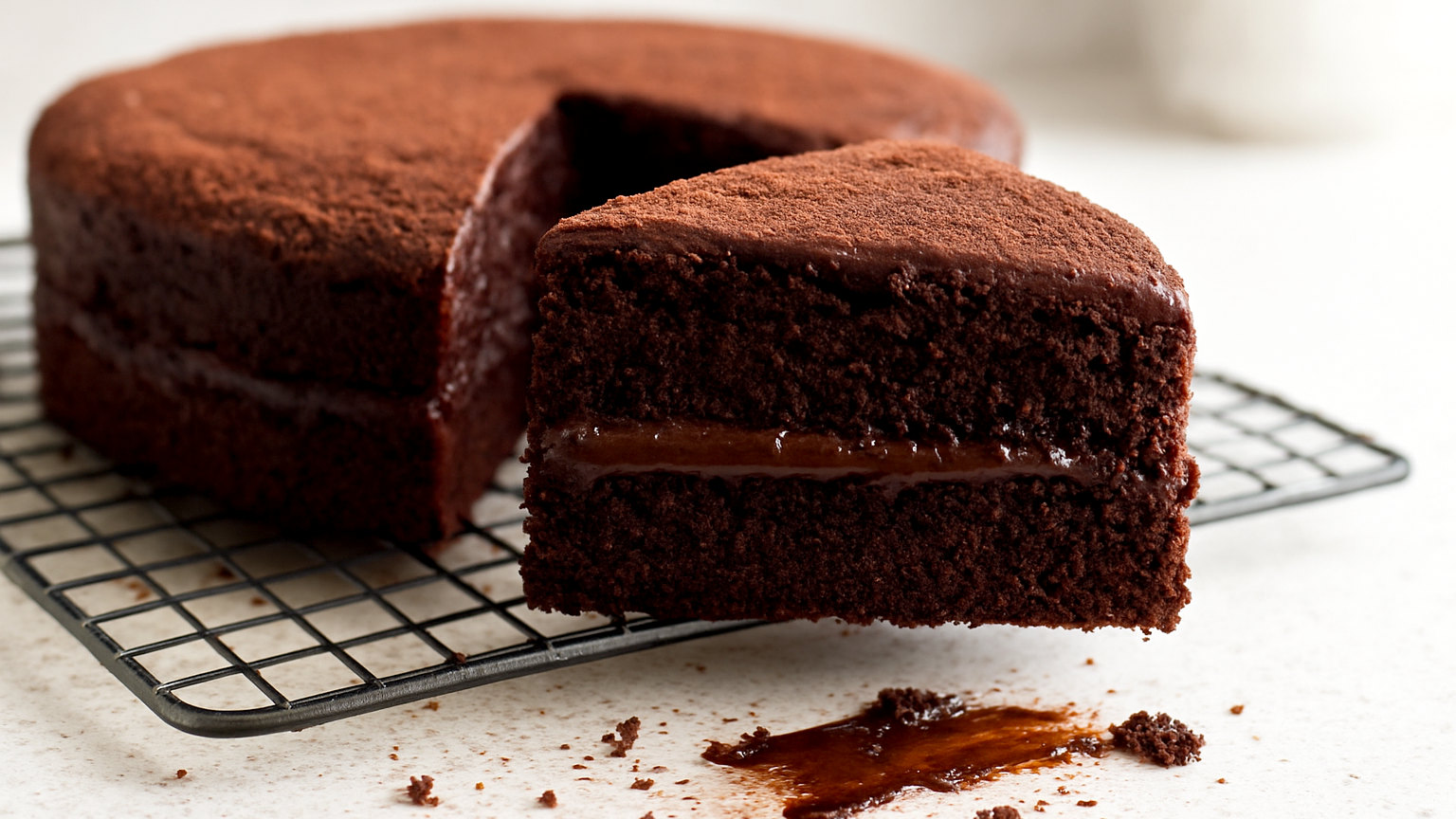
A chocolate cake usually sinks in the middle because it was underbaked, the oven door was opened too early, or the recipe had too much raising agent for the tin. Less often, the oven was too cool or the batter was overmixed. The good news is that each cause leaves clues, and once you know what to look for, a sunken cake is easy to prevent. Chocolate cakes are especially prone to this because their dark colour hides when they are done.
Why do cakes sink in the middle?
As a cake bakes, gas from the raising agent and steam from the liquid expand, pushing the batter up. The heat then sets the flour and eggs around those bubbles. If the cake comes out, or the oven cools, before the structure has set, the bubbles collapse and the middle falls. Anything that makes the cake rise too fast or set too slowly can cause a sunken cake.
What are the most common causes?
| What you see | Likely cause | How to fix it |
|---|---|---|
| Wet, dense band in the middle | Underbaked | Bake longer and use a skewer test |
| Rose high, then collapsed | Too much raising agent | Measure with proper spoons |
| Sank after checking | Oven door opened early | Wait until three-quarters of the time |
| Pale and flat all over | Oven too cool | Check with an oven thermometer |
| Coarse, holey crumb | Overmixed batter | Fold in the flour gently |
Can too much baking powder make a cake sink?
Yes, and it is a surprisingly common cause. Too much baking powder or bicarbonate of soda produces more gas than the batter can hold, so the cake rises dramatically, the bubbles grow too large and burst, and the middle drops. Always use level measuring spoons rather than cutlery, and never add extra raising agent to self-raising flour unless the recipe asks for it.
Does opening the oven door make a cake sink?
It can. Opening the door in the first half of baking lets a rush of cool air in just as the cake is rising and still unset. The temperature drop can be enough to collapse the middle. Wait until at least three-quarters of the baking time has passed before opening the door, and close it gently. Use the oven light to check progress instead.
How can you tell when a chocolate cake is baked?
Colour is not much help with chocolate sponge, so use several signs together. The top should spring back when pressed lightly, and the edges should be shrinking slightly from the tin. A skewer or thin knife pushed into the centre should come out with a few moist crumbs but no wet batter. If you have one, an instant-read thermometer should read about 96°C in the middle of a sponge.
Check your oven: many domestic ovens run 10 to 20 degrees hotter or cooler than the dial suggests. An inexpensive oven thermometer is the single most useful tool for more reliable baking.
Can old ingredients cause a sunken cake?
Yes. Baking powder loses strength over time, especially once opened. To test it, stir half a teaspoon into a little hot water; it should fizz vigorously. Test bicarbonate of soda with a splash of vinegar or lemon juice in the same way. Weak raising agents give a cake that rises slowly, sets unevenly and can dip in the centre as it cools.
Can you rescue a cake that has sunk?
Often, yes. If the cake is cooked through but slightly dipped, level the top with a serrated knife and fill the hollow with buttercream or ganache; nobody will know. If the middle is raw, return it to the oven straight away for 10 minutes, covered loosely with foil. A badly sunken cake can still be turned into trifle, cake pops or a quick chocolate cake pudding with warm custard.
Does the tin size make a difference?
Yes. Putting the batter into a smaller or deeper tin than the recipe asks for means the centre takes much longer to cook, so the edges set while the middle is still liquid. It is one of the easiest ways to end up with a sunken cake. If you have to use a deeper tin, lower the oven temperature by about 10 degrees and bake for longer, so the heat has time to reach the middle before the outside overcooks.


