
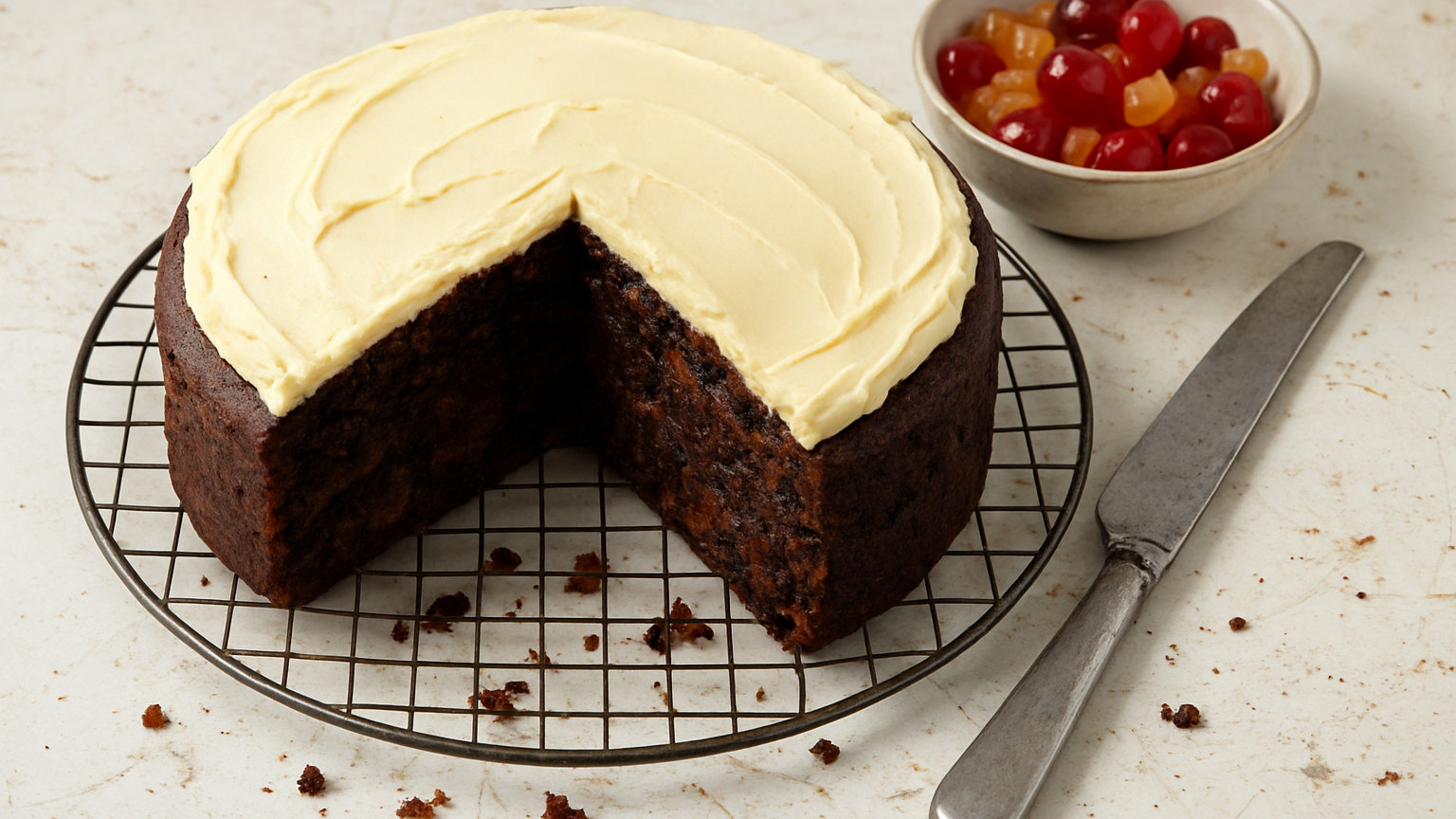
A boiled fruit cake is one of the easiest and most comforting cakes you can make. The dried fruit, butter, sugar, spice and liquid are simmered together in a saucepan for a few minutes, which plumps up the fruit and melts everything into a rich syrup. Once cool, eggs and flour are stirred in and the cake is baked. The result is moist, dark and fruity, and unlike a rich Christmas cake it is ready to eat as soon as it has cooled.
Why is the fruit boiled first?
Simmering dried fruit in liquid makes it soft and juicy, so it stays moist in the oven and does not draw moisture from the cake. It also dissolves the sugar and melts the butter, which gives a dense, sticky, even crumb without any creaming. It is a traditional method that dates back to times when butter and eggs were scarce, as it makes a satisfying cake from simple, inexpensive ingredients.
Which liquid should you use?
Water works perfectly well, but other liquids add extra flavour. Cold tea gives a rich, slightly tannic flavour that is traditional in many British and Irish recipes. Orange juice adds sweetness and a citrus note. A mixture of water and a splash of brandy, rum or whisky makes it more festive. Guinness or another stout gives a dark, malty cake similar to Irish porter cake.
What ingredients do you need?
- 400g mixed dried fruit
- 150g unsalted butter
- 150g light brown soft sugar
- 200ml water, cold tea or orange juice
- 1 tsp mixed spice
- 1 tsp bicarbonate of soda
- 2 large eggs, beaten
- 225g self-raising flour
- A pinch of fine salt
How do you make a boiled fruit cake?
- Put the dried fruit, butter, sugar, liquid and mixed spice in a large saucepan. Bring to a simmer over a medium heat, stirring until the butter melts, then simmer gently for five minutes.
- Take the pan off the heat and stir in the bicarbonate of soda. The mixture will foam up, so use a large pan.
- Leave to cool for at least 30 minutes, until just warm.
- Heat the oven to 160°C (140°C fan), gas 3. Grease and line a 900g loaf tin or a deep 18cm round tin.
- Stir the beaten eggs into the cooled fruit mixture, then sift in the flour and salt and fold together.
- Pour into the tin and bake for 1 hour to 1 hour 15 minutes, until risen, firm and a skewer comes out clean.
- Cool in the tin for 15 minutes before turning out onto a wire rack.
Let it cool first: if the fruit mixture is still hot when you add the eggs, they can start to cook and scramble. Warm, not hot, is the goal.
Why add bicarbonate of soda to the pan?
The bicarbonate of soda reacts with the acidity of the brown sugar and dried fruit, releasing gas that helps the cake rise. It also darkens the colour and softens the fruit skins. Adding it to the hot mixture starts the reaction early, which gives the cake its characteristic moist, even texture.
Can you make it without eggs?
Yes. Many old boiled fruit cake recipes contain no eggs at all. Leave them out and add an extra 50ml of liquid to the pan. The cake will be slightly denser and more crumbly, but still moist and very good, which makes it a useful option for anyone with an egg allergy.
How long does it keep?
A boiled fruit cake keeps for up to two weeks wrapped in baking paper and foil in an airtight tin. It actually improves after a day or two as the flavours settle. It freezes well for up to three months, and it is lovely sliced and spread with butter, served with a wedge of cheese, or packed into lunchboxes.
Can you bake it as a Christmas cake?
Yes. For a quick Christmas cake, double the recipe and bake it in a deep 20cm round tin at 150°C (130°C fan) for about two hours. Add a splash of brandy to the pan and a little extra spice. It will not be as rich as a traditional Christmas cake, but it can be made just a week or two before and still covered with marzipan and icing.


