
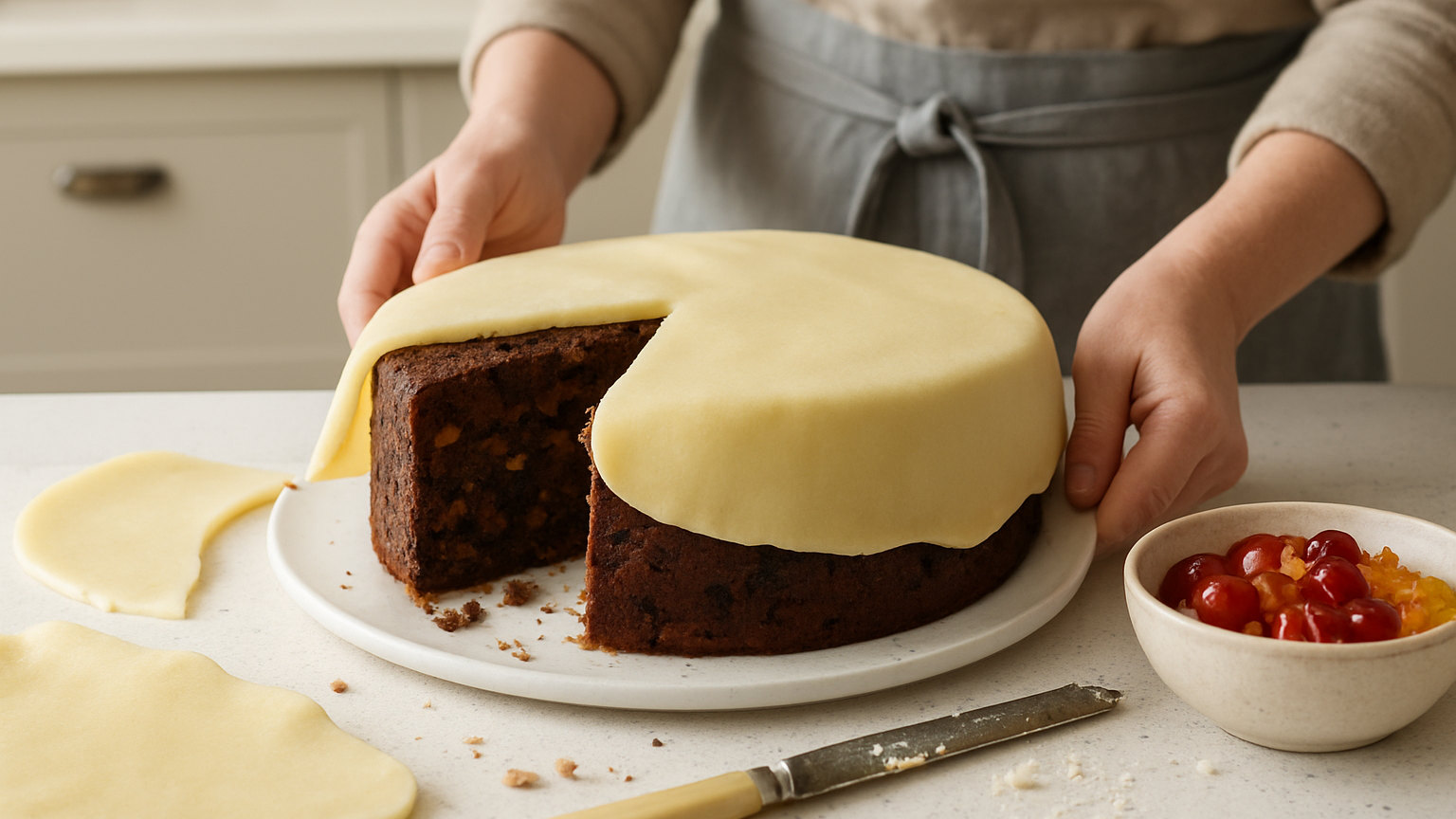
A rich Christmas cake is dark, moist and packed with brandy-soaked dried fruit, warm spices and a hint of black treacle. It is baked slowly for several hours, then fed with more brandy over the following weeks before being covered with marzipan and icing. Made in October or November, it matures into a deep, mellow cake that keeps well into the New Year and is the centrepiece of the British Christmas table.
When should you make a Christmas cake?
Most bakers make their Christmas cake between early October and late November, which gives six to ten weeks for the flavour to mature and for the cake to be fed. Traditionally, many families bake on Stir-up Sunday, the last Sunday before Advent. If you are short of time, a rich fruit cake made just two weeks before Christmas is still delicious, simply a little less mellow.
Why soak the dried fruit?
Soaking the dried fruit overnight in brandy plumps it up, so it stays juicy during the long bake rather than drawing moisture from the cake. It also carries the flavour of the alcohol right through the crumb. Cover the bowl and leave it at room temperature for at least 12 hours, stirring once or twice. For an alcohol-free cake, soak the fruit in orange juice or cold tea instead.
What ingredients do you need?
- 1kg mixed dried fruit, such as raisins, sultanas, currants, glacé cherries and mixed peel
- 125ml brandy, plus extra for feeding
- 250g unsalted butter, softened
- 250g dark brown soft sugar
- 4 large eggs
- 1 tbsp black treacle
- Finely grated zest of 1 orange and 1 lemon
- 250g plain flour
- 2 tsp mixed spice
- ½ tsp ground cinnamon
- 75g chopped almonds
How do you make a rich Christmas cake?
- The day before, mix the dried fruit with the brandy in a large bowl, cover and leave to soak.
- Heat the oven to 140°C (120°C fan), gas 1. Line a deep 20cm round tin with a double layer of baking paper that stands 5cm above the rim.
- Wrap a double band of brown paper or newspaper around the outside of the tin and tie it with string. This insulates the sides during the long bake.
- Beat the butter and sugar until light and fluffy, then beat in the eggs one at a time with a spoonful of flour.
- Stir in the treacle and zests.
- Sift in the flour and spices and fold in, then stir in the soaked fruit and almonds until evenly mixed.
- Spoon into the tin, level the top and make a slight hollow in the centre so the cake bakes flat.
- Bake for 3½ to 4 hours, until a skewer pushed into the centre comes out clean.
- Leave to cool completely in the tin, then spoon over 2 tbsp brandy, wrap in baking paper and foil, and store in an airtight tin.
Protect the top: if the cake is browning too quickly after two hours, lay a sheet of baking paper with a small hole in the centre loosely over the tin.
How do you know when it is done?
A rich fruit cake is ready when it is firm to the touch, a deep brown on top and a skewer pushed into the centre comes out clean, without sticky batter. The cake may make a faint crackling sound when you listen closely at the top; a quiet cake is usually done. Fruit on the skewer is fine, but wet mixture means it needs longer.
How do you store and feed it?
Wrap the cooled cake in baking paper and then foil, and keep it in an airtight tin in a cool, dark cupboard. Every one to two weeks, unwrap it, pierce the top with a skewer and spoon over one or two tablespoons of brandy. Stop feeding about a week before you add the marzipan, so the surface can dry out slightly.
When should you marzipan and ice it?
Cover the cake with marzipan about a week before Christmas and leave it to dry for two or three days, then add royal icing or ready-to-roll icing. This gives the marzipan time to firm up so its oils do not stain the icing. Once iced, the cake keeps for several weeks in an airtight tin.


