
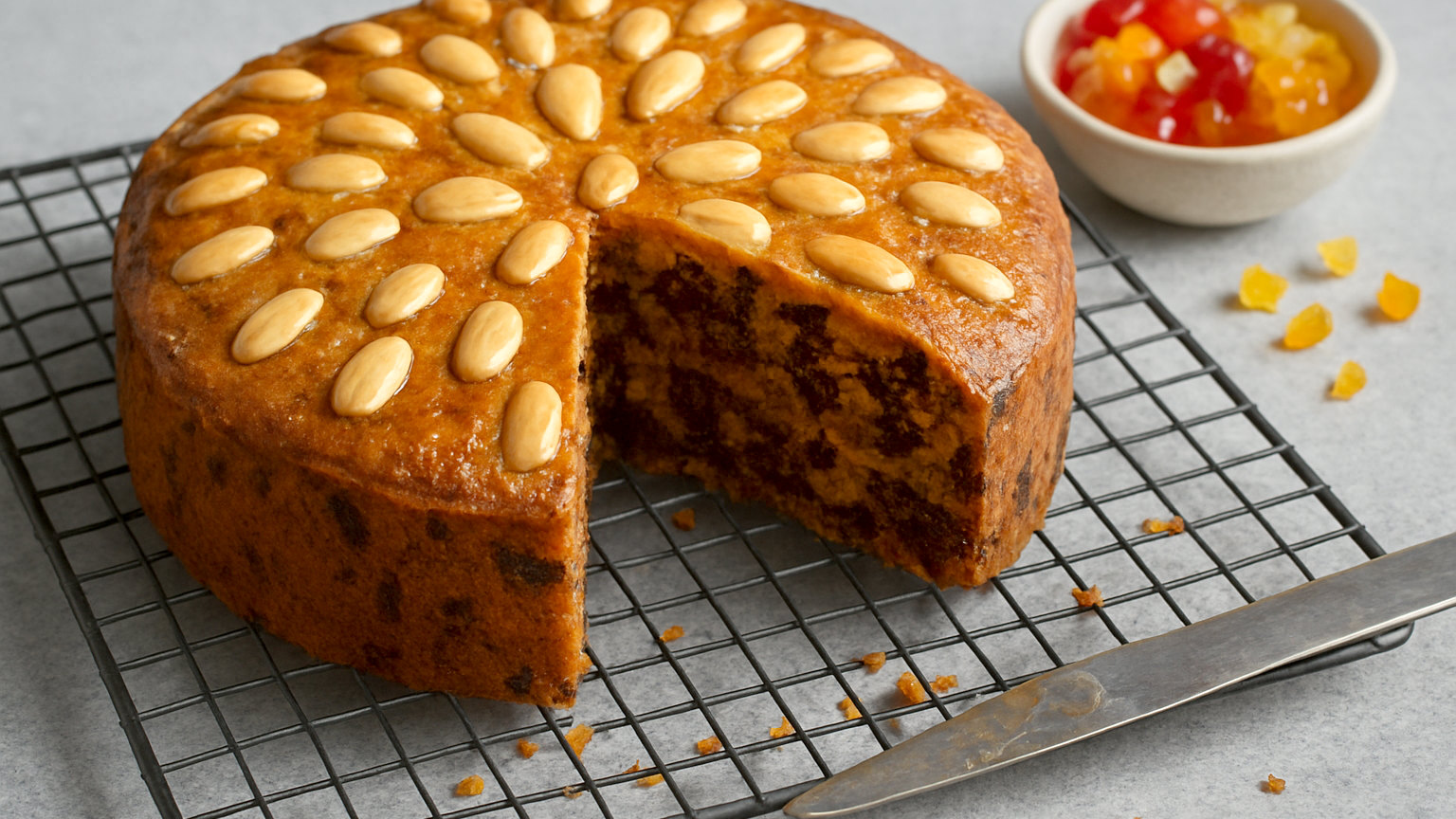
A Dundee cake is a traditional Scottish fruit cake, lighter than a rich Christmas cake, flavoured with orange zest and marmalade and decorated with rings of whole blanched almonds pressed into the top. It has no marzipan or icing, so the pattern of golden nuts is its signature. Buttery, fruity and gently citrus, it is a lovely cake for St Andrew's Day, Christmas and Hogmanay, or simply with a cup of tea at any time of year.
Where does Dundee cake come from?
As the name suggests, it comes from the city of Dundee on the east coast of Scotland. It is closely associated with the Keiller family, who were famous for Dundee marmalade and produced the cake commercially in the nineteenth century, which explains the orange flavour. Its popularity spread across Britain, and it remains one of the best-known Scottish bakes.
How is it different from a Christmas cake?
A Dundee cake is lighter in colour, texture and flavour than a rich Christmas cake. It contains less fruit, usually sultanas, currants and candied peel rather than dark raisins, and it uses light brown sugar rather than dark. It is not normally fed with alcohol, so it is ready to eat within a day or two, though it keeps well for several weeks.
What ingredients do you need?
- 175g unsalted butter, softened
- 175g light brown soft sugar
- Finely grated zest of 1 orange
- 3 large eggs
- 225g plain flour
- 1 tsp baking powder
- 50g ground almonds
- 2 tbsp orange marmalade
- 200g sultanas
- 150g currants
- 50g candied peel, chopped
- 2 tbsp milk or whisky
- 50g whole blanched almonds, for the top
How do you make a Dundee cake?
- Heat the oven to 150°C (130°C fan), gas 2. Grease a deep 20cm round tin and line the base and sides with baking paper.
- Beat the butter, sugar and orange zest until light and fluffy.
- Beat in the eggs one at a time, adding a spoonful of flour with each.
- Sift in the remaining flour and baking powder, then fold in with the ground almonds and marmalade.
- Stir in the sultanas, currants, candied peel and milk or whisky until evenly mixed.
- Spoon into the tin and level the top.
- Arrange the blanched almonds in neat concentric circles over the surface, pressing them in very lightly.
- Bake for 1 hour 45 minutes to 2 hours, until golden, firm and a skewer comes out clean.
- Cool completely in the tin before turning out.
Do not press too hard: almonds pushed deep into the mixture sink during baking. Rest them gently on the surface and they will settle in as the cake rises.
Why use blanched almonds?
Blanched almonds have had their brown skins removed, so they toast to an even golden colour in the oven and look neat and bright on top of the cake. Almonds with their skins on turn dark and can taste bitter after the long bake. If you can only find skin-on almonds, cover them with boiling water for a minute, drain, and the skins will slip off easily.
How long does a Dundee cake keep?
Wrapped in baking paper and foil and stored in an airtight tin, a Dundee cake keeps for up to a month, and the flavour improves after a few days. You can brush the top with a little whisky once a week if you like, though it is not traditional. It also freezes well for up to three months. Wrap it in individual slices if you would like to take out one piece at a time.
What can you serve with it?
In Scotland, a slice of Dundee cake is often served with a cup of tea or a small dram of whisky. It also pairs well with a wedge of mature Cheddar or Wensleydale cheese, a combination popular across the north of England and Scotland. Warmed slightly with a spoonful of custard, it makes a comforting winter pudding, and leftover slices are excellent toasted and buttered.


