
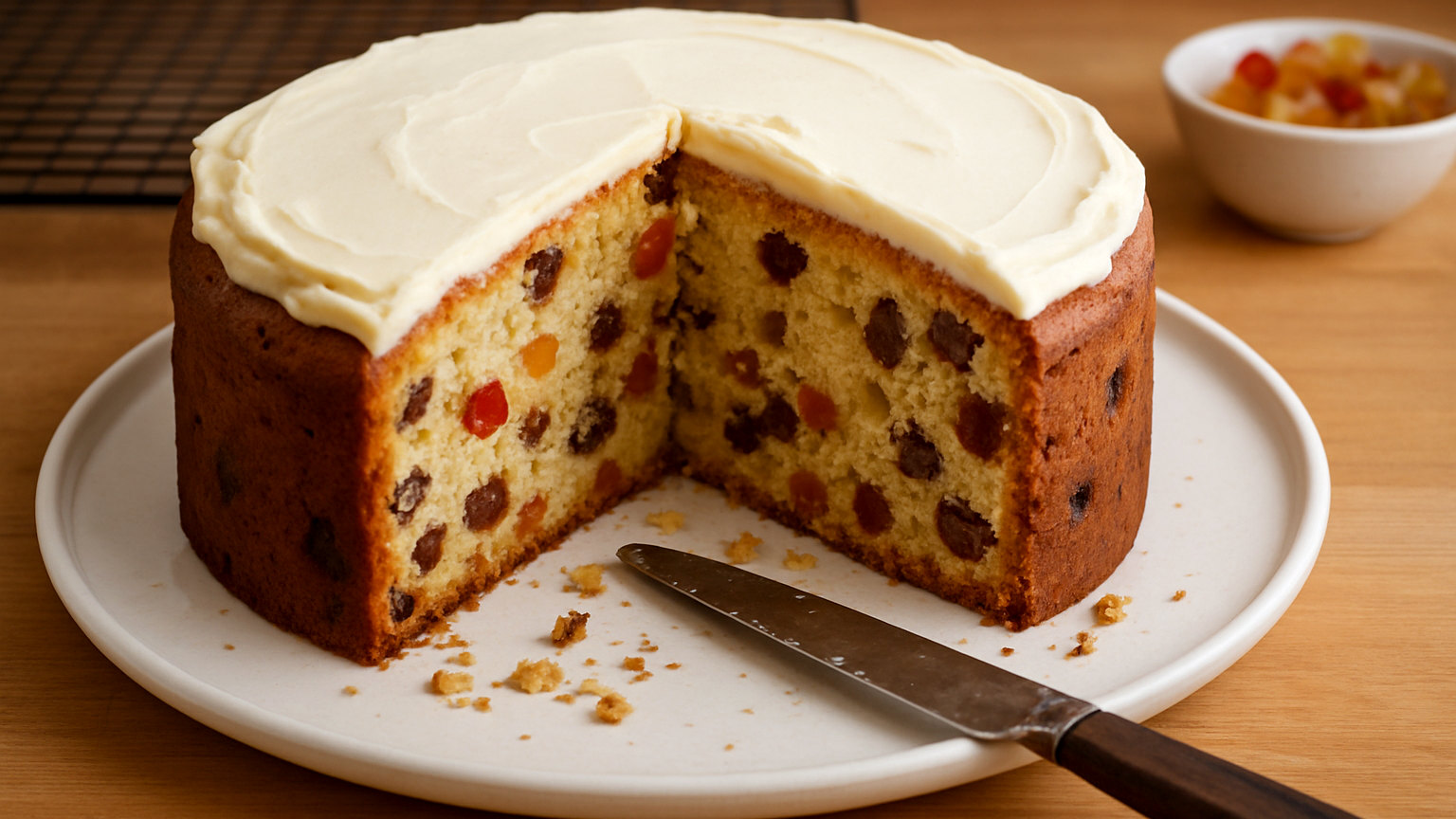
A Genoa cake is a light, golden fruit cake packed with sultanas, glacé cherries and mixed peel, flavoured with lemon and orange zest and topped with flaked almonds that toast to a crunchy finish. It was a favourite in Victorian Britain and is still sold in bakeries today. Lighter than a Christmas cake and quicker to make, it is an excellent everyday fruit cake for afternoon tea, picnics and lunchboxes.
Where does Genoa cake come from?
The cake takes its name from the Italian city of Genoa, which was famous for its rich, buttery cakes and candied fruit. Recipes for Genoa cake appeared in British cookery books during the nineteenth century, when candied peel and glacé fruit became more widely available. It became a British and Commonwealth classic, and it remains popular in Australia and New Zealand as well as the UK.
How is it different from a Dundee cake?
Both are light fruit cakes, but they have different flavours and toppings. A Genoa cake contains glacé cherries and plenty of mixed peel, and is topped with flaked almonds scattered over the surface. A Dundee cake is flavoured with orange marmalade, contains no cherries in most versions, and is decorated with whole blanched almonds arranged in neat circles. A Genoa cake is usually slightly paler and more buttery.
What ingredients do you need?
- 175g unsalted butter, softened
- 175g caster sugar
- Finely grated zest of 1 lemon and 1 orange
- 3 large eggs
- 225g plain flour
- 1 tsp baking powder
- 50g ground almonds
- 2 tbsp milk
- 200g sultanas
- 100g glacé cherries, rinsed, dried and quartered
- 75g mixed peel
- 25g flaked almonds
How do you make a Genoa cake?
- Heat the oven to 160°C (140°C fan), gas 3. Grease a deep 20cm round tin and line the base and sides.
- Beat the butter, sugar and citrus zests until pale and fluffy.
- Beat in the eggs one at a time, adding a spoonful of the flour with each.
- Sift in the remaining flour and baking powder, then fold in with the ground almonds and milk.
- Fold in the sultanas, cherries and mixed peel until evenly spread.
- Spoon into the tin, level the top and scatter evenly with the flaked almonds.
- Bake for 1 hour 20 to 1 hour 30 minutes, until golden, firm and a skewer comes out clean.
- Cool in the tin for 20 minutes, then turn out onto a wire rack.
Stop the almonds burning: flaked almonds brown quickly during a long bake. If they are getting too dark after an hour, lay a sheet of foil loosely over the top.
Why rinse the glacé cherries?
Glacé cherries are coated in a sticky syrup that makes them slide through the batter and sink to the bottom of the cake. Rinsing them under warm water, drying them thoroughly and cutting them into quarters makes them lighter and helps them stay evenly suspended. Tossing them in a spoonful of flour gives them extra grip.
Can you use other fruit?
Yes. Chopped dried apricots, cranberries or pineapple add colour and a slight tang. Raisins and currants give a darker, richer cake. Keep the total weight of fruit about the same so the balance of batter to fruit stays correct. Candied peel adds the traditional citrus flavour, but you can leave it out and add extra zest if you dislike it.
How long does it keep?
Stored in an airtight tin and wrapped in baking paper, a Genoa cake keeps for up to two weeks. Its flavour improves after a day or two, as the fruit softens and the citrus mellows. It also freezes well for up to three months.
Can you ice a Genoa cake?
Traditionally a Genoa cake is not iced; the flaked almond top is its finish. However, it makes a good lighter alternative to a rich Christmas cake. Bake it without the almonds, then cover with marzipan and ready-to-roll icing for anyone who prefers a less heavy fruit cake at Christmas.


