
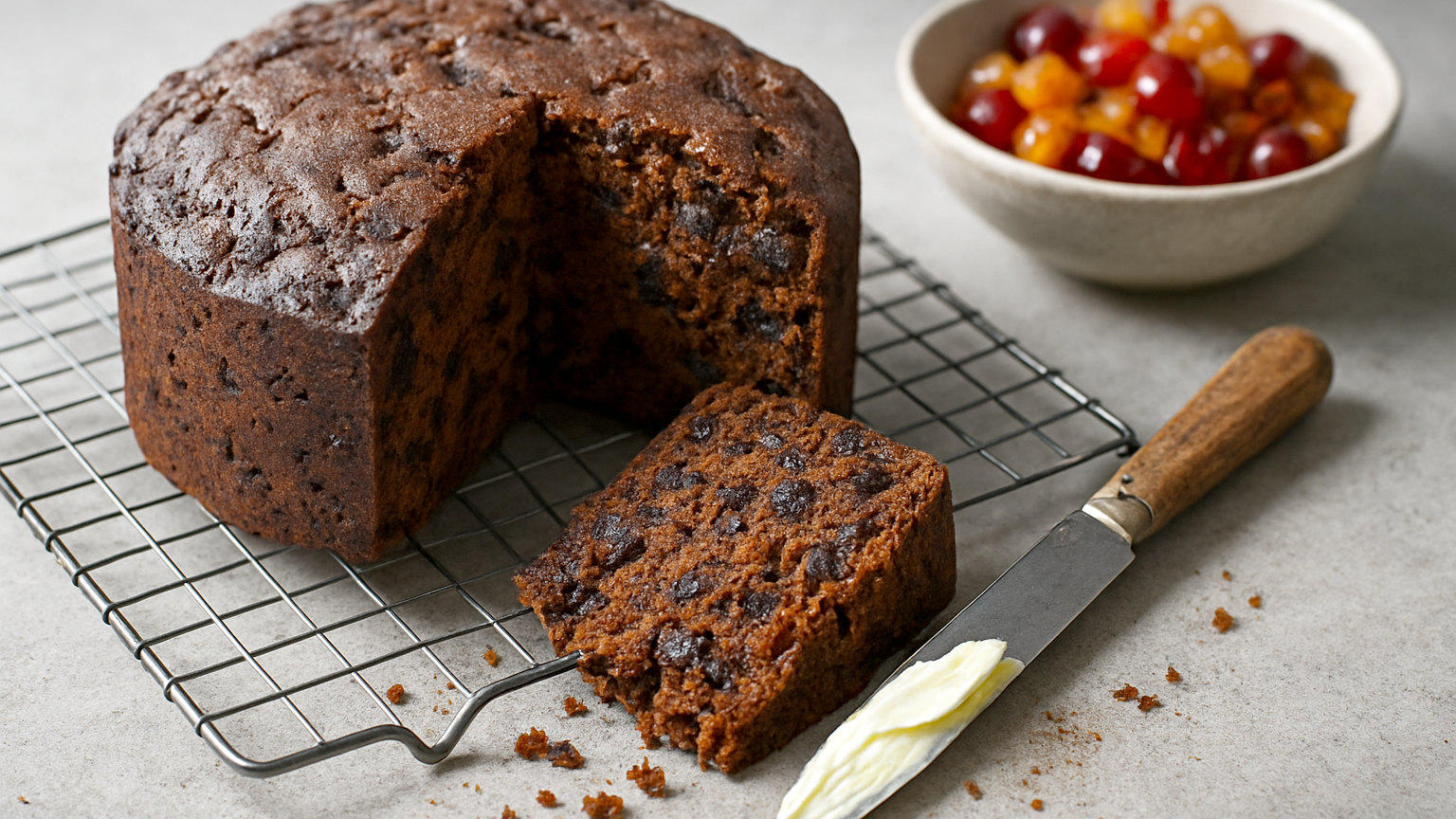
Fruit sinks in a cake because it is heavier than the batter around it, and as the batter warms and loosens in the oven, the fruit drops through before the cake has set. Wet or sticky fruit, a thin batter, large pieces of fruit and too much raising agent all make it more likely. The good news is that a few simple changes, mostly to the batter rather than the fruit, keep it evenly spread through every slice.
Why does fruit sink to the bottom?
When a cake goes into the oven, the butter melts and the batter becomes thinner for a while before the eggs and flour set. During that window, anything heavy suspended in the batter can slide downwards. Dense, syrupy fruit such as glacé cherries is the most likely to sink, followed by large pieces of fresh fruit and chocolate chunks. Small, light dried fruit such as currants rarely causes problems.
What are the main causes?
| Cause | Why it happens | Fix |
|---|---|---|
| Batter too thin | Cannot hold heavy fruit | Keep the batter stiff |
| Fruit wet or syrupy | Slides through the mixture | Rinse and dry thoroughly |
| Pieces too large | Too heavy to be supported | Chop into smaller pieces |
| Too much raising agent | Batter becomes weak and airy | Measure carefully |
| Oven too cool | Batter stays runny for longer | Check with a thermometer |
Does tossing fruit in flour work?
It helps, but only a little. A light coating of flour absorbs surface moisture and gives the fruit something to grip, which is useful for sticky fruit such as glacé cherries or chopped dates. However, if the batter itself is too thin to hold the fruit, no amount of flour will stop it sinking. The consistency of the cake batter matters far more.
How thick should the batter be?
For a fruit cake, the batter should be stiff enough to drop reluctantly from a spoon, rather than pouring. A thick batter holds the fruit in place while it bakes. Recipes designed for fruit often use a higher proportion of flour or add ground almonds, which thicken the mixture. If you add fruit to a recipe that was not written for it, such as a light sponge, reduce the milk slightly or add a tablespoon or two of extra flour.
How do you stop glacé cherries sinking?
Glacé cherries are the worst offenders because they are heavy and coated in syrup. Rinse them in a sieve under warm water, dry them very well on kitchen paper, then cut them into quarters. Toss them in a spoonful of the measured flour. Combined with a firm batter, this keeps them evenly distributed.
Layer the batter: spread a thin layer of plain batter over the base of the tin before adding the fruit-filled mixture. This gives the fruit a cushion to settle on rather than the bottom of the tin.
Can too much raising agent cause sinking?
Yes. Too much baking powder or bicarbonate of soda creates large bubbles that make the batter weak and open, and it cannot support heavy fruit. When using self-raising flour, do not add extra raising agent unless the recipe asks for it. For rich fruit cakes, many recipes use plain flour with little or no raising agent, because a dense batter holds the fruit best.
Does fresh fruit behave differently?
Fresh fruit such as berries, apples and plums releases juice as it bakes, which thins the batter around it and helps it sink. Choose firm fruit, pat it dry and cut it into small pieces. Frozen berries should be added straight from the freezer, still frozen, as they release less juice before the batter sets. Scattering some of the fruit over the top of the batter, rather than stirring it all in, also gives a more even result. Tossing the berries in a little flour helps absorb any juice they release, so the batter around them stays thick enough to hold them in place.


