
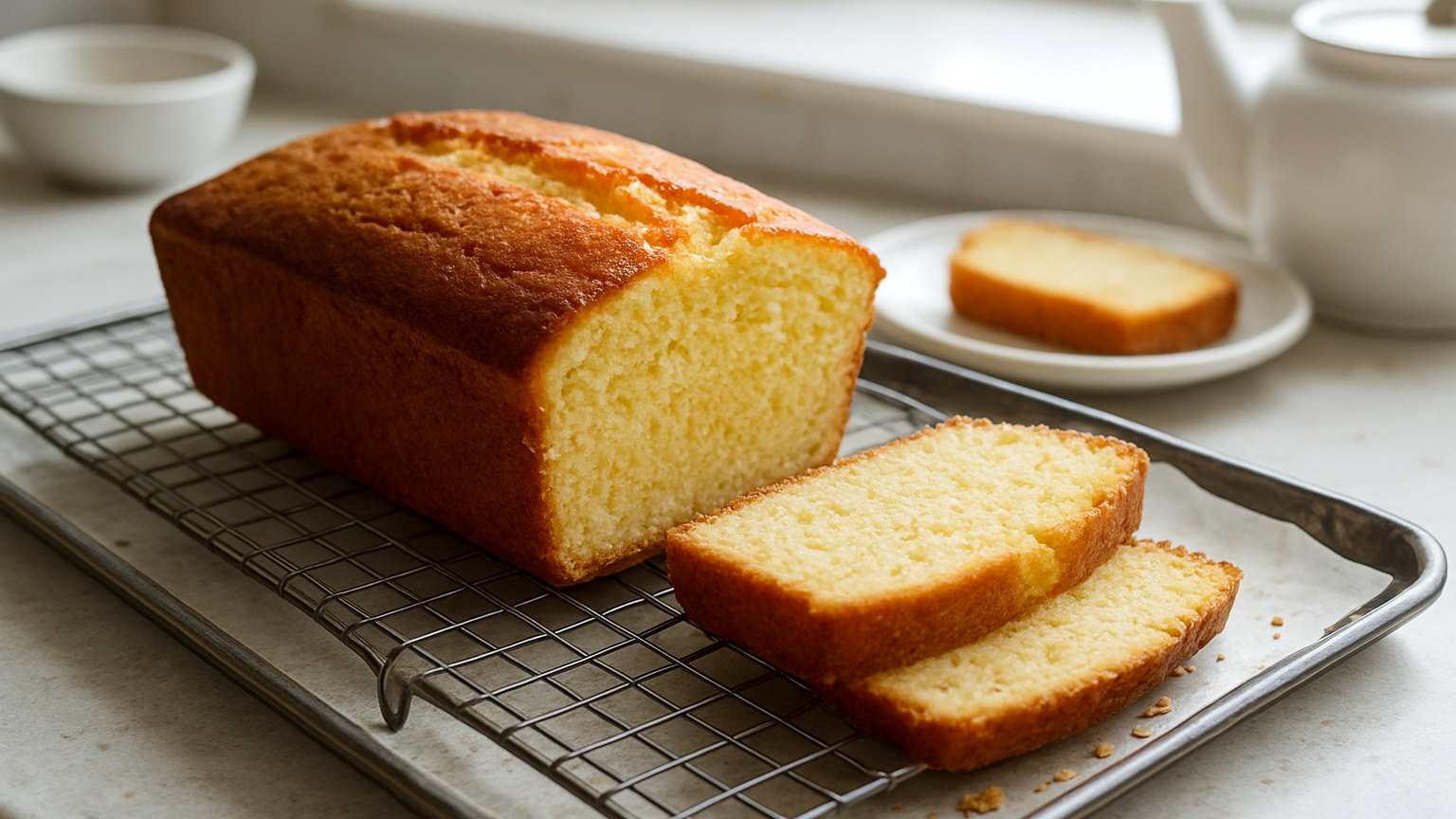
A Madeira cake is a firm, buttery sponge with a fine, close crumb and a gentle flavour of lemon. It is sturdier than a Victoria sponge, which makes it a British classic both for afternoon tea and as the base for carved, shaped and novelty cakes. Traditionally, a thin strip of candied citron peel is laid on top halfway through baking, and it is served in simple slices, perhaps with a cup of tea or a glass of something sweet.
Why is it called Madeira cake?
Despite the name, Madeira cake does not come from Madeira and contains no Madeira wine. It was named in England in the eighteenth and nineteenth centuries because it was often served with a glass of Madeira wine, a fortified wine from the Portuguese island that was fashionable at the time. The pairing is still lovely today, although most people now enjoy it with tea.
How is it different from a Victoria sponge?
A Madeira cake uses a higher proportion of flour, some of it plain, and less raising agent than a Victoria sponge. This gives a denser, tighter crumb that holds together when cut into shapes. It is baked in a single deep tin at a lower temperature for longer, so it develops a firm golden crust. A Victoria sponge is lighter and softer, and is usually baked in two shallow tins.
What ingredients do you need?
- 175g unsalted butter, softened
- 175g caster sugar
- Finely grated zest of 1 lemon
- 3 large eggs
- 150g self-raising flour
- 100g plain flour
- 2 to 3 tbsp milk
- A thin strip of candied citron peel, optional
How do you make a Madeira cake?
- Heat the oven to 160°C (140°C fan), gas 3. Grease a 900g loaf tin and line with baking paper.
- Beat the butter, sugar and lemon zest together until light and fluffy.
- Beat in the eggs one at a time, adding a spoonful of flour with each.
- Sift in the self-raising flour and plain flour, then fold in with enough milk to give a soft dropping consistency.
- Spoon into the tin and level the top.
- Bake for 30 minutes, then quickly lay the strip of candied citron on top, if using, and close the door gently.
- Bake for another 30 to 40 minutes, until golden, risen and a skewer comes out clean.
- Cool in the tin for 10 minutes, then turn out onto a wire rack.
Why add the peel later: citron peel placed on the raw batter sinks. Added after 30 minutes, when the top has started to set, it stays on the surface and looks neat.
Why is Madeira cake used for novelty cakes?
The firm, close crumb holds its shape when carved, stacked or covered with fondant, and it produces fewer crumbs than a light sponge. It also keeps well, so it can be baked a day or two before decorating. That is why many bakers use it for numbered birthday cakes, character shapes and wedding cake tiers. For a larger cake, bake the mixture in a deep round or square tin and allow a longer time.
What is candied citron?
Citron is a large, thick-skinned citrus fruit, and its peel is candied in sugar syrup. It has a fragrant, slightly bitter flavour and a pale, translucent look. It can be hard to find in supermarkets, so a strip of candied lemon or orange peel makes a good substitute, or you can simply leave it out.
How long does it keep?
Madeira cake keeps well for up to a week in an airtight tin at room temperature, which is one reason it has always been popular. It freezes well for up to three months, wrapped tightly. For novelty cakes, bake it the day before decorating, as a day-old cake carves more cleanly than a fresh one.
Can you add other flavours?
Yes. Replace the lemon zest with orange zest, add a teaspoon of vanilla extract, or fold in 100g glacé cherries for a cherry Madeira. For a chocolate version, replace 25g of the plain flour with cocoa powder and add an extra tablespoon of milk.


