
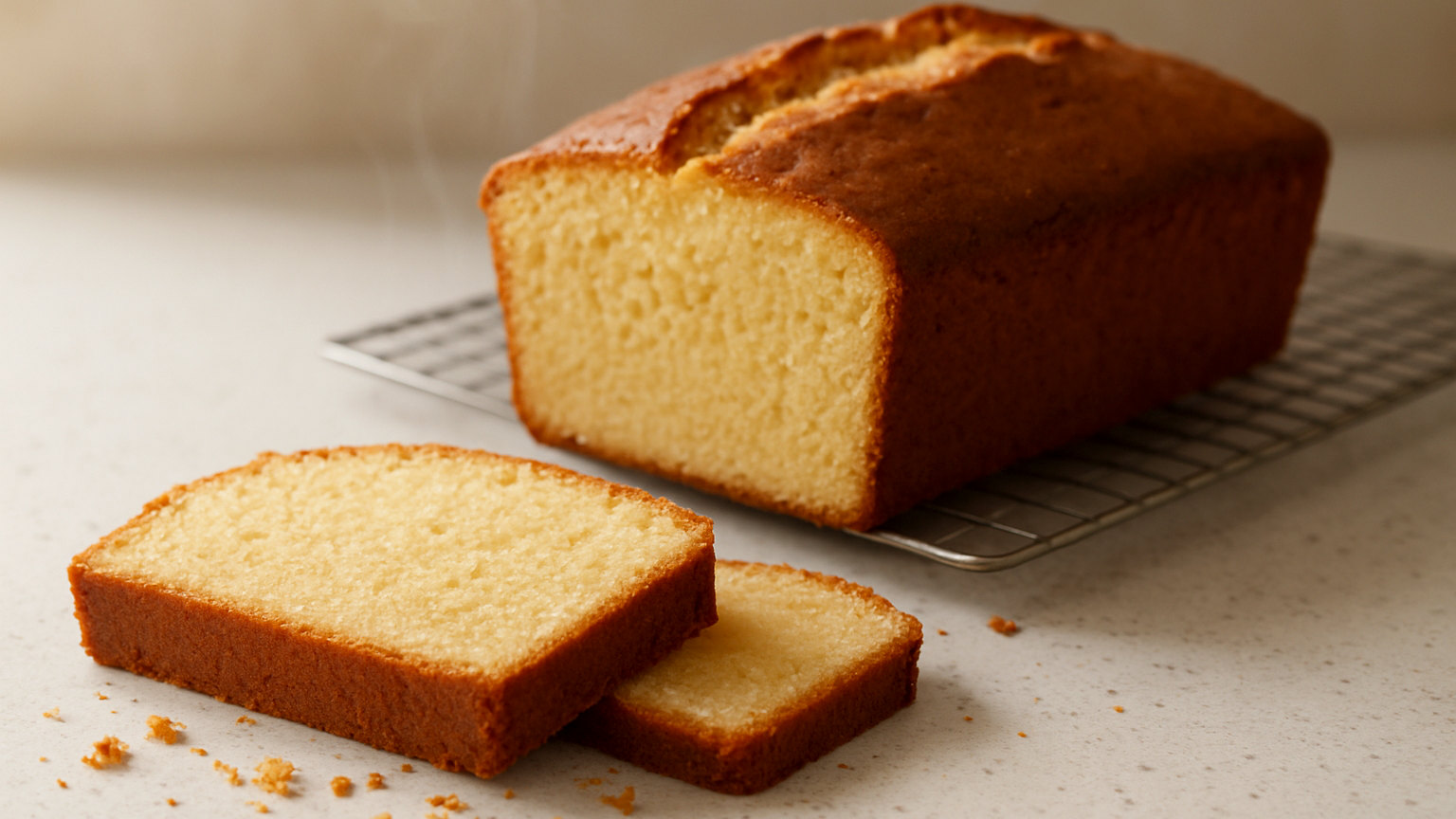
A classic pound cake is a rich, buttery loaf with a dense, velvety crumb and a golden crust. It gets its name from the original recipe, which used a pound each of butter, sugar, eggs and flour. It is one of the oldest cakes in British and American baking, and many later cakes, including the Victoria sponge and Madeira cake, grew from the same idea. Simple and satisfying, it is perfect with fresh fruit or a cup of tea.
Why is it called pound cake?
Early recipes from the eighteenth century called for a pound each of the four main ingredients, which made the cake easy to remember in a time when many people could not read recipe books. Those quantities made a very large cake, so modern recipes keep the same equal weights but in smaller amounts. The name stuck, even though few people bake a full-sized pound cake today.
How is it different from a Victoria sponge?
Both use equal weights of butter, sugar, eggs and flour. However, a traditional pound cake uses plain flour and little or no raising agent, relying on air beaten into the butter and eggs. This gives a denser, richer and closer crumb. A Victoria sponge uses self-raising flour and is baked in two shallow tins, giving a lighter texture. A Madeira cake sits between the two.
What ingredients do you need?
- 225g unsalted butter, softened
- 225g caster sugar
- 4 large eggs, at room temperature
- 225g plain flour
- ½ tsp baking powder
- 1 tsp vanilla extract
- A pinch of fine salt
- 2 tbsp milk
How do you make a pound cake?
- Heat the oven to 160°C (140°C fan), gas 3. Grease a 900g loaf tin and line with baking paper.
- Beat the butter and sugar together for five minutes, until very pale and fluffy. This is where the cake gets most of its lift.
- Beat the eggs with the vanilla, then add to the butter a little at a time, beating well between each addition.
- Sift in the flour, baking powder and salt, then fold in gently with the milk until smooth.
- Spoon into the tin and level the top.
- Bake for 1 hour to 1 hour 10 minutes, until golden, risen with a crack along the top, and a skewer comes out clean.
- Cool in the tin for 15 minutes, then turn out onto a wire rack.
Beat for longer: with so little raising agent, the long creaming step is essential. Five minutes of beating gives a lighter, finer pound cake than a quick mix.
Why use equal weights?
Equal weights of fat, sugar, eggs and flour give a naturally balanced cake that is rich but not greasy, and firm but not dry. Weighing the eggs in their shells and matching the other ingredients to that weight is an old trick that guarantees the right balance. It also makes the recipe easy to scale up or down for different tin sizes.
How can you flavour a pound cake?
Vanilla extract is traditional, but lemon or orange zest, almond extract or a few tablespoons of brandy all work well. For a marble pound cake, mix cocoa powder into half the batter and swirl. A simple lemon glaze or a dusting of icing sugar is all it needs on top.
How should you serve it?
Pound cake is lovely on its own, but it is also excellent with fresh berries and whipped cream, or toasted and served with ice cream and a fruit compote. Its firm crumb makes it a good base for trifle, as it soaks up juice without falling apart.
How long does it keep?
Stored in an airtight tin at room temperature, pound cake keeps for up to a week. The high butter content keeps it moist, and many people find the flavour better on the second day. It freezes well for up to three months, and slices defrost in about an hour.


