
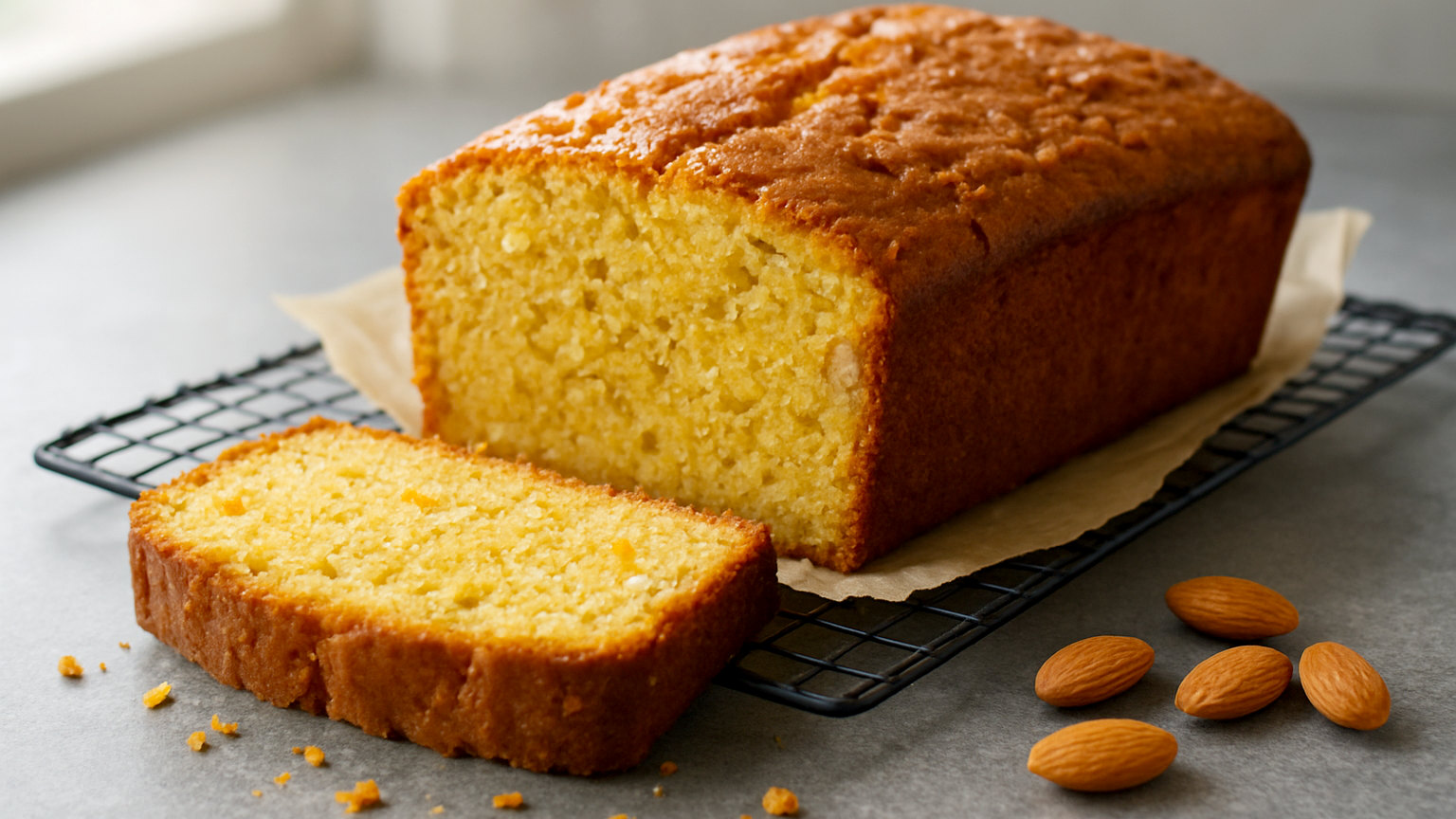
An orange and almond loaf cake is made from whole oranges that are boiled until soft, then blended, peel and all, into a fragrant purée and mixed with ground almonds, eggs and sugar. There is no flour and no butter, so the cake is naturally gluten-free and dairy-free. The result is dense, very moist and intensely citrusy, with a slight bitterness from the peel that makes it taste grown-up and sophisticated.
Where does this cake come from?
Cakes made with whole oranges and almonds have a long history in Sephardic Jewish and Middle Eastern cooking, where they are often served at Passover because they contain no flour. The idea was popularised in Britain in the second half of the twentieth century by the food writer Claudia Roden, and it has since become a much-loved gluten-free bake. Traditionally it is made in a round tin, but a loaf tin works beautifully.
Why boil the whole oranges?
Boiling the oranges for about an hour and a half softens the peel and pith completely and mellows their bitterness, so they can be blended into a smooth purée. Using the whole fruit gives the cake its intense orange flavour and extraordinarily moist texture. It takes a while, but it is almost entirely hands-off time, and the oranges can be boiled a day or two ahead.
What ingredients do you need?
- 1 large orange, about 250g, or 2 small ones
- 3 large eggs
- 150g caster sugar
- 200g ground almonds
- 1 tsp gluten-free baking powder
- 2 tbsp flaked almonds, for the top
- Icing sugar, for dusting
How do you make an orange and almond loaf?
- Put the whole oranges in a pan, cover with water and simmer, covered, for 1½ hours, topping up with water if needed, until very soft.
- Drain and leave to cool. Cut in half, remove any pips, then blend the whole oranges, including the peel, to a smooth purée.
- Heat the oven to 170°C (150°C fan), gas 3. Grease a 900g loaf tin and line with baking paper.
- Whisk the eggs and sugar together until pale and slightly thickened.
- Stir in the orange purée, ground almonds and baking powder until evenly combined.
- Pour into the tin and scatter with flaked almonds.
- Bake for 50 minutes to 1 hour, until golden, firm and a skewer comes out clean. Cover with foil if it browns too quickly.
- Cool completely in the tin, as the cake is fragile while warm. Dust with icing sugar before serving.
Speed it up: you can microwave the oranges instead. Pierce them, put them in a covered bowl with a little water and cook on high for about 10 minutes, until soft.
Is it gluten-free and dairy-free?
Yes. This orange cake contains no flour, butter or milk, so it is naturally both a gluten-free cake and a dairy-free cake. Check that your baking powder is labelled gluten-free, as some brands contain wheat starch. It is not suitable for anyone with a nut allergy, because it relies on ground almonds.
Which oranges should you use?
Ordinary navel oranges work well, as they have no pips and thin skin. Thin-skinned oranges give a less bitter cake. In January and February, blood oranges make a beautiful pink-tinged version, and a Seville orange mixed with a sweet orange adds a marmalade-like bitterness. Choose unwaxed fruit if you can, since the peel is used.
How should you serve it?
Serve it on its own dusted with icing sugar, or as a dessert with Greek yoghurt, crème fraîche and a drizzle of orange syrup. Fresh berries or pomegranate seeds add colour and sharpness. It is lovely with a cup of coffee.
How long does it keep?
Because it is so moist, the loaf keeps very well. Store it in an airtight container in a cool place for up to five days; in warm weather, keep it in the fridge. It freezes well for up to three months, and the flavour often improves after a day as the citrus mellows.


