
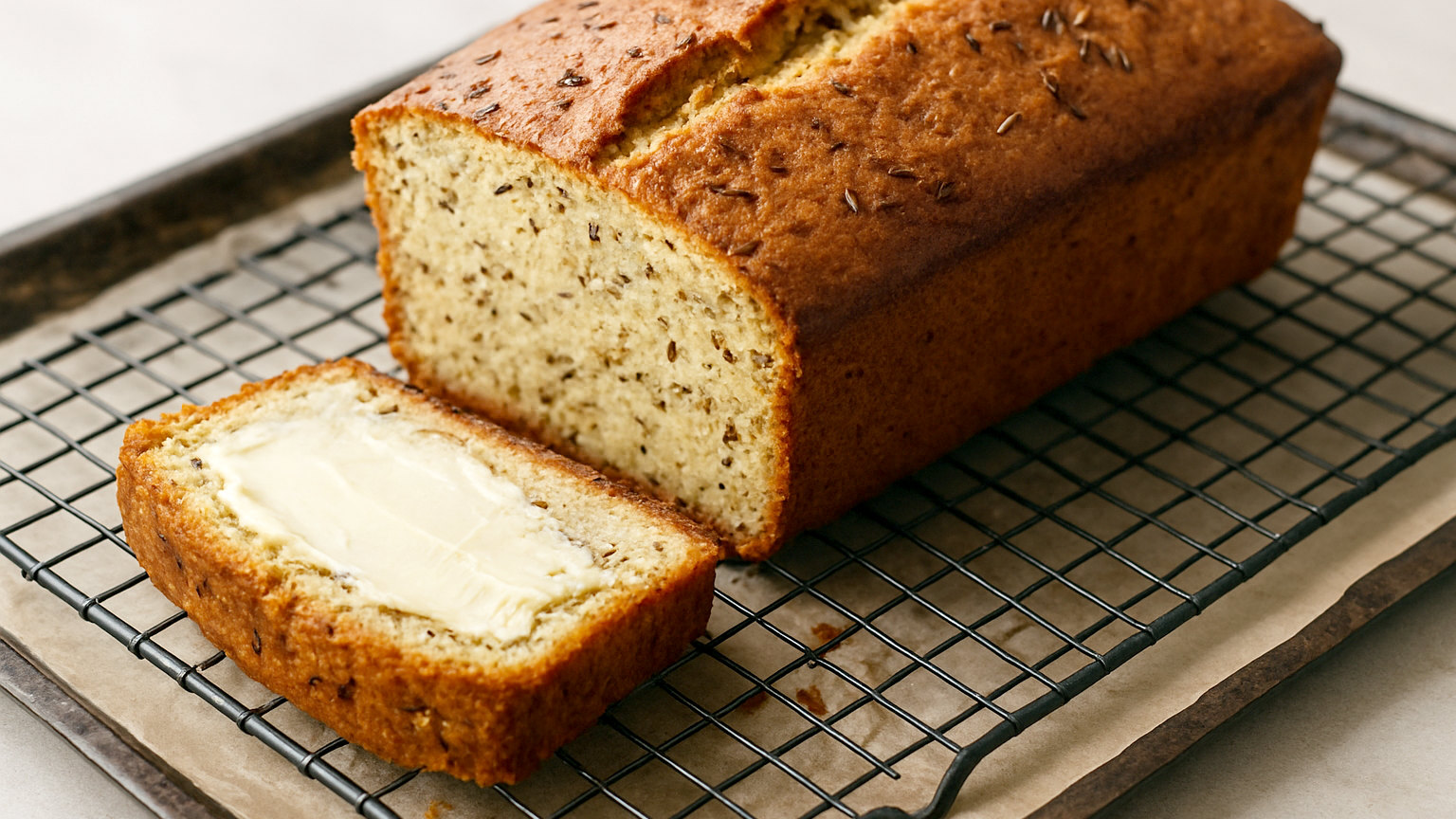
A caraway seed cake is an old-fashioned British loaf cake made with a buttery Madeira-style sponge, ground almonds and caraway seeds, which give it a warm, aromatic flavour. It was one of the most popular cakes in Georgian and Victorian Britain and appears in many classic novels, from Charlotte Brontë's Jane Eyre to Tolkien's The Hobbit, where Bilbo serves seed cake to his unexpected guests. It is simple, distinctive and well worth rediscovering.
What does caraway taste like?
Caraway seeds have a warm, slightly peppery flavour with a hint of aniseed and citrus. They are best known in Britain as the flavouring in rye bread and some cheeses. In a sweet cake, their flavour is gentle rather than overpowering, and it gives the buttery sponge a subtle, aromatic depth. People who dislike aniseed often find caraway much milder than they expect.
Why toast the caraway seeds?
Toasting the seeds briefly in a dry frying pan for one or two minutes, until fragrant, releases their natural oils and deepens their flavour. Toasted seeds taste warmer and nuttier, while raw ones can taste slightly sharp. Keep them moving in the pan and take them off the heat as soon as you can smell them, as they burn quickly. Let them cool before adding to the mixture.
What ingredients do you need?
- 175g unsalted butter, softened
- 175g caster sugar
- 3 large eggs
- 200g self-raising flour
- 50g ground almonds
- 2 tsp caraway seeds, toasted
- Finely grated zest of ½ lemon
- 2 tbsp milk
- 1 tbsp demerara sugar, for the top
How do you make a seed cake?
- Heat the oven to 170°C (150°C fan), gas 3. Grease a 900g loaf tin and line with baking paper.
- Beat the butter and caster sugar until light and fluffy.
- Beat in the eggs one at a time.
- Sift in the flour, then fold in with the ground almonds, toasted seeds, lemon zest and milk.
- Spoon into the tin, level the top and sprinkle with demerara sugar.
- Bake for 50 minutes to 1 hour, until golden and a skewer comes out clean.
- Cool in the tin for 10 minutes, then turn out onto a wire rack.
Start small: if you are new to caraway, use one teaspoon of seeds the first time. You can increase it to two or three teaspoons once you know how much you like.
Why add ground almonds?
Ground almonds make the cake richer and moister, and give it a slightly denser, more tender crumb. They also help it keep for longer. Many historical seed cake recipes contained almonds or almond flavouring, and they complement the caraway beautifully. For a nut-free version, replace them with the same weight of extra flour and add an extra tablespoon of milk.
How is seed cake different from Madeira cake?
The two are very closely related. A seed cake is essentially a Madeira cake flavoured with caraway, often with ground almonds added. Both have a firm, buttery crumb and were traditionally served in slices at afternoon tea, sometimes with a glass of sweet wine. Seed cake has a more distinctive, aromatic flavour.
How should you serve it?
Serve seed cake in slices with a cup of tea, as it was in Victorian drawing rooms. It is also lovely with a small glass of sherry or Madeira. Some people enjoy it toasted and buttered, and it goes well with a wedge of mild, creamy cheese.
How long does it keep?
Stored in an airtight tin at room temperature, seed cake keeps for up to a week, and the caraway flavour develops over the first day or two. It freezes well for up to three months. Caraway seeds themselves keep best in an airtight jar away from light.
Can you use other seeds?
Yes. Fennel seeds give a sweeter, stronger aniseed flavour, so use a little less. Poppy seeds make a milder, nuttier cake with a crunchy texture. For a modern twist, try a mixture of caraway seeds and orange zest, which brings out the citrus notes in the seeds.


