
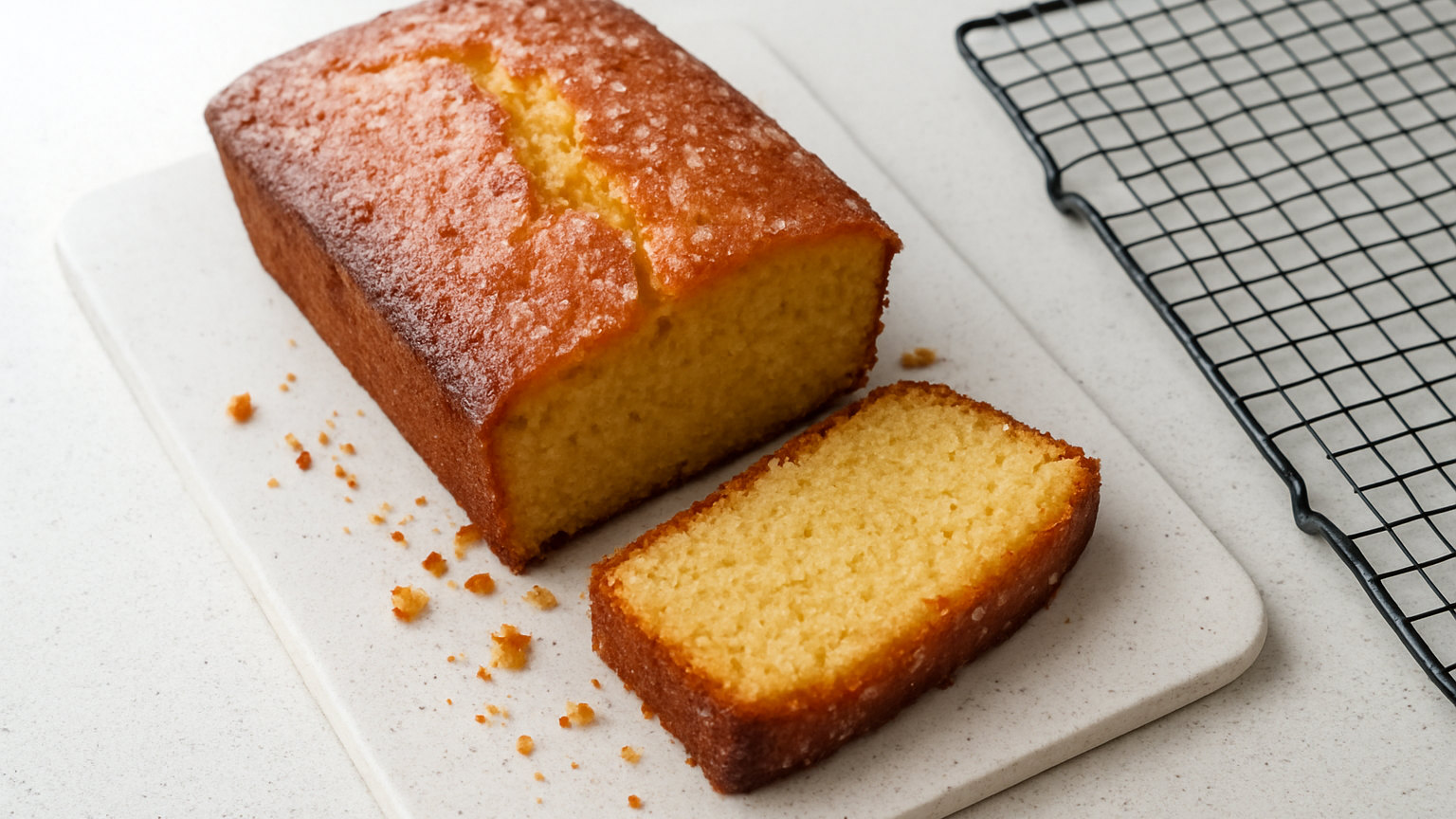
A crack along the top of a loaf cake is completely normal and happens because the outside sets before the middle has finished rising. A loaf that sinks or stays raw in the middle is a different matter, usually caused by underbaking, the wrong tin size, too much raising agent or an oven that is too hot. Knowing which problems are expected and which can be fixed makes baking loaf cakes much less stressful.
Why do loaf cakes crack on top?
Loaf tins are narrow and deep, so the batter sits in a tall column. In the oven, the outside of the cake, next to the hot metal, sets first. The middle keeps rising after the top has formed a crust, and it pushes up through the weakest point, splitting the crust along the centre. This is so common that many people see a neat crack as the sign of a well-risen loaf cake.
How can you get a neater crack?
If you prefer a tidy split, dip a knife in melted butter or oil and draw a line down the centre of the batter just before it goes into the oven. The cake will rise along that line, giving a neat, even crack. Alternatively, baking at a slightly lower oven temperature, around 160 to 170°C, gives a flatter top with a gentler crack.
Why is my loaf cake raw in the middle?
A raw middle is the most common loaf cake problem, and there are several causes.
| Problem | Likely cause | What to do |
|---|---|---|
| Raw middle, dark outside | Oven too hot | Lower the temperature by 10 to 20 degrees |
| Raw middle, pale outside | Underbaked | Bake for longer and test with a skewer |
| Raw middle and overflowing | Tin too small | Use the size the recipe asks for |
| Dense, wet streak | Batter too wet | Measure liquids and fruit carefully |
Because a loaf tin is deep, heat takes a long time to reach the centre, so loaf cakes need longer, gentler baking than sandwich sponges.
Why did my loaf cake sink?
A sunken middle usually means the cake was taken out before the centre had set, or the oven door was opened early, letting cold air in while the cake was still rising. Too much raising agent can also make a loaf rise quickly and then collapse. Always measure baking powder and bicarbonate of soda with proper measuring spoons, levelled off.
Check your oven: many ovens run hotter or cooler than the dial shows. An inexpensive oven thermometer tells you exactly what temperature the cake is baking at, which solves many loaf cake problems.
How do you know when a loaf cake is done?
Push a long skewer into the deepest part of the loaf, usually through the crack. It should come out clean, or with a few moist crumbs but no wet batter. The top should be golden and spring back when pressed, and the cake should be starting to shrink from the sides of the tin. Dense cakes such as banana bread can look done on top well before the middle is cooked.
What if the top browns too quickly?
If the top is golden but the middle is still raw, lay a sheet of foil loosely over the tin and continue baking. The foil shields the top from direct heat while the centre catches up. Check every five to ten minutes until a skewer comes out clean.
Which loaf tin size should you use?
Most British recipes use a 900g, or 2lb, loaf tin, which usually measures around 21 x 11cm across the base. A 450g, or 1lb, tin is about half the volume. Using a smaller tin than the recipe asks for makes the batter deeper, which is a common cause of a raw middle and an overflowing cake.
Can you rescue an underbaked loaf?
If you notice a raw middle soon after taking the cake out, return it to the oven straight away, covered loosely with foil, for another 10 to 15 minutes. Once a loaf has cooled completely, it is harder to rescue, but the cooked parts can still be sliced, toasted or used in a trifle.


