
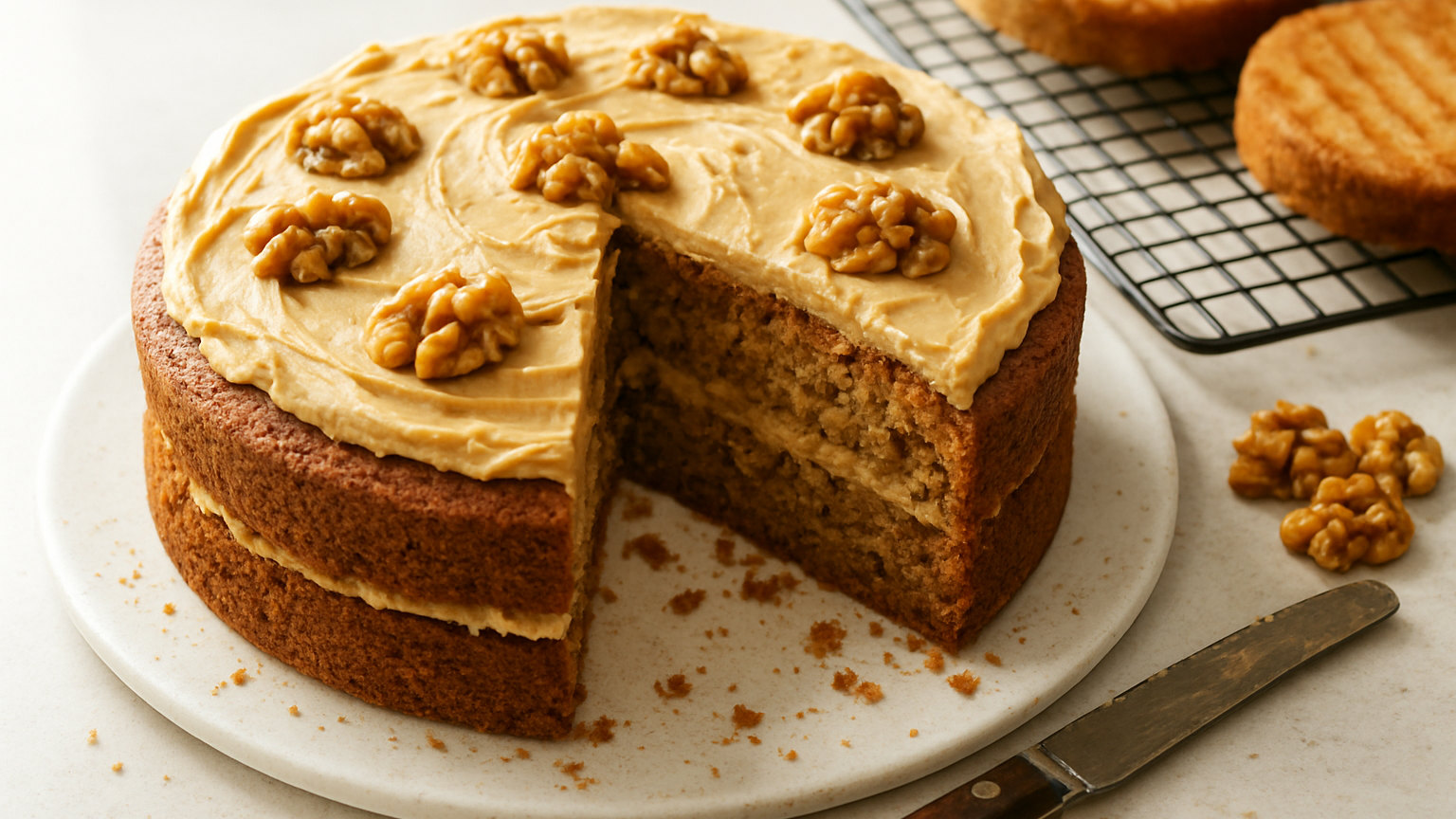
Coffee and walnut cake is one of the great British tea-room classics. A soft, buttery sponge flavoured with strong coffee and dotted with chopped walnuts is sandwiched and topped with a generous layer of coffee buttercream, then finished with a ring of walnut halves. It is simple to make with ordinary instant coffee, and the combination of bitter coffee, sweet icing and rich, slightly tannic walnuts is hard to beat with an afternoon cup of tea.
Which coffee should you use?
Instant coffee granules or instant espresso powder dissolved in a little boiling water give the clearest flavour without adding too much liquid. Aim for a very strong, almost syrupy mixture. Freshly brewed coffee is too weak to flavour the sponge properly unless you use a lot, which would make the mixture wet. Decaffeinated instant coffee works perfectly well and tastes the same.
Why toast the walnuts?
Toasted walnuts taste deeper, nuttier and less bitter than raw ones, and they stay crunchier in the sponge. Spread them on a baking tray and toast at 180°C (160°C fan) for six to eight minutes, until fragrant. Let them cool before chopping. Keep the best-looking halves back for decorating the top.
What ingredients do you need?
For the sponge
- 225g unsalted butter, softened
- 225g light brown soft sugar
- 4 large eggs
- 225g self-raising flour
- 1 tsp baking powder
- 2 tbsp instant coffee dissolved in 2 tbsp boiling water, cooled
- 75g toasted walnuts, chopped
For the coffee buttercream
- 150g unsalted butter, softened
- 300g icing sugar
- 1 tbsp instant coffee dissolved in 1 tbsp boiling water, cooled
- 10 to 12 walnut halves, to decorate
How do you make coffee and walnut cake?
- Heat the oven to 180°C (160°C fan), gas 4. Grease and line two 20cm sandwich tins.
- Beat the butter and sugar until light and fluffy, then beat in the eggs one at a time.
- Sift in the flour and baking powder, then fold in with the cooled coffee.
- Fold in the chopped walnuts and divide between the tins.
- Bake for 22 to 25 minutes, until risen and springy. Cool on a wire rack.
- For the buttercream, beat the butter until pale, then gradually beat in the icing sugar and the coffee.
- Sandwich the sponges with half the buttercream, spread the rest on top and arrange the walnut halves around the edge.
Brown sugar or caster: light brown soft sugar adds a gentle caramel note that suits coffee beautifully. Caster sugar gives a paler, lighter sponge if you prefer the traditional look.
Why has my sponge turned greyish?
Walnut skins contain natural tannins that can react with the raising agents and tint the batter a slightly grey or purple colour, especially around the nuts. It is harmless and does not affect the flavour. Toasting the walnuts and rubbing off loose skins in a clean tea towel reduces the effect, and the coffee colour usually disguises it well.
Can you leave out the walnuts?
Yes. The sponge is lovely as a plain coffee cake, which is useful if you are baking for someone with a nut allergy. Leave the walnuts out of both the sponge and the decoration and add a pinch more coffee if you like a stronger flavour. Chocolate-covered coffee beans make a good nut-free decoration. If nut allergy is a concern, check that your other ingredients are made without nuts too.
How long does it keep?
Coffee and walnut cake keeps well for three to four days in an airtight tin at room temperature, and the flavour is often better on the second day. The un-iced sponges can be frozen for up to three months. The buttercream keeps for a week in the fridge; bring it to room temperature and beat it again before using.
Can you bake it as a traybake?
Yes. Spread the mixture into a 30 x 23cm tin and bake for 25 to 30 minutes. Cover the top with the buttercream and cut into 16 squares, each topped with a walnut half. It is an easy way to serve a crowd at a coffee morning or cake stall.


