
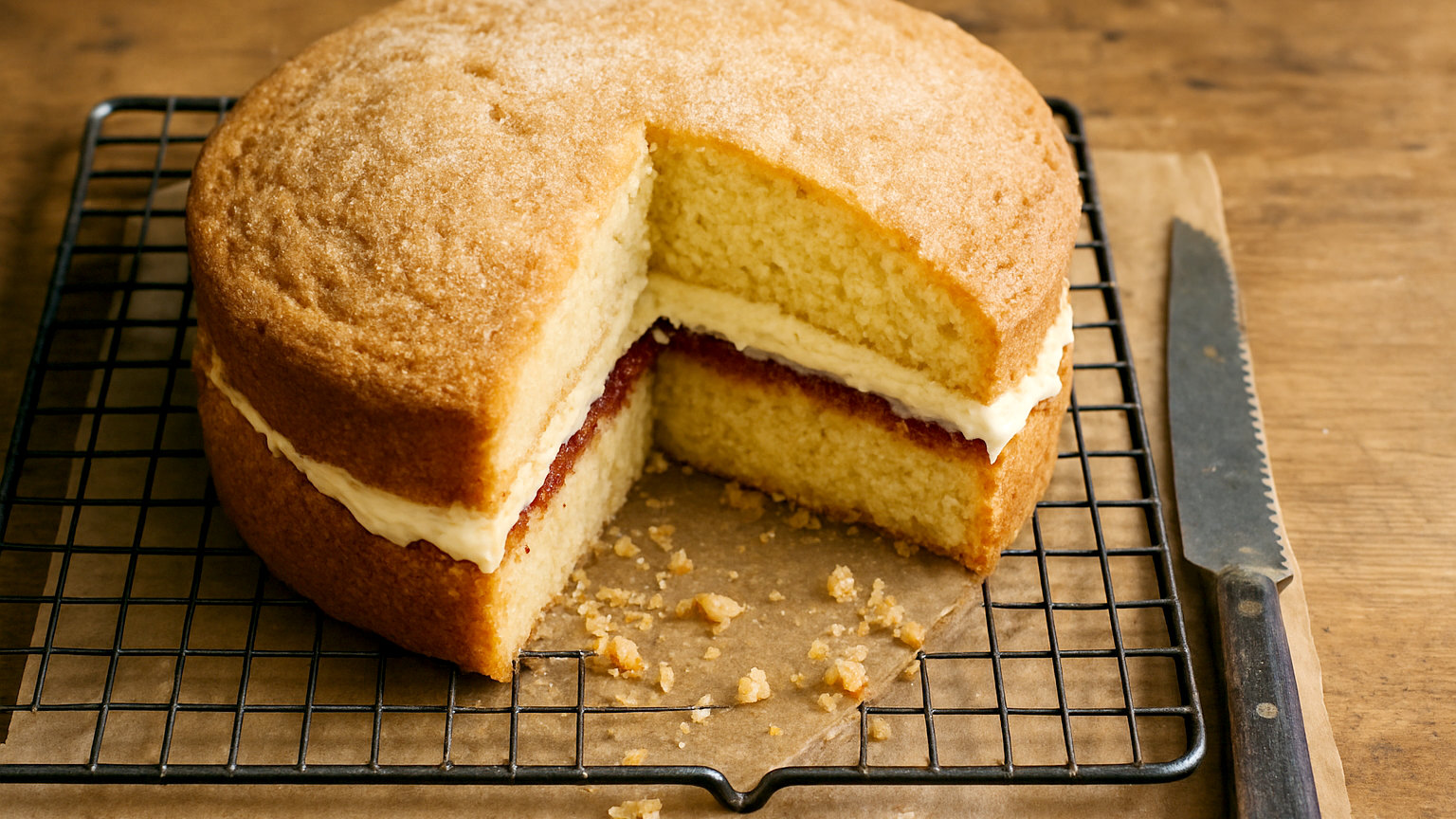
An eggless sponge cake can be soft, light and golden with the right recipe. This one uses yoghurt for richness and moisture, and a little lemon juice reacting with bicarbonate of soda to lift the cake in place of eggs. It is ideal if you are baking for someone with an egg allergy, if you have run out of eggs, or if you simply want a reliable, easy sponge that comes together in one bowl.
Why do cakes usually need eggs?
In a traditional sponge, eggs do several jobs at once. They trap air when beaten, bind the ingredients together, add moisture and richness, and set in the oven to give the cake its structure. An eggless recipe has to replace each of those roles. Here, yoghurt adds moisture and body, the raising agents supply the lift, and the flour provides the structure.
How does an eggless sponge rise?
The lift comes from a combination of baking powder and bicarbonate of soda. Bicarbonate of soda is an alkali, and when it meets the acidity of the yoghurt and lemon juice it releases carbon dioxide gas, which forms bubbles in the batter. Baking powder adds a second, steadier rise in the oven. Because the reaction starts as soon as the wet and dry ingredients are mixed, get the cake into the oven promptly.
What ingredients do you need?
- 200g self-raising flour
- 1 tsp baking powder
- ½ tsp bicarbonate of soda
- 150g caster sugar
- 150g plain yoghurt
- 100ml milk
- 100g unsalted butter, melted and cooled
- 1 tbsp lemon juice
- 1 tsp vanilla extract
- 4 tbsp jam and a little icing sugar, to finish
How do you make an eggless sponge?
- Heat the oven to 180°C (160°C fan), gas 4. Grease two 18cm sandwich tins and line the bases.
- Whisk the flour, baking powder, bicarbonate of soda and sugar together in a large bowl.
- In a jug, whisk the yoghurt, milk, melted butter, lemon juice and vanilla until smooth.
- Pour the wet ingredients into the dry and fold together gently until just combined. Do not overmix.
- Divide between the tins and bake straight away for 20 to 25 minutes, until golden and springy.
- Cool in the tins for 10 minutes, then turn out onto a wire rack.
- Sandwich with jam and dust the top with icing sugar.
Egg allergy check: some baking powders, flavourings and decorations are made in factories that handle egg. If you are baking for someone with an egg allergy, check every label.
Which egg replacer works best in a sponge?
| Replacement per egg | Best for | Result |
|---|---|---|
| 50g plain yoghurt | Sponges and cupcakes | Soft and moist |
| 3 tbsp aquafaba | Light sponges | Airy but delicate |
| 60g condensed milk | Rich, sweet cakes | Dense and tender |
| Commercial egg replacer | Most bakes | Reliable, follow the packet |
Yoghurt gives the most reliable sponge, which is why it is used here. Aquafaba, the liquid from a tin of chickpeas, can be whisked to a foam and gives a lighter result. Flaxseed mixed with water is popular in vegan baking but can make a sponge heavy and nutty, so it suits muffins better.
Can you make it vegan?
Yes. Use a plant-based yoghurt such as soya or coconut, swap the milk for a plant milk, and replace the butter with 90ml of a mild vegetable oil. The cake will be very slightly denser but still soft. Check that your jam and any icing are free from animal products too.
Why is my eggless sponge dense?
Overmixing is the most common cause, because without eggs to support it the batter loses its bubbles easily. Leaving the mixed batter to stand before baking lets the gas escape, too. Check that your raising agents are fresh; a pinch of bicarbonate of soda dropped into lemon juice should fizz immediately.
How long does it keep?
Store the sponge in an airtight tin at room temperature for up to three days. It freezes well, un-filled, for up to three months. Defrost at room temperature, still wrapped, before filling.


