
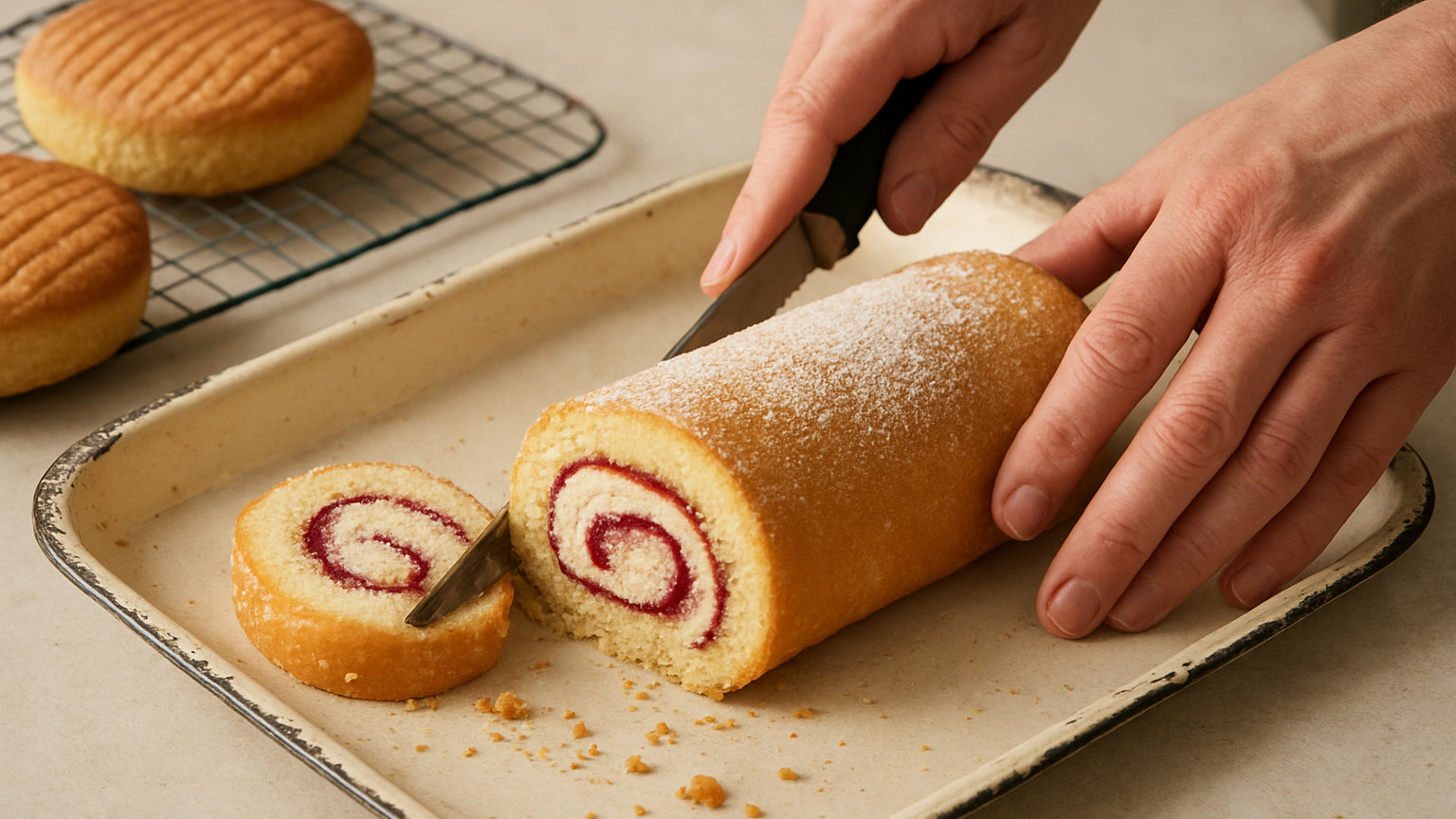
A Swiss roll is a thin, light sponge baked in a shallow tin, spread with jam and rolled up into a spiral while still warm. It uses a whisked sponge made without butter, which makes it flexible enough to roll without breaking. Once you have the method, it takes under half an hour from start to finish, and it is a lovely way to learn how whisked sponges work.
Is a Swiss roll actually Swiss?
Probably not. Despite the name, there is little evidence that it came from Switzerland. Rolled sponge cakes appeared in several European countries during the nineteenth century, and the name Swiss roll has been used in Britain since at least the 1870s. Similar cakes are known as jelly rolls in America and roulades in France.
Why must you roll it while warm?
A warm sponge is soft and pliable, but as it cools it sets into its final shape. If you roll it while still warm, it cools in a spiral and stays rolled. If you let it cool flat, it becomes stiffer and is much more likely to crack when you try to roll it later.
What ingredients do you need?
- 3 large eggs, at room temperature
- 85g caster sugar, plus extra for rolling
- 85g plain flour
- 5 tbsp raspberry jam, warmed slightly
How do you make a Swiss roll?
- Heat the oven to 200°C (180°C fan), gas 6. Grease a 33 x 23cm Swiss roll tin and line it with baking paper.
- Whisk the eggs and sugar with an electric mixer for eight to ten minutes, until pale, thick and tripled in volume. When you lift the whisk, the mixture should leave a trail that holds for a few seconds.
- Sift the flour over the mixture and fold in very gently with a large metal spoon, cutting through the middle and turning the bowl, until no streaks remain.
- Pour into the tin and tip it gently so the mixture reaches the corners.
- Bake for 8 to 10 minutes, until golden and springy to the touch.
- While it bakes, lay a sheet of baking paper on the work surface and sprinkle it evenly with caster sugar.
- Turn the hot sponge out onto the sugared paper and peel away the lining paper.
- Score a line 2cm in from one short edge, without cutting all the way through. This helps start the roll.
- Spread the warm jam over the sponge, then roll up tightly from the scored edge, using the paper to help.
- Leave it seam side down to cool.
Stop the edges drying: trim the crisp edges off with a sharp knife before rolling. Dry edges are where most cracks begin.
Why did my Swiss roll crack?
The most common reason is overbaking, which dries the sponge and makes it brittle, so take it out as soon as it springs back. Letting it cool before rolling and spreading the filling too thickly also cause cracks. A few small cracks on the surface are fine; dust with icing sugar and nobody will notice.
How do you add a cream filling?
Cream would melt on a warm sponge, so the method changes slightly. Roll the hot sponge up in the sugared paper without any filling and leave it to cool. Once cold, gently unroll it, spread with jam and a layer of whipped cream, then roll it up again. Keep a cream-filled Swiss roll in the fridge and eat within a day.
How do you make a chocolate roll?
Replace 25g of the flour with cocoa powder and bake as above. A chocolate roll is traditionally filled with whipped cream or a light vanilla buttercream, and at Christmas it becomes the base for a yule log, covered in chocolate buttercream and marked with a fork to look like bark.
How long does it keep?
A jam-filled Swiss roll keeps for two days in an airtight container. Whisked sponges contain no butter, so they dry out more quickly than other cakes. Wrap it tightly, and freeze for up to a month if you need to keep it longer.


