
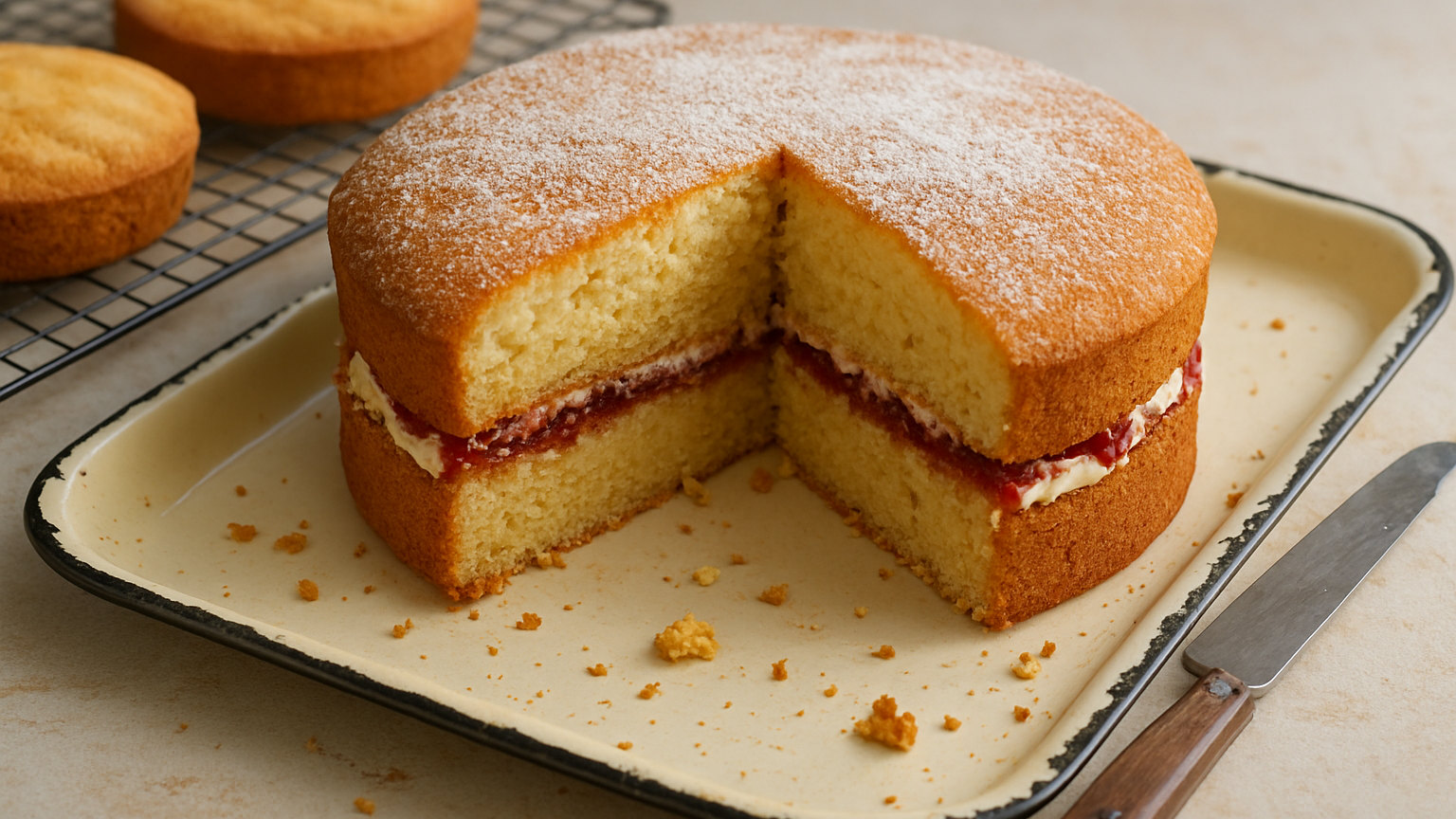
A sponge cake usually turns out dense because not enough air was beaten into the mixture, the mixture curdled, the flour was overmixed, or the raising agent was old or missing. Less often, the oven was too cool or the tins were too small. Each of these causes leaves a slightly different result, and once you can recognise them, a dense sponge is one of the easiest baking problems to fix.
What does a sponge cake need to be light?
A light sponge depends on air. In the creaming method, beating butter and sugar together traps millions of tiny bubbles, and the raising agent in self-raising flour or baking powder produces gas that enlarges them in the oven. The eggs and flour then set around those bubbles to hold the cake up. Anything that reduces the air, knocks it out or stops it expanding leads to a dense sponge.
What are the most common causes?
| What you notice | Likely cause | What to do next time |
|---|---|---|
| Heavy and close all the way through | Butter and sugar not creamed enough | Beat for four to five minutes until pale |
| Tight, rubbery crumb | Flour overmixed | Fold gently until just combined |
| Greasy and heavy | Mixture curdled | Use room temperature eggs |
| Flat, with little rise | Old or missing raising agent | Check dates and test it |
| Dense, damp line at the base | Oven too cool or underbaked | Check with an oven thermometer |
Can cold ingredients make a sponge dense?
Yes. Eggs straight from the fridge can make creamed butter firm up and split, so the mixture looks curdled and greasy. A curdled mixture cannot hold as much air, and the sponge bakes heavy. Take eggs and butter out an hour before baking so everything is at room temperature. If the mixture does start to curdle, beat in a spoonful of the flour to bring it back together.
Does overmixing make a cake heavy?
It does. Once the flour goes in, mixing develops gluten, the stretchy protein that gives bread its chew. A little is fine, but beating the mixture hard after adding the flour makes the crumb tight and rubbery, and it also knocks out air. Fold the flour in with a large spoon or on the lowest mixer speed, and stop as soon as you can no longer see streaks of flour.
Could the raising agent be the problem?
Baking powder and the raising agents in self-raising flour weaken over time, especially once the packet has been opened in a damp kitchen. Test baking powder by stirring half a teaspoon into hot water; it should fizz strongly. Check the date on your self-raising flour too. Accidentally using plain flour without adding a raising agent is another common, and very understandable, reason for a flat, dense cake. If you have run out of self-raising flour, add two level teaspoons of baking powder to every 225g of plain flour.
Weigh everything: measuring flour by the cup can add up to a quarter more than intended, which makes the batter stiff and the sponge heavy. Digital scales are far more reliable.
Does oven temperature matter?
It matters a great deal. If the oven is too cool, the cake rises slowly and the bubbles escape before the structure sets, leaving a dense, sometimes damp texture. If it is too hot, the outside sets before the cake has finished rising. Many ovens run hotter or cooler than their dial shows, so an inexpensive oven thermometer is well worth having. Always preheat fully before the tins go in.
Can you rescue a dense sponge?
A dense sponge is still perfectly good to eat. Brush it with a sugar syrup or fruit juice to soften it, then use it as the base of a trifle, where a firmer sponge actually holds up better. You can also cut it into cubes and serve it warm with custard as a quick pudding, or blitz it into crumbs for cake truffles.


