
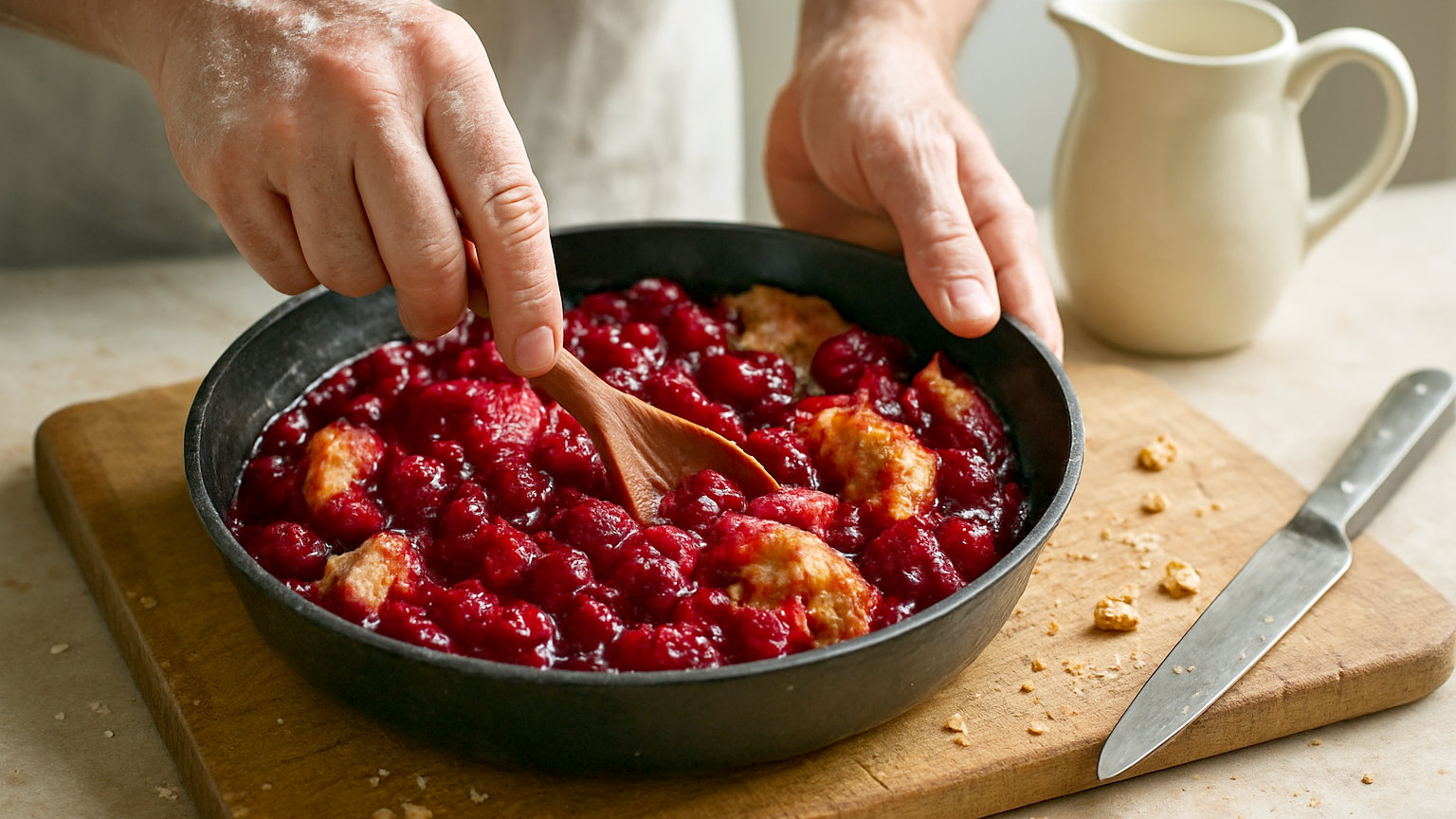
Stewing fruit means cooking it gently with a little sugar and liquid until it softens. It sounds too simple to get wrong, and yet most stewed fruit is either watery and raw or cooked to a colourless mush. The differences come down to three things: how much liquid, how much sugar, and knowing when to stop.
How long does each fruit take?
| Fruit | Sugar per 500g | Liquid | Time |
|---|---|---|---|
| Bramley apples | 75g | 3 tbsp | 8 to 10 min |
| Eating apples | 50g | 3 tbsp | 12 to 15 min |
| Plums, halved | 75g | 2 tbsp | 8 to 10 min |
| Rhubarb | 100g | 1 tbsp | 5 to 8 min |
| Gooseberries | 125g | 2 tbsp | 10 to 12 min |
| Blackcurrants | 125g | 2 tbsp | 6 to 8 min |
| Blackberries | 60g | None | 4 to 5 min |
| Pears | 50g | 4 tbsp | 15 to 20 min |
How much liquid should you add?
Far less than most people use. Two or three tablespoons is enough for 500g of fruit, since fruit releases a great deal of its own juice as it heats. Adding more gives a pan of watery fruit floating in liquid, and the flavour is diluted rather than concentrated.
Use a heavy pan with a tight lid: the lid traps the steam so the fruit cooks in its own juices, which is why so little added liquid is needed.
When should you stop cooking it?
As soon as the fruit is tender and before it loses its shape, unless you specifically want a purée. Test with the tip of a knife. Fruit continues softening in the residual heat for several minutes after the pan comes off the hob, so stop slightly earlier than seems right.
When should you add the sugar?
At the start, with the fruit. Sugar draws juice out of the fruit as it heats, which is what creates the syrup. Adding it at the end means it sits in the liquid rather than being drawn through the fruit, and it will not have dissolved evenly.
Does the fruit need lemon juice?
Apples, pears and anything that browns benefit from a tablespoon, added at the start. Sweet, low-acid fruit such as pears and sweet plums tastes flat without it. Sharp fruit such as rhubarb, gooseberries and blackcurrants needs none, as it has plenty of acidity already.
Why has my fruit gone to mush?
It was cooked too long, stirred too often, or cooked at too high a heat. Stir as little as possible, keep the heat low and covered, and check from the earliest time in the table. Some fruit, particularly Bramley apples and rhubarb, goes from firm to collapsed in under two minutes.
Can you stew it in the oven instead?
Yes, and for delicate fruit such as rhubarb or plums it is more reliable, since nothing is stirred and the heat is even. Toss the fruit with sugar in a shallow dish, cover with foil and bake at 180°C for 15 to 20 minutes. The pieces hold their shape far better.
How long does stewed fruit keep?
Five days in an airtight container in the fridge, and it freezes for six months. Freeze it in portions. It is worth stewing a large quantity when fruit is cheap and in season, since it is useful for crumbles, fools, trifles, porridge and yoghurt through the year.
Should you peel the fruit?
Apples and pears, yes, since the skins toughen and separate during cooking and are unpleasant in the finished dish. Plums, apricots and all berries keep their skins, which hold the fruit together and add colour. Rhubarb is never peeled unless the stalks are very thick and stringy.
Do you have to add sugar?
Not always. Very ripe plums, blackberries and pears need little or none, and stewed fruit without sugar is useful if it is going into something already sweet. Sharp fruit such as rhubarb and gooseberries genuinely needs it, and not just for sweetness, since the sugar also helps draw out the juices.


