
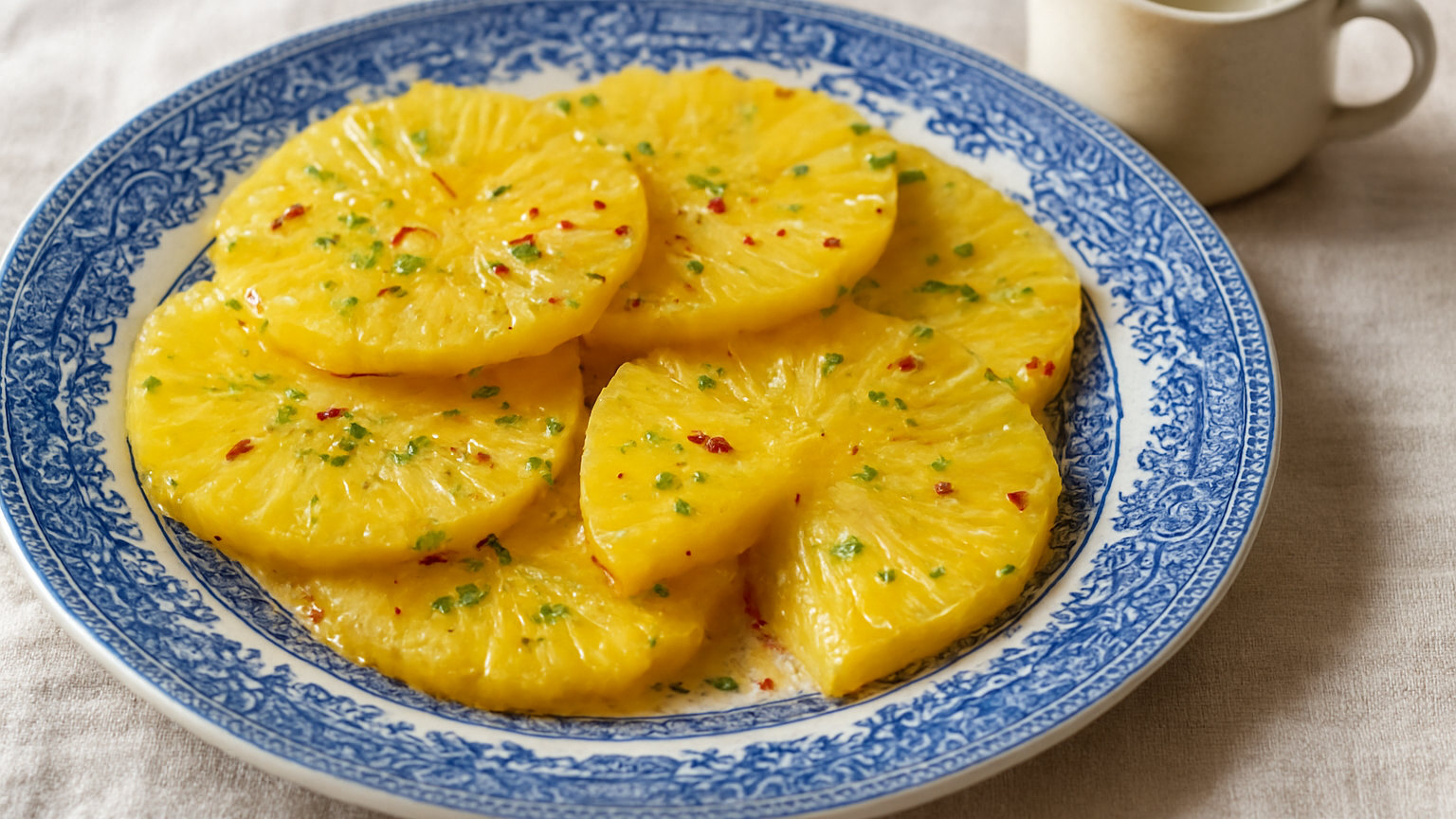
Thinly sliced fresh pineapple scattered with lime, mint and a little finely chopped chilli takes five minutes and requires no cooking. After a rich meal it is far more welcome than another creamy pudding, and the combination of sweet fruit, sharp lime and a little heat is genuinely refreshing rather than merely virtuous.
What do you need?
Serves 6.
- 1 large ripe pineapple
- Juice and finely grated zest of 2 limes
- 1 tbsp caster sugar
- ½ red chilli, deseeded and very finely chopped
- A small handful of mint leaves
- A pinch of flaked sea salt
How do you make it?
- Cut the top and base off the pineapple and stand it upright.
- Slice down the sides to remove the skin, following the curve of the fruit.
- Cut out any remaining brown eyes with the tip of a knife.
- Slice the pineapple into rounds about 5mm thick and cut out the woody core from each.
- Arrange the slices overlapping on a large plate.
- Whisk the lime juice, zest and sugar together until the sugar dissolves, then spoon over.
- Scatter with the chopped chilli, torn mint and a few flakes of salt.
- Chill for 20 minutes before serving.
Deseed the chilli and chop it very finely: this should be a warm background note, not a mouthful of heat. A single small piece of seed can dominate an entire plate.
How do you choose a ripe pineapple?
It should smell sweet and fragrant at the base and feel heavy for its size. The leaves should be green and a central one should pull out with a gentle tug. Colour is not a reliable guide, as varieties differ. A pineapple with no smell at all is underripe and will not improve much.
Does pineapple ripen after picking?
Not really. Pineapples become softer and juicier after picking but do not get any sweeter, since they do not convert starch to sugar once off the plant. This is why choosing a fragrant one at the shop matters more than leaving it on the worktop for a few days.
Why does chilli work with pineapple?
Sweetness and heat balance each other, which is why the combination appears across Mexico, Thailand and the Caribbean. The acidity of the lime and the salt sharpen both. It is a genuinely traditional pairing rather than a modern affectation, and it works with mango and watermelon too.
Do you have to remove the core?
Yes, for a dessert. The core is noticeably tougher and more fibrous than the flesh around it, and it is unpleasant to chew. A small round cutter removes it neatly from each slice, or cut it out with the tip of a knife. It can be kept for smoothies.
Can you use tinned pineapple?
It works, but it is a different dish. Tinned pineapple is softer, sweeter and lacks the fresh acidity, so reduce the sugar and add extra lime. Drain it thoroughly first. Fresh pineapple is worth the effort here, since the texture is much of the point.
What else can you add?
Toasted coconut flakes, a scattering of pomegranate seeds, or a spoonful of coconut yoghurt alongside. Basil works as well as mint. A little grated fresh ginger in the lime dressing is excellent. Keep the additions few, as the dish depends on its simplicity.
How long does it keep?
It is best within a few hours of being made, though it keeps overnight in the fridge. The lime softens the fruit over time, so the texture becomes less crisp. Cut the pineapple up to a day ahead and dress it shortly before serving.
Why is the zest worth including?
Most of the aromatic oil in a lime is in its skin rather than its juice, so the zest carries a fragrance that the juice alone does not. Grate it finely so it disperses, and add it to the dressing rather than scattering it over, where it would clump.


