
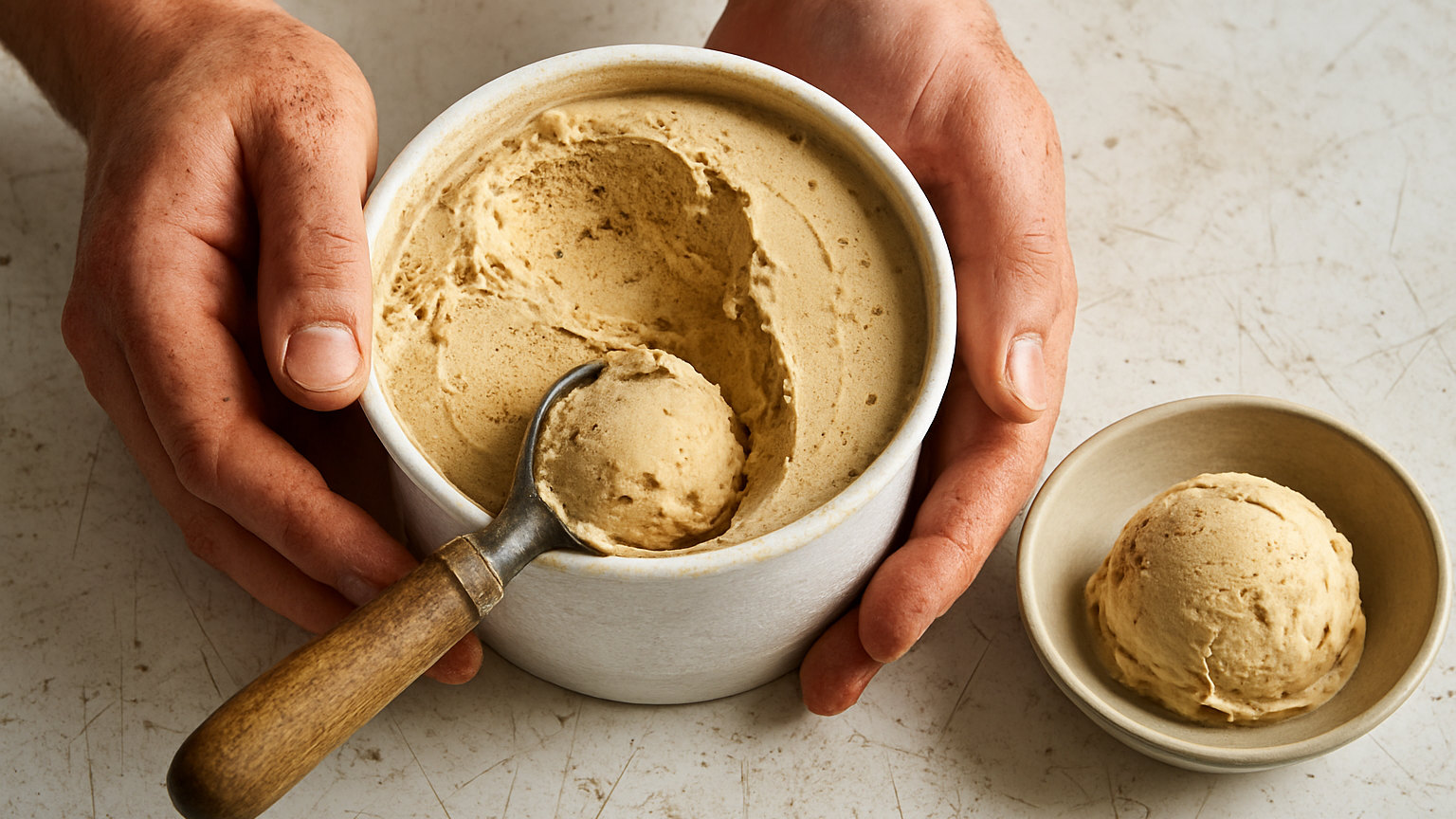
Coffee ice cream made by infusing crushed coffee beans into the cream tastes noticeably cleaner and more aromatic than one made with instant powder. The beans give the roasted, slightly bitter character of good coffee without the harshness that instant sometimes brings. It is a properly grown-up flavour and it suits being served alongside a chocolate pudding.
What ingredients do you need?
Makes about 1 litre.
- 300ml whole milk
- 400ml double cream
- 75g coffee beans, lightly crushed
- 5 large egg yolks
- 150g caster sugar
- A pinch of fine salt
- 1 tbsp coffee liqueur, optional
How do you make it?
- Crush the coffee beans lightly with a rolling pin, just enough to break them, not to grind them.
- Heat the milk and cream with the beans until steaming, then leave to infuse off the heat for 30 minutes.
- Strain out the beans and top the liquid back up to 700ml if needed.
- Whisk the yolks, sugar and salt until pale.
- Reheat the infused cream and pour it over the yolks while whisking.
- Return to the pan and cook over a low heat, stirring, until it reaches 78 to 82°C.
- Strain into a cold bowl, stir in the liqueur if using, and cool.
- Chill for at least six hours, then churn for 25 to 35 minutes.
- Freeze for four hours before serving.
Crush the beans, do not grind them: ground coffee releases fine sediment that no sieve removes completely, and the finished ice cream ends up gritty.
Why infuse beans rather than use instant?
Infusion extracts the aromatic oils without the harsh, slightly burnt notes that instant coffee can bring. It also avoids adding any powder that might not dissolve. Instant espresso powder is quicker and perfectly acceptable, at three tablespoons whisked into the hot cream, but the flavour is flatter.
How strong should it be?
Clearly coffee-flavoured with a bitter edge, which is what stops a sweet dairy base tasting cloying. Seventy-five grams of beans in 700ml of liquid gives that. Taste the infused cream before making the custard and infuse longer if it seems weak, though beyond 45 minutes the flavour turns bitter rather than stronger.
Which coffee beans work best?
A medium or dark roast, which has the depth to survive being diluted into a custard. A light, fruity roast is largely lost. Fresh beans have more aroma than old ones. Decaffeinated beans work identically and make sense if you are serving the ice cream in the evening.
Should you add liqueur?
A tablespoon of coffee liqueur or brandy deepens the flavour and keeps the ice cream slightly softer, since alcohol lowers the freezing point. It is not cooked off, so the ice cream is then unsuitable for children. More than two tablespoons and the ice cream struggles to freeze firm at all.
What can you ripple through it?
A dark chocolate ripple works beautifully, layered in as you transfer the ice cream to its container. Crushed amaretti biscuits, chopped chocolate-covered coffee beans or a salted caramel swirl are all good. Keep additions to about 150g so the base still freezes properly.
How do you serve it?
It is excellent on its own, and outstanding poured over with a shot of hot espresso as an affogato. A scoop alongside a chocolate fondant or a sticky toffee pudding is another good use, since the bitterness cuts through a rich hot pudding.
How long does it keep?
It keeps for two months in an airtight container with baking paper pressed onto the surface. The coffee flavour holds up well, better than most fruit flavours.
Can you make a no-churn version?
Yes. Infuse the beans into 200ml of the cream, strain it and whisk it into a tin of condensed milk with a tablespoon of espresso powder for extra depth. Whip the remaining 400ml of cream, fold it in and freeze. It is sweeter than the custard version but very good, and it takes about fifteen minutes rather than an afternoon.


